
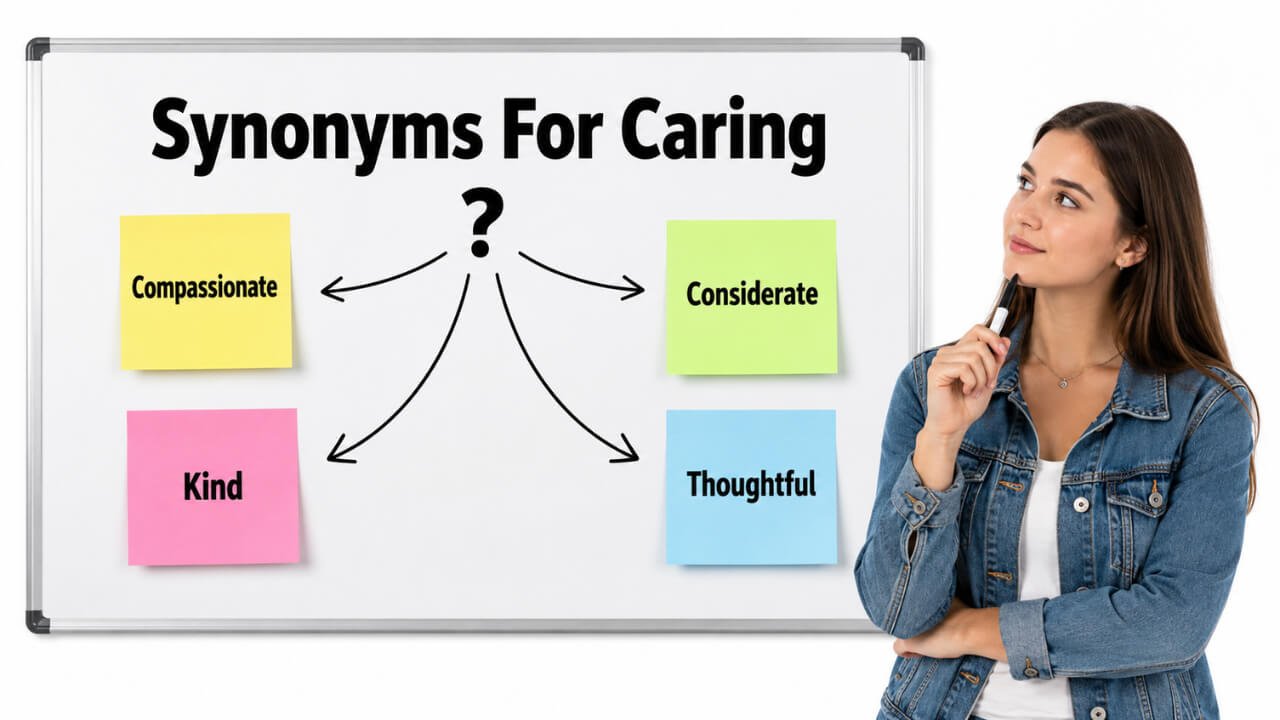
Quick Answer: The best synonyms for caring include compassionate, kind, thoughtful, considerate, empathetic, sympathetic, nurturing, supportive, loving, and attentive. Use compassionate for deep concern, kind for simple goodness, thoughtful for careful attention, considerate for polite behavior, empathetic for understanding feelings, nurturing for guidance and care, and supportive for help during difficulty.
Pronunciation and Word Details
Word: Caring.
Pronunciation: /ˈkeərɪŋ/
Part of Speech: Adjective, noun, and gerund.
Meaning: Caring means showing kindness, concern, attention, or emotional support for someone or something.
US Pronunciation:
UK Pronunciation:
What Does “Caring” Mean?
Direct Answer: “Caring” means showing concern, kindness, and attention toward another person, animal, place, responsibility, or situation.
As an adjective, caring describes a person, action, attitude, or relationship that is kind and supportive. As a noun or gerund, it can describe the act of giving care, showing concern, or helping someone with patience and warmth.
The word works in many sentence contexts. You can describe a caring friend, a caring parent, a caring message, a caring profession, or a caring attitude. It often suggests emotional warmth, moral responsibility, and genuine concern.
Meaning, Tone, and Context of “Caring”
Tone: “Caring” has a positive, warm, gentle, and respectful tone.
Formality: It is neutral and works in both formal and casual writing.
Emotion: The word carries emotional meaning because it often describes kindness, affection, compassion, and human connection.
Common Use: “Caring” is common in personal relationships, family writing, healthcare, education, workplace communication, counseling, character descriptions, and emotional support messages.
Writing Context: In essays and reports, “caring” can describe behavior, values, social responsibility, or professional qualities. In everyday conversation, it often describes someone who listens, helps, protects, and notices other people’s needs.
When and How to Use “Caring”
For Personality: Use “caring” when describing someone who is kind, thoughtful, and emotionally aware.
Example: She is a caring person who always notices when others need help.
For Relationships: Use “caring” when describing warmth, love, attention, and support between people.
Example: A caring friendship makes difficult days easier to face.
For Professional Behavior: Use “caring” when describing respectful and helpful service, guidance, or support.
Example: The nurse gave each patient caring attention.
For Emotional Support: Use “caring” when someone comforts, listens, encourages, or helps during a hard time.
Example: His caring words made her feel less alone.
For Responsibility: Use “caring” when someone protects or looks after a person, animal, place, or duty.
Example: Caring for the garden taught him patience and responsibility.
Best Synonyms for Caring
Compassionate: Showing deep concern for someone’s pain or difficulty.
Example: Her compassionate response helped the family feel understood.
Kind: Gentle, helpful, and good toward others.
Example: He gave a kind answer when she felt nervous.
Thoughtful: Showing careful attention to someone’s needs or feelings.
Example: Her thoughtful note arrived at the right moment.
Considerate: Respectful of how other people feel or what they need.
Example: It was considerate of him to lower his voice.
Empathetic: Able to understand and share another person’s feelings.
Example: A good counselor must be empathetic and patient.
Sympathetic: Showing concern and emotional support for someone’s trouble.
Example: She gave him a sympathetic smile after the bad news.
Nurturing: Helping someone grow, heal, learn, or feel safe.
Example: His nurturing guidance helped the child gain confidence.
Supportive: Giving help, encouragement, or emotional strength.
Example: Her supportive family stood beside her through every challenge.
Loving: Showing affection, warmth, and deep care.
Example: He grew up in a loving home.
Attentive: Paying close attention to someone’s needs.
Example: The teacher was attentive to every student’s progress.
50 Synonyms for Caring with Short Meanings
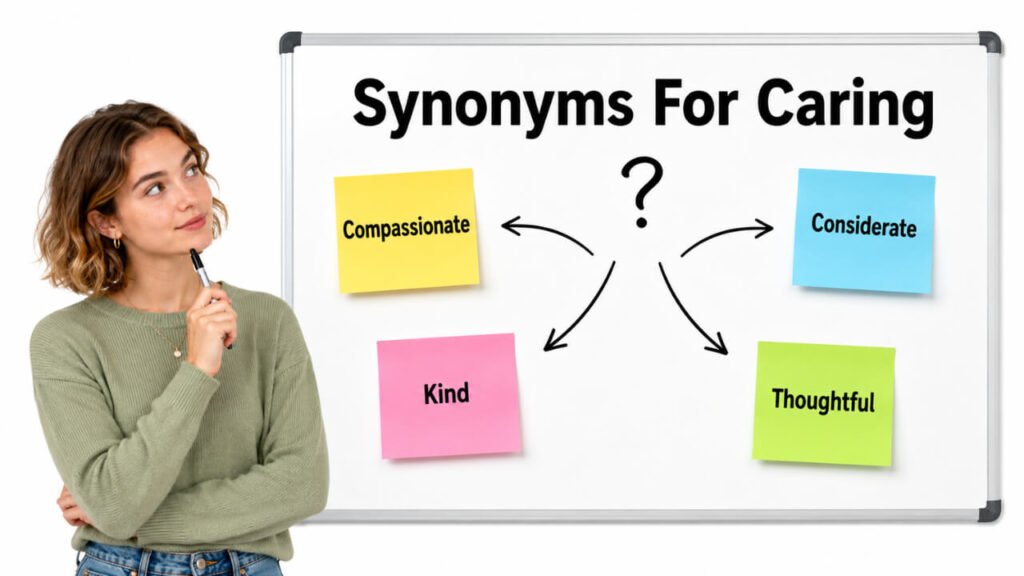
- Compassionate: Deeply concerned about others’ pain.
- Kind: Helpful, gentle, and good toward others.
- Thoughtful: Aware of other people’s needs and feelings.
- Considerate: Respectful of others’ comfort and emotions.
- Empathetic: Able to understand another person’s feelings.
- Sympathetic: Showing concern during someone’s trouble.
- Nurturing: Helping someone grow, heal, or feel safe.
- Supportive: Giving help, strength, or encouragement.
- Loving: Showing affection and deep emotional care.
- Attentive: Closely aware of someone’s needs.
- Gentle: Soft, calm, and careful in behavior.
- Tender: Warm, delicate, and emotionally kind.
- Warm: Friendly, affectionate, and welcoming.
- Affectionate: Showing love or fondness openly.
- Kindhearted: Naturally kind and generous in spirit.
- Benevolent: Wanting to do good for others.
- Charitable: Generous and willing to help others.
- Humane: Showing mercy, kindness, and respect.
- Merciful: Willing to forgive or reduce suffering.
- Helpful: Ready to assist or support.
- Concerned: Worried or interested in someone’s well being.
- Protective: Wanting to keep someone safe.
- Understanding: Patient and aware of another person’s situation.
- Patient: Calm and tolerant during difficulty.
- Sensitive: Aware of feelings, needs, or emotional changes.
- Responsive: Quick to notice and answer someone’s needs.
- Mindful: Carefully aware of people, actions, and effects.
- Selfless: Putting others’ needs before personal comfort.
- Generous: Willing to give help, time, or kindness.
- Devoted: Deeply loyal and committed to care.
- Loyal: Faithful, steady, and supportive.
- Motherly: Warm, protective, and nurturing.
- Fatherly: Protective, guiding, and supportive.
- Friendly: Pleasant, kind, and easy to approach.
- Gracious: Kind, polite, and generous in manner.
- Softhearted: Easily moved by compassion or emotion.
- Tenderhearted: Gentle and full of emotional kindness.
- Comforting: Helping someone feel calmer or safer.
- Reassuring: Giving confidence, peace, or emotional relief.
- Encouraging: Giving hope, confidence, or support.
- Helpful Minded: Naturally willing to assist others.
- Service Oriented: Focused on helping and supporting people.
- Warmhearted: Kind, affectionate, and emotionally generous.
- Neighborly: Friendly, helpful, and community minded.
- Altruistic: Acting for others without selfish purpose.
- Respectful: Treating others with care and dignity.
- Polite: Showing good manners and consideration.
- Tenderly Concerned: Gently worried about someone’s needs.
- Emotionally Supportive: Giving comfort and understanding.
- Protectively Kind: Caring in a way that keeps others safe.
Read Also:
Synonyms for Example

Synonyms for Caring by Context
When Caring Means Compassionate
Use these words when “caring” means deep concern for someone’s pain, sadness, difficulty, or suffering.
Best Synonyms: Compassionate, sympathetic, empathetic, humane, merciful.
Example: Her compassionate nature made people feel safe during hard times.
Example: He gave a sympathetic response when his friend shared the news.
When Caring Means Kind and Thoughtful
Use these words when “caring” means gentle, polite, helpful, or mindful of other people’s feelings.
Best Synonyms: Kind, thoughtful, considerate, gentle, warm.
Example: His thoughtful message showed that he truly remembered her feelings.
Example: A considerate person thinks before speaking harshly.
When Caring Means Loving
Use these words when “caring” expresses affection, closeness, tenderness, or emotional warmth.
Best Synonyms: Loving, affectionate, tender, warmhearted, devoted.
Example: She gave her children a loving home filled with patience.
Example: His tender voice helped calm the frightened child.
When Caring Means Supportive
Use these words when “caring” means helping someone through pressure, fear, loss, change, or challenge.
Best Synonyms: Supportive, encouraging, comforting, reassuring, helpful.
Example: Her supportive words helped him believe in himself again.
Example: A reassuring smile can make a difficult moment feel lighter.
When Caring Means Protective or Responsible
Use these words when “caring” means watching over someone, preventing harm, or taking responsibility.
Best Synonyms: Protective, attentive, responsible, mindful, devoted.
Example: A protective older brother walked his sister home.
Example: The attentive caregiver noticed every small change.
Another Word for Caring
Direct Answer: Another word for caring is compassionate when you mean deep concern for others. However, the best alternative depends on context. Use kind for simple goodness, thoughtful for awareness of feelings, supportive for encouragement, and loving for affection.
Original: She is a caring teacher.
Better Option: She is a compassionate teacher.
Original: He sent a caring message after the accident.
Better Option: He sent a thoughtful message after the accident.
Original: They gave her caring support during recovery.
Better Option: They gave her supportive help during recovery.
Original: His caring attitude made everyone feel welcome.
Better Option: His kind attitude made everyone feel welcome.
When Not to Use “Caring”
Do not use “caring” when a more exact word would express the meaning better. The word is warm and useful, but it can sound general if the sentence needs emotional depth, professional detail, or stronger description.
Weak: She is caring about the project.
Better: She is committed to the project.
Weak: He gave a caring answer to the technical question.
Better: He gave a thoughtful answer to the technical question.
Weak: The doctor was caring with the diagnosis.
Better: The doctor was compassionate when explaining the diagnosis.
Weak: His caring for numbers helped the report.
Better: His attention to detail helped the report.
Avoid using “caring” when you mean interested, responsible, concerned, or careful. These words are related, but they do not always mean the same thing.
Words Commonly Confused With Caring
Caring vs Careful: “Caring” means kind or concerned, while “careful” means cautious and attentive to avoid mistakes.
Caring vs Concerned: “Caring” suggests warmth and kindness, while “concerned” can mean worried, interested, or involved.
Caring vs Loving: “Caring” can be general, while “loving” is stronger and usually shows deep affection.
Caring vs Kind: “Caring” often includes concern and attention, while “kind” focuses on goodness and gentle behavior.
Caring vs Compassionate: “Caring” is broad, while “compassionate” suggests deeper emotional concern for suffering.
Caring vs Thoughtful: “Caring” describes concern, while “thoughtful” describes careful attention to someone’s feelings or needs.
Caring vs Supportive: “Caring” shows concern, while “supportive” means giving help, strength, or encouragement.
Which Synonym Should You Choose?
Choose compassionate when writing about pain, illness, loss, hardship, or emotional suffering.
Choose kind when you need a simple, natural word for good and gentle behavior.
Choose thoughtful when someone notices details, remembers feelings, or acts with care.
Choose considerate when writing about politeness, respect, and awareness of others.
Choose empathetic when someone understands another person’s feelings deeply.
Choose sympathetic when someone expresses concern during sadness or difficulty.
Choose nurturing when writing about growth, guidance, healing, teaching, or parenting.
Choose supportive when someone gives help, encouragement, or emotional strength.
Choose loving when the context includes affection, family, closeness, or deep emotional warmth.
Choose attentive when someone pays careful attention to needs, details, or changes.
Real Life Examples of “Caring” in Sentences
Original: She is a caring friend.
Better Option: She is a thoughtful friend.
Original: He has a caring personality.
Better Option: He has a compassionate personality.
Original: The nurse was caring with every patient.
Better Option: The nurse was attentive with every patient.
Original: Their caring words helped me feel calm.
Better Option: Their comforting words helped me feel calm.
Original: He grew up with caring parents.
Better Option: He grew up with loving parents.
Original: The manager showed a caring attitude.
Better Option: The manager showed a considerate attitude.
Original: She gave him caring support after the loss.
Better Option: She gave him sympathetic support after the loss.
Original: A caring teacher listens to students.
Better Option: A supportive teacher listens to students.
Original: His caring nature made him easy to trust.
Better Option: His warmhearted nature made him easy to trust.
Original: Caring actions often matter more than words.
Better Option: Compassionate actions often matter more than words.
Synonym Groups and Usage Differences
Compassion Group
Words in this group show concern for pain, sadness, hardship, or suffering. They are useful in emotional, personal, medical, and supportive writing.
Synonyms: Compassionate, sympathetic, empathetic, humane, merciful.
Example: A compassionate response can comfort someone during grief.
Kindness Group
Words in this group describe gentle, respectful, and helpful behavior. They work well in everyday conversation and simple descriptions.
Synonyms: Kind, thoughtful, considerate, gentle, friendly.
Example: Her kind words made the new student feel welcome.
Love Group
Words in this group describe affection, warmth, closeness, and devotion. They are common in family, friendship, and relationship contexts.
Synonyms: Loving, affectionate, tender, devoted, warmhearted.
Example: His loving care helped the child feel safe.
Support Group
Words in this group describe practical or emotional help. They are useful for difficult times, teamwork, recovery, and encouragement.
Synonyms: Supportive, helpful, comforting, encouraging, reassuring.
Example: A supportive mentor can help a student build confidence.
Protection Group
Words in this group describe safety, responsibility, and attention to needs. They work well when someone watches over another person or situation.
Synonyms: Protective, attentive, mindful, responsible, devoted.
Example: The attentive parent noticed when the child became quiet.
Antonyms of Caring
Uncaring: Not showing concern or kindness.
Indifferent: Not interested or emotionally involved.
Cold: Lacking warmth, kindness, or sympathy.
Cruel: Intentionally causing pain or showing harshness.
Insensitive: Not aware of or concerned about others’ feelings.
Thoughtless: Acting without considering how others feel.
Neglectful: Failing to give needed care or attention.
Selfish: Focused mainly on personal needs.
Harsh: Severe, unkind, or rough in manner.
Unkind: Not gentle, helpful, or considerate.
Apathetic: Showing little feeling, interest, or concern.
Detached: Emotionally distant or uninvolved.
Comparison: Caring vs Related Words
Caring vs Compassionate
“Caring” is broad and means showing concern, kindness, or support. “Compassionate” is deeper and is often used when someone responds to pain or suffering.
Example With Caring: She gave him caring advice after the problem.
Example With Compassionate: She gave him compassionate advice after the loss.
Caring vs Kind
“Caring” includes concern and attention, while “kind” focuses on gentle and helpful behavior.
Example With Caring: He is caring toward his younger cousins.
Example With Kind: He is kind to everyone he meets.
Caring vs Thoughtful
“Caring” describes a warm attitude, while “thoughtful” highlights careful attention to someone’s feelings or needs.
Example With Caring: Her caring nature made her a trusted friend.
Example With Thoughtful: Her thoughtful gift showed that she remembered his needs.
Caring vs Considerate
“Caring” can be emotional, while “considerate” is often about polite and respectful behavior.
Example With Caring: The coach was caring toward nervous players.
Example With Considerate: The coach was considerate of everyone’s time.
Caring vs Empathetic
“Caring” means showing concern, while “empathetic” means understanding or sharing another person’s feelings.
Example With Caring: He gave a caring reply to her message.
Example With Empathetic: He gave an empathetic reply because he understood her fear.
Caring vs Supportive
“Caring” shows concern, while “supportive” means actively giving help or encouragement.
Example With Caring: She was caring during his illness.
Example With Supportive: She was supportive during his recovery.
Common Phrases and Expressions With Caring
Caring Person: Someone who shows kindness and concern.
Caring Nature: A naturally kind and supportive character.
Caring Attitude: A way of behaving that shows concern.
Caring Friend: A friend who listens, helps, and supports.
Caring Family: A family that gives love, attention, and support.
Caring Words: Words that comfort, encourage, or show concern.
Caring Heart: A kind and emotionally generous nature.
Caring Support: Help given with warmth and concern.
Caring Profession: Work that involves helping and supporting people.
Caring for Others: Looking after people with kindness and responsibility.
Common Mistakes to Avoid
Repeating Caring Too Often: Using “caring” again and again can make writing sound plain. Replace it with compassionate, thoughtful, supportive, or kind when the meaning is clear.
Weak: She is caring and gives caring support with caring words.
Better: She is compassionate and offers supportive words when people need comfort.
Using Caring Instead of Careful: “Caring” means kind or concerned. “Careful” means cautious and precise.
Weak: Be caring when crossing the road.
Better: Be careful when crossing the road.
Using Caring Instead of Interested: “Caring” is emotional, while “interested” means wanting to know more.
Weak: He is caring about history.
Better: He is interested in history.
Using Caring Instead of Responsible: “Caring” can include responsibility, but it does not always mean dependable.
Weak: She is caring for completing the task on time.
Better: She is responsible for completing the task on time.
Choosing a Word That Is Too Formal: Words like benevolent or altruistic may sound too formal in simple sentences.
Weak: My sister is benevolent when I feel sad.
Better: My sister is kind when I feel sad.
Forgetting Context: The best synonym changes with meaning. Use loving for affection, attentive for focus, compassionate for suffering, and supportive for help.
Conclusion
The keyword synonyms for caring includes many strong options for emotional, personal, professional, and descriptive writing. Use compassionate for deep concern, kind for simple goodness, thoughtful for awareness, considerate for respect, empathetic for emotional understanding, supportive for encouragement, and loving for affection. Choosing the right synonym helps your writing sound more precise, natural, and meaningful.
FAQs About Synonyms for Caring
What is the best synonym for caring?
The best synonym for caring is compassionate when you mean deep concern. Use kind for simple everyday meaning and supportive for helpful behavior.
What is another word for a caring person?
Another word for a caring person is compassionate person. You can also say kind person, thoughtful person, supportive person, or warmhearted person.
Is caring the same as kind?
“Caring” and “kind” are closely related, but they are not always the same. “Caring” includes concern and attention, while “kind” focuses on gentle and helpful behavior.
What is a formal synonym for caring?
Formal synonyms for caring include compassionate, considerate, empathetic, benevolent, humane, and supportive.
What is a stronger word than caring?
A stronger word than caring is compassionate when the meaning involves deep emotional concern. Devoted can also be stronger when describing loyal care.
What is the opposite of caring?
The opposite of caring can be uncaring, indifferent, cold, insensitive, thoughtless, or neglectful, depending on the sentence.
Can caring be used in professional writing?
Yes, caring can be used in professional writing, especially when describing service, education, healthcare, leadership, support, or respectful communication.
