
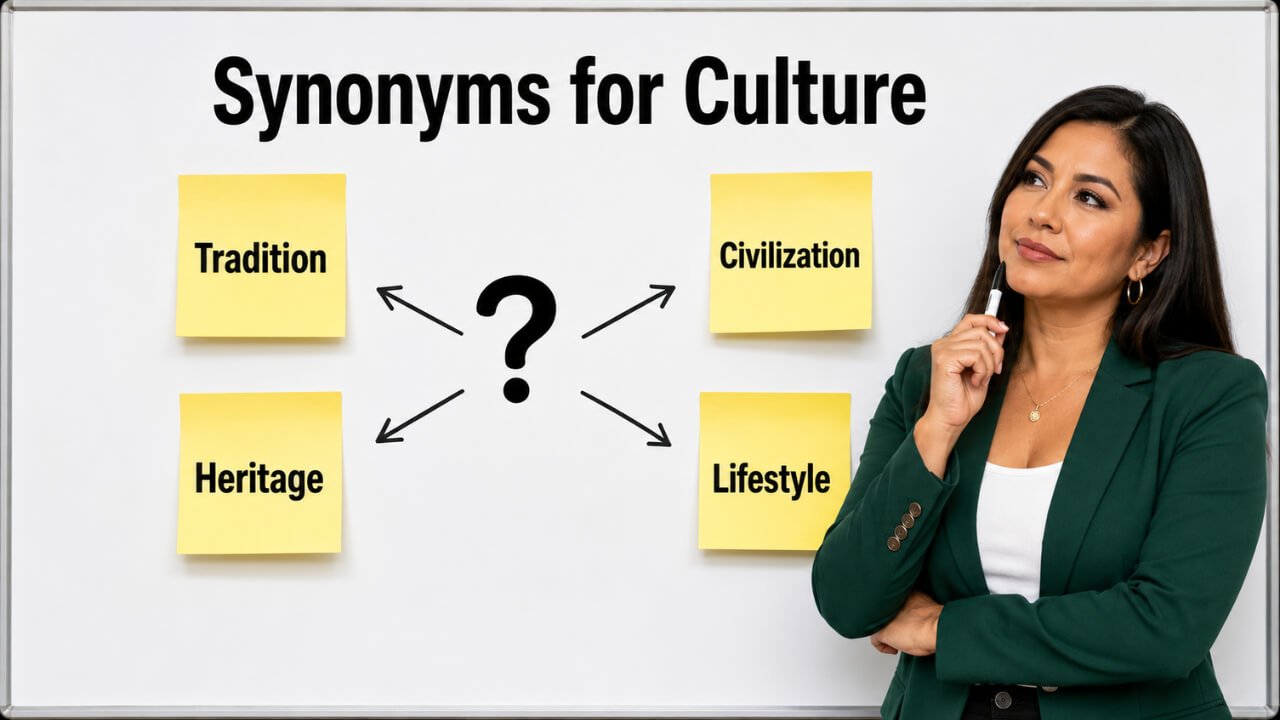
Quick Answer: The best synonyms for culture include civilization, society, heritage, tradition, customs, values, way of life, lifestyle, refinement, and arts. For synonyms for culture in formal writing, civilization, society, heritage, and values often work best. In casual speech, way of life, customs, and lifestyle sound more natural. Use tradition when focusing on long held practices, heritage when discussing inherited identity, refinement when culture means education or good taste, and arts when culture refers to creative expression.
Pronunciation and Word Details
Word: Culture
Pronunciation: /ˈkʌl.tʃər/
Part of Speech: Noun
Meaning: Culture means the beliefs, customs, values, arts, habits, and way of life shared by a group of people.
US Pronunciation:
UK Pronunciation:
What Does “Culture” Mean?
Culture means the shared way of life, beliefs, customs, values, language, behavior, art, and traditions of a group. It is mainly used as a noun. Culture can describe a country, community, workplace, family, school, social group, or historical period. In another sense, culture can mean refinement, education, taste, or interest in art, music, literature, and learning. In science, culture can also mean the growth of cells or bacteria, but in vocabulary and grammar writing, it usually refers to people, identity, behavior, and society.
Meaning, Tone, and Context of “Culture”
Culture is a neutral and flexible word. It can sound formal in academic, historical, social, and business writing, but it is also common in everyday conversation. The word can feel emotional when it refers to identity, heritage, belonging, family values, or traditions. It can sound professional when used in phrases like company culture, school culture, or workplace culture. It can also sound artistic when used for music, literature, museums, performance, and creative life. Because culture has several meanings, the best synonym depends on whether you mean society, customs, values, heritage, behavior, or the arts.
When and How to Use “Culture”
For Shared Beliefs and Values: Use culture when describing the ideas, morals, and standards that guide a group.
Example: The school promotes a culture of respect and responsibility.
For Traditions and Customs: Use culture when discussing practices passed from one generation to another.
Example: Food plays an important role in local culture.
For Society and Community: Use culture when talking about the behavior, lifestyle, and identity of a group.
Example: Every community has a culture shaped by history and daily life.
For Workplace Behavior: Use culture when describing the habits, expectations, and values inside an organization.
Example: A healthy work culture encourages trust and teamwork.
For Art and Learning: Use culture when referring to art, music, literature, education, and refined taste.
Example: The city is known for its rich culture and creative energy.
For Identity and Heritage: Use culture when describing what connects people to their background.
Example: Many families protect their culture through language and tradition.
Best Synonyms for Culture
Civilization: The organized life, development, and achievements of a society.
Example: Ancient civilization shaped many ideas still studied today.
Society: A group of people living together with shared systems, rules, and relationships.
Example: Society changes when values, technology, and habits change.
Heritage: Traditions, history, and values passed down from the past.
Example: She takes pride in her family heritage.
Tradition: A custom, belief, or practice passed through generations.
Example: Storytelling is an important tradition in many communities.
Customs: Common practices or habits followed by a group.
Example: Wedding customs vary from place to place.
Values: Beliefs about what is important, right, or acceptable.
Example: The company’s values shaped its work culture.
Way of Life: The usual habits, beliefs, and daily practices of a person or group.
Example: Farming was once the main way of life in the village.
Lifestyle: A person’s or group’s pattern of living, habits, and choices.
Example: Urban lifestyle often differs from rural living.
Refinement: Good taste, education, manners, and cultural awareness.
Example: Her speech showed refinement and confidence.
Arts: Creative activities such as music, painting, dance, literature, and performance.
Example: The festival celebrates local arts and culture.
50 Synonyms for Culture with Short Meanings
- Civilization: Organized social life and development.
- Society: People living together with shared systems and rules.
- Heritage: Inherited traditions, history, and identity.
- Tradition: Long established belief or practice.
- Customs: Shared habits and accepted practices.
- Values: Beliefs about what is important or right.
- Way of Life: Usual pattern of living.
- Lifestyle: Daily habits, choices, and living style.
- Ethos: Guiding spirit, values, or character of a group.
- Identity: The qualities that make a group or person distinct.
- Background: Social, family, historical, or cultural origin.
- Roots: Deep origins, ancestry, or cultural foundation.
- Heritage Identity: Sense of belonging linked to inherited culture.
- Social Life: Ways people interact and live together.
- Community Life: Shared life within a group or local area.
- Social Customs: Accepted practices within a society.
- Cultural Practices: Activities connected to a group’s traditions.
- Beliefs: Ideas accepted as true or meaningful.
- Principles: Basic rules or moral standards.
- Norms: Expected behavior in a group.
- Manners: Accepted polite behavior.
- Etiquette: Formal rules of polite conduct.
- Habits: Repeated ways of acting or living.
- Practices: Regular actions or customs.
- Rituals: Formal or repeated traditional acts.
- Ceremonies: Formal cultural or social events.
- Folklore: Traditional stories, songs, and beliefs.
- Lore: Shared traditional knowledge or stories.
- Legacy: Something handed down from the past.
- Ancestry: Family or group origin.
- Lineage: Direct family or historical descent.
- Upbringing: The way someone is raised.
- Environment: Surrounding social or living conditions.
- Milieu: Social setting or cultural environment.
- Social Setting: The environment in which people live and interact.
- Climate: General mood, attitude, or atmosphere.
- Atmosphere: Feeling or character of a place or group.
- Spirit: General character, mood, or attitude.
- Character: Distinct qualities of a group or place.
- Outlook: General attitude or way of seeing life.
- Mindset: Common way of thinking.
- Worldview: Broad way of understanding life and society.
- Refinement: Good taste, education, and manners.
- Sophistication: Advanced taste, knowledge, or social polish.
- Education: Learning and intellectual development.
- Taste: Judgment in art, style, or beauty.
- The Arts: Creative fields such as music, literature, and painting.
- Creative Life: Artistic activity and expression in a group.
- Intellectual Life: Ideas, learning, and thoughtful activity.
- Social Fabric: Connected relationships, values, and customs in society.
Read Also:
Synonyms for You

Synonyms for Culture by Context
When Culture Means Society
When culture means a large group’s social life, history, and development, strong synonyms include civilization, society, social order, community life, and social fabric.
Example: Culture changes as people create new habits and values.
Better Option: Society changes as people create new habits and values.
Example: The culture of ancient cities shaped law and education.
Better Option: The civilization of ancient cities shaped law and education.
When Culture Means Traditions
When culture means customs passed through generations, use tradition, heritage, customs, rituals, folklore, legacy, and roots.
Example: The festival is part of local culture.
Better Option: The festival is part of local tradition.
Example: Music helped preserve their culture.
Better Option: Music helped preserve their heritage.
When Culture Means Values and Beliefs
When culture means the ideas that guide behavior, use values, beliefs, principles, norms, ethos, mindset, and worldview.
Example: The organization has a culture of honesty.
Better Option: The organization has values of honesty.
Example: Their culture encourages respect for elders.
Better Option: Their norms encourage respect for elders.
When Culture Means Way of Life
When culture means daily living, use way of life, lifestyle, habits, practices, community life, and social customs.
Example: Their culture includes simple food, close families, and shared work.
Better Option: Their way of life includes simple food, close families, and shared work.
Example: City culture can feel fast and busy.
Better Option: City lifestyle can feel fast and busy.
When Culture Means Workplace Environment
When culture means behavior inside a workplace or group, use environment, climate, atmosphere, ethos, values, mindset, and social setting.
Example: The company culture supports open communication.
Better Option: The company environment supports open communication.
Example: A positive culture can improve teamwork.
Better Option: A positive climate can improve teamwork.
When Culture Means Art and Refinement
When culture means creative expression, education, or good taste, use arts, refinement, sophistication, education, taste, creative life, and intellectual life.
Example: The museum celebrates culture from different periods.
Better Option: The museum celebrates the arts from different periods.
Example: He gained culture through travel and reading.
Better Option: He gained refinement through travel and reading.
Another Word for Culture
Another word for culture is society when you mean the shared life, customs, values, and behavior of a group. However, the best alternative depends on context. Use heritage for inherited identity, tradition for long held practices, values for guiding beliefs, lifestyle for daily habits, and arts for creative expression.
Original: The town has a rich culture.
Better Option: The town has a rich heritage.
Original: Culture shapes how people communicate.
Better Option: Society shapes how people communicate.
Original: The company wants to improve its culture.
Better Option: The company wants to improve its work environment.
Original: Food is an important part of culture.
Better Option: Food is an important part of tradition.
When Not to Use “Culture”
Do not use culture when the meaning is too broad or unclear. The word can sound vague if readers do not know whether you mean customs, values, society, art, or workplace behavior. In formal writing, choose a more exact synonym when precision matters. Use tradition for repeated practices, heritage for inherited background, values for beliefs, environment for workplace mood, and arts for creative work.
Weak: The report discusses culture in the office.
Better: The report discusses the workplace environment in the office.
Weak: Their culture is different.
Better: Their customs and values are different.
Weak: The city offers a lot of culture.
Better: The city offers museums, music, theater, and local arts.
Weak: Culture caused the decision.
Better: Shared values influenced the decision.
Words Commonly Confused With Culture
Culture vs Society: Culture means shared customs, values, beliefs, and ways of life. Society means the organized group of people who live together and interact.
Culture vs Heritage: Culture can describe present and past ways of life. Heritage focuses more on traditions, history, and identity passed down from earlier generations.
Culture vs Tradition: Culture is broader. Tradition is one part of culture and usually means a repeated practice or belief passed down over time.
Culture vs Customs: Culture includes values, beliefs, language, arts, and lifestyle. Customs are specific actions or practices followed by a group.
Culture vs Values: Culture includes many parts of group life. Values are the beliefs inside culture that show what a group considers important.
Culture vs Lifestyle: Culture is shared by a group and can include history and identity. Lifestyle focuses more on daily habits and personal or group choices.
Culture vs Civilization: Culture describes beliefs, customs, and expression. Civilization often refers to a developed society with organized systems, cities, laws, and institutions.
Culture vs Refinement: Culture can mean a group’s way of life. Refinement means good taste, manners, education, or polished behavior.
Which Synonym Should You Choose?
Choose civilization when writing about historical development, organized societies, cities, law, and large social progress.
Choose society when writing about people living together, social systems, behavior, and public life.
Choose heritage when writing about identity, ancestry, inherited traditions, and connection to the past.
Choose tradition when writing about practices, celebrations, customs, and beliefs passed through generations.
Choose customs when writing about specific habits, manners, ceremonies, or accepted social practices.
Choose values when writing about moral beliefs, priorities, and principles that guide behavior.
Choose way of life when writing in simple, clear language about how people live.
Choose lifestyle when writing about daily choices, habits, fashion, food, work, or living patterns.
Choose ethos when writing formally about the guiding spirit or character of a group.
Choose environment when writing about workplace culture, school culture, or group atmosphere.
Choose refinement when culture means education, manners, polish, or good taste.
Choose arts when culture means music, painting, literature, dance, theater, and creative expression.
Real Life Examples of “Culture” in Sentences
Original: The city is famous for its culture.
Better Option: The city is famous for its arts and heritage.
Original: Family culture affects how children learn respect.
Better Option: Family values affect how children learn respect.
Original: The company has a strong culture of teamwork.
Better Option: The company has a strong environment of teamwork.
Original: Many people protect their culture through language.
Better Option: Many people protect their heritage through language.
Original: Culture influences food, clothing, and celebrations.
Better Option: Tradition influences food, clothing, and celebrations.
Original: The school culture encourages curiosity.
Better Option: The school ethos encourages curiosity.
Original: Travel helps people understand other cultures.
Better Option: Travel helps people understand other ways of life.
Original: Culture can change from one generation to the next.
Better Option: Social customs can change from one generation to the next.
Original: He enjoys culture, especially music and literature.
Better Option: He enjoys the arts, especially music and literature.
Original: Rural culture is often different from city culture.
Better Option: Rural lifestyle is often different from city lifestyle.
Synonym Groups and Usage Differences
Society Group
This group includes society, civilization, community life, social order, and social fabric. Use these words when culture means organized human life, shared systems, and social relationships.
Example: Civilization develops through language, law, learning, and cooperation.
Heritage Group
This group includes heritage, roots, ancestry, lineage, legacy, and background. Use these words when culture means inherited identity, family history, or connection to the past.
Example: Her heritage influenced her music, food, and family traditions.
Tradition Group
This group includes tradition, customs, rituals, ceremonies, folklore, and lore. Use these words when culture means repeated practices, celebrations, and beliefs passed down over time.
Example: The ceremony reflects a tradition that has lasted for generations.
Values Group
This group includes values, beliefs, principles, norms, ethos, mindset, and worldview. Use these words when culture means the ideas that guide behavior and decisions.
Example: A community’s values often shape its laws and expectations.
Lifestyle Group
This group includes way of life, lifestyle, habits, practices, social customs, and community life. Use these words when culture means daily living and ordinary behavior.
Example: Their way of life depends on farming, family support, and seasonal work.
Environment Group
This group includes environment, climate, atmosphere, spirit, character, and social setting. Use these words when culture means the mood or behavior inside a group, school, office, or organization.
Example: A respectful atmosphere makes people feel safe to speak.
Arts Group
This group includes arts, creative life, intellectual life, refinement, sophistication, taste, and education. Use these words when culture means creativity, learning, artistic activity, or polished taste.
Example: The city’s creative life includes music, painting, dance, and poetry.
Antonyms of Culture
Antonyms of culture depend on the meaning. If culture means refinement, the opposite may be ignorance or crudeness. If culture means social order, the opposite may be disorder. If culture means shared customs, the opposite may be rootlessness or isolation.
Ignorance: Lack of knowledge, learning, or awareness.
Crudeness: Lack of polish, manners, or refinement.
Barbarism: Harsh, uncivilized, or brutal behavior.
Disorder: Lack of structure, order, or social organization.
Chaos: Complete confusion or lack of control.
Rootlessness: Lack of strong connection to heritage or place.
Isolation: Separation from a group or society.
Alienation: Feeling disconnected from people, values, or community.
Unrefinement: Lack of taste, polish, or educated behavior.
Neglect: Failure to preserve values, traditions, or learning.
Comparison: Culture vs Related Words
Culture vs Society
Culture refers to shared values, customs, beliefs, and ways of life. Society refers to the group of people and the systems they live within.
Example With Culture: Culture shapes how people greet one another.
Example With Society: Society creates rules for public behavior.
Culture vs Heritage
Culture can include present behavior, beliefs, language, food, arts, and customs. Heritage focuses on what is inherited from the past.
Example With Culture: Culture affects daily habits and communication.
Example With Heritage: Heritage connects families to their history and traditions.
Culture vs Tradition
Culture is the full pattern of group life. Tradition is a repeated practice or belief within that culture.
Example With Culture: Culture includes food, language, values, and art.
Example With Tradition: Tradition includes special meals served during family celebrations.
Culture vs Customs
Culture is broad and includes beliefs, values, arts, and lifestyle. Customs are specific accepted practices.
Example With Culture: Culture influences how communities live and think.
Example With Customs: Customs influence how people celebrate important events.
Culture vs Values
Culture includes visible and invisible parts of group life. Values are the beliefs about what matters most.
Example With Culture: Culture can shape clothing, speech, and manners.
Example With Values: Values can shape honesty, respect, and responsibility.
Culture vs Lifestyle
Culture is shared by a group and often connected to history and identity. Lifestyle is more about daily habits and choices.
Example With Culture: Culture teaches people what behavior is respectful.
Example With Lifestyle: Lifestyle affects food choices, exercise, and work routines.
Culture vs Civilization
Culture focuses on beliefs, customs, values, and expression. Civilization often suggests organized development, cities, institutions, law, and social structure.
Example With Culture: Culture is expressed through language, music, and festivals.
Example With Civilization: Civilization developed through farming, writing, trade, and government.
Culture vs Refinement
Culture can mean a group’s shared way of life. Refinement means polished manners, education, and good taste.
Example With Culture: Culture is learned through family, school, and community.
Example With Refinement: Refinement is shown through graceful speech and thoughtful behavior.
Common Phrases and Expressions With Culture
Company Culture: The values, habits, and behavior shared in a workplace.
Work Culture: The way people behave, communicate, and cooperate at work.
School Culture: The values, rules, and atmosphere of a school.
Popular Culture: Entertainment, ideas, trends, and habits widely enjoyed by people.
Local Culture: Customs, food, language, and traditions of a specific place.
Cultural Heritage: Traditions, history, and identity passed down from the past.
Cultural Values: Beliefs that guide the behavior of a group.
Cultural Identity: A person’s or group’s sense of belonging to a culture.
Cultural Differences: Differences in customs, values, behavior, or beliefs between groups.
Culture Shock: Confusion or discomfort when entering an unfamiliar culture.
Common Mistakes to Avoid
Avoid using culture when you really mean only tradition, values, arts, or lifestyle. Culture is broad, so it can become vague if the sentence does not explain the exact meaning. In essays, reports, and professional writing, use more specific words when possible. For example, workplace environment may be clearer than workplace culture if you are discussing office mood and behavior.
Do not treat culture as one simple thing. It can include language, beliefs, customs, food, clothing, music, religion, manners, education, family structure, and social habits. Also avoid overusing culture in every sentence. Mix in society, heritage, tradition, values, customs, environment, and arts when those words fit better. This makes writing clearer, more natural, and less repetitive.
Conclusion
Synonyms for culture should be chosen by meaning, not just by sound. Use society or civilization for group life, heritage for inherited identity, tradition and customs for repeated practices, values for beliefs, lifestyle or way of life for daily habits, environment for workplace or school behavior, and arts for creative expression. Culture is a useful word, but more specific synonyms often make your writing clearer, richer, and more accurate.
FAQs About Synonyms for Culture
What is the best synonym for culture?
The best synonym for culture is society when you mean shared social life. Use heritage, tradition, customs, values, or arts when you need a more specific meaning.
What is a formal synonym for culture?
Formal synonyms for culture include civilization, society, heritage, ethos, values, social fabric, and intellectual life. These words work well in essays and reports.
What is another word for culture in a workplace?
Another word for culture in a workplace is environment, climate, atmosphere, ethos, or work culture. Environment is often the clearest choice.
What is another word for culture in history?
Another word for culture in history is civilization, heritage, tradition, customs, or legacy. Civilization works well for large historical societies.
What is another word for cultural values?
Another word for cultural values is beliefs, principles, norms, ethos, or worldview. Use values when discussing what a group considers important.
Is heritage the same as culture?
Heritage is part of culture, but they are not exactly the same. Heritage focuses on what is inherited from the past, while culture can include present habits, values, arts, and daily life.
What is the opposite of culture?
The opposite of culture depends on meaning. If culture means refinement, the opposite may be ignorance or crudeness. If it means social order, the opposite may be chaos or disorder.
