
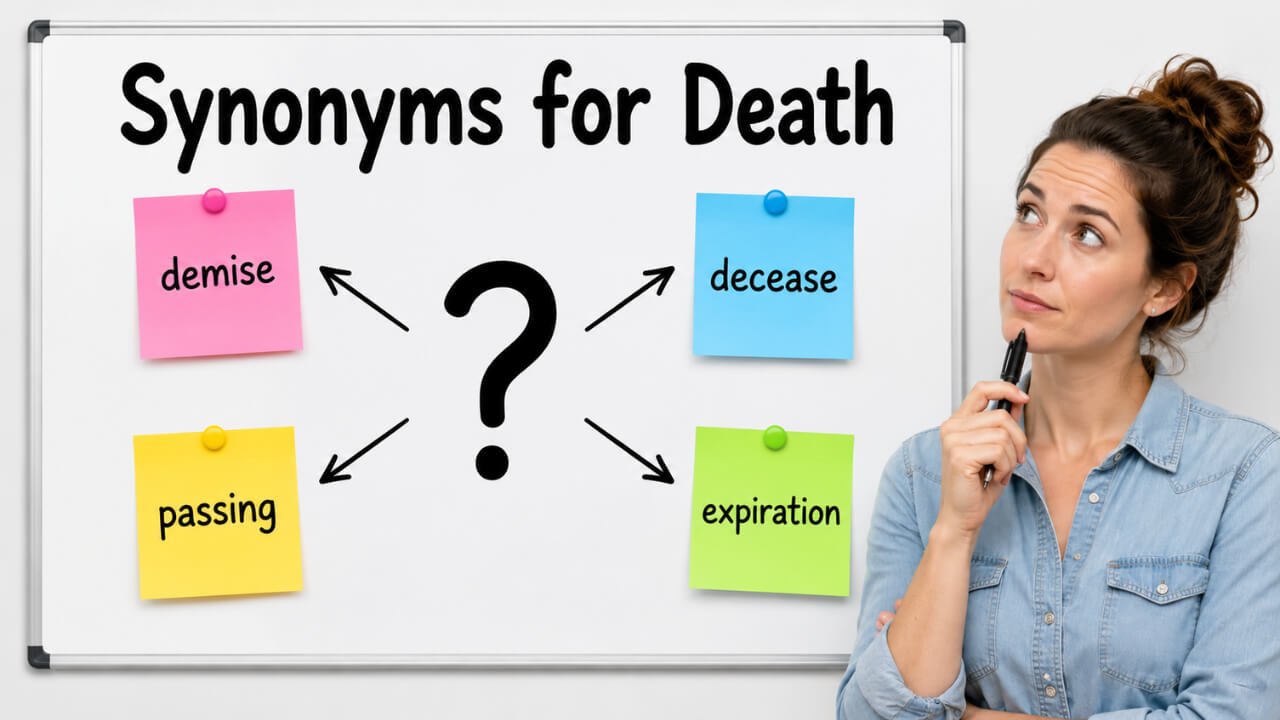
Quick Answer: Synonyms for death include passing, passing away, demise, decease, end, loss, fatality, expiration, departure, and end of life. Use passing or passing away for gentle and respectful speech, demise for formal writing, fatality for reports or accidents, loss for emotional contexts, and end of life for medical or sensitive situations. The best synonym depends on tone, respect, audience, and context.
Pronunciation and Word Details
Word: Death
Pronunciation: /dɛθ/
Part of Speech: Noun
Meaning: Death means the end of life or the state of no longer being alive.
US Pronunciation:
UK Pronunciation:
What Does “Death” Mean?
Death means the end of life. It is a noun used to describe the moment, condition, or fact of no longer being alive. The word can refer to a person, animal, plant, idea, system, habit, tradition, or period of time that has ended.
Death works in many sentence contexts. It can be used in medical writing, legal documents, news style reports, poetry, condolences, history, philosophy, and everyday conversation. Because the word can feel direct and emotional, softer alternatives are often used in sensitive situations.
Meaning, Tone, and Context of “Death”
Death is a serious, direct, and emotionally strong word. It is clear and accurate, but it can feel too blunt in personal messages, sympathy notes, or gentle conversations. In formal writing, death is acceptable because it is precise. In emotional writing, words like passing, passing away, loss, or departure may sound kinder.
The word is common in medical, legal, academic, religious, literary, and everyday contexts. In technical or official writing, death is often preferred for clarity. In condolences, softer synonyms help show respect and care.
When and How to Use “Death”
For Accuracy: Use death when you need a clear and direct word for the end of life.
Example: The report confirmed the death of the patient.
For Condolences: Use passing, passing away, or loss when you want a gentle and respectful tone.
Example: We are deeply sorry for your loss.
For Formal Writing: Use demise, decease, or death when the tone is official or serious.
Example: The document recorded the date of his decease.
For Medical Context: Use death or end of life when writing about health, care, or medical conditions.
Example: The family discussed end of life care with the doctor.
For Reports: Use fatality when referring to death caused by an accident, disaster, or serious event.
Example: The accident resulted in one fatality.
For Literature: Use departure, final rest, or eternal rest when the tone is poetic or reflective.
Example: The poem describes death as a peaceful departure.
Best Synonyms for Death
Passing: A gentle word for death.
Example: Her passing brought great sadness to the family.
Passing Away: A soft and respectful expression for dying.
Example: We were sorry to hear of his passing away.
Demise: A formal word for death or ending.
Example: The article discussed the sudden demise of the leader.
Decease: A formal or legal word for death.
Example: The record listed the date of decease.
End: The final point of life, time, or existence.
Example: The story reflects on the end of a long life.
Loss: A sensitive word that focuses on grief and absence.
Example: The family is mourning a painful loss.
Fatality: A death caused by an accident, disaster, or violent event.
Example: The storm caused several fatalities.
Expiration: A formal word for death or the ending of a period.
Example: The certificate noted the expiration of life.
Departure: A gentle or poetic word for leaving life.
Example: His departure left a deep silence in the home.
End of Life: A respectful phrase used in medical, emotional, or practical contexts.
Example: End of life care should be handled with compassion.
50 Synonyms for Death with Short Meanings
- Passing: A gentle word for death.
- Passing Away: A soft expression for dying.
- Demise: A formal word for death.
- Decease: A legal or formal word for death.
- End: The final point of life or existence.
- End of Life: The final stage or close of life.
- Loss: Death viewed through grief and absence.
- Fatality: A death from an accident or event.
- Expiration: A formal ending of life.
- Expiry: A formal or technical ending.
- Departure: A gentle or poetic leaving of life.
- Final Rest: A peaceful expression for death.
- Eternal Rest: A religious or poetic expression for death.
- Last Breath: The final moment of life.
- Life’s End: The closing point of life.
- Loss of Life: A formal phrase for death.
- Fatal Outcome: A result that ends in death.
- Mortal End: A literary expression for death.
- Quietus: A literary word for final death or release.
- The End: A simple phrase for finality or death.
- Cessation: The stopping of life or activity.
- Termination: The ending of life, process, or condition.
- Extinction: The death or disappearance of a species or group.
- Mortality: The condition of being subject to death.
- Perishing: Dying, often from danger or hardship.
- Downfall: A final collapse or ending.
- Collapse: A complete failure or ending.
- Ruin: The destruction or end of something.
- Destruction: The act or result of being ended.
- Annihilation: Complete destruction or ending.
- Oblivion: A poetic state of being forgotten or ended.
- The Grave: A figurative phrase for death.
- Final Departure: A respectful phrase for death.
- Final Exit: A strong phrase for the end of life.
- Last Journey: A poetic expression for death.
- Eternal Sleep: A gentle poetic phrase for death.
- Permanent Sleep: A soft figurative phrase for death.
- Rest: A gentle word suggesting peaceful death.
- Peaceful Rest: A comforting phrase for death.
- End Point: The final stage or limit.
- Close: The ending of a life or period.
- Conclusion: The final part or ending.
- Final Chapter: A literary phrase for life’s end.
- Final Hour: The last period before death.
- Final Moment: The last moment of life.
- Last Day: A phrase for the day of death.
- Life Closure: A respectful phrase for the end of life.
- Biological End: A technical phrase for death.
- Clinical Death: A medical phrase for death based on vital signs.
- Physical Death: The end of bodily life.
Read Also:
Synonyms for Uses

Synonyms for Death by Context
When Death Means a Gentle Passing
Use these words when you want a softer, kinder, and more respectful tone.
Passing: Her passing was felt deeply by everyone.
Passing Away: The family announced his passing away with sadness.
Loss: We are sorry for your loss.
Departure: Her departure left a quiet space in our hearts.
Final Rest: They spoke of his final rest with peace.
When Death Means a Formal Event
Use these words when writing in serious, official, academic, or legal contexts.
Demise: The document recorded the leader’s demise.
Decease: The form requested the date of decease.
Expiration: The report referred to the expiration of life.
Loss of Life: The incident caused a tragic loss of life.
Fatality: The crash resulted in one fatality.
When Death Means a Medical Reality
Use these words when writing about health, treatment, care, or medical facts.
Death: The doctor confirmed the death.
End of Life: The family discussed end of life care.
Clinical Death: Clinical death refers to the stopping of vital functions.
Physical Death: Physical death marks the end of bodily life.
Biological End: The phrase describes the final biological state of life.
When Death Means an Ending
Use these words when death is used figuratively for the end of a thing, habit, idea, or period.
End: The scandal marked the end of his career.
Cessation: The closure caused the cessation of operations.
Termination: The agreement reached its termination.
Collapse: The system faced complete collapse.
Downfall: Poor decisions led to the downfall of the project.
When Death Means Destruction
Use these words when death means complete ruin, disappearance, or destruction.
Destruction: The fire caused the destruction of the old building.
Annihilation: The war brought near annihilation to the region.
Extinction: Habitat loss can lead to extinction.
Ruin: Neglect led to the ruin of the garden.
Oblivion: The tradition slowly faded into oblivion.
When Death Means a Poetic or Spiritual Idea
Use these words when writing poetry, sympathy messages, reflection, or spiritual content.
Eternal Rest: May he find eternal rest.
Last Journey: The poem describes death as the last journey.
Eternal Sleep: The phrase eternal sleep gives death a peaceful tone.
Final Chapter: Her final chapter was filled with dignity.
The Grave: The story reflects on life beyond the grave.
Another Word for Death
Another word for death is passing when you want a gentle and respectful replacement. However, the best alternative depends on context. Use demise for formal writing, fatality for reports, loss for condolences, and end of life for medical or sensitive situations.
Original: We were saddened by his death.
Better Option: We were saddened by his passing.
Original: The accident caused two deaths.
Better Option: The accident caused two fatalities.
Original: The family is grieving her death.
Better Option: The family is grieving her loss.
Original: The article discussed death care decisions.
Better Option: The article discussed end of life care decisions.
When Not to Use “Death”
Do not use death when the sentence needs a softer, more sensitive, or more personal tone. In sympathy notes, passing, loss, or passing away often sounds kinder. In formal reports about accidents, fatality may be more precise. In medical or caregiving contexts, end of life may sound more respectful and specific.
Weak: I am sorry about your father’s death.
Better: I am sorry for the loss of your father.
Weak: The accident caused three deaths.
Better: The accident caused three fatalities.
Weak: The hospital discussed death care.
Better: The hospital discussed end of life care.
Weak: The death of the tradition happened slowly.
Better: The decline of the tradition happened slowly.
Weak: His death from the company shocked everyone.
Better: His departure from the company shocked everyone.
Words Commonly Confused With Death
Death vs Dying: Death is the end state of life, while dying is the process of approaching death.
Death vs Passing: Death is direct and factual, while passing is softer and more comforting.
Death vs Demise: Death is common and direct, while demise is more formal and sometimes used for people, systems, or institutions.
Death vs Fatality: Death is general, while fatality usually means a death caused by an accident, disaster, or violent event.
Death vs Loss: Death names the fact, while loss focuses on grief, absence, and emotional impact.
Death vs End: Death refers to life ending, while end can refer to any conclusion, including a story, period, habit, or relationship.
Death vs Extinction: Death often refers to an individual, while extinction refers to the disappearance of an entire species, group, or type.
Which Synonym Should You Choose?
Choose passing when writing a gentle condolence or respectful message.
Choose passing away when you want a soft, familiar, and compassionate expression.
Choose demise when writing in a formal, historical, or serious style.
Choose decease when writing in legal, official, or record based contexts.
Choose fatality when writing about accidents, disasters, reports, or tragic events.
Choose loss when focusing on grief, sympathy, or emotional absence.
Choose end of life when writing about medical care, aging, planning, or sensitive decisions.
Choose expiration when the tone is formal, technical, or old fashioned.
Choose departure when writing in a poetic, reflective, or gentle tone.
Choose extinction when writing about the end of a species, group, language, or tradition.
Real Life Examples of “Death” in Sentences
Original: Her death brought sadness to the whole town.
Better Option: Her passing brought sadness to the whole town.
Original: The family announced his death yesterday.
Better Option: The family announced his passing away yesterday.
Original: The crash caused one death.
Better Option: The crash caused one fatality.
Original: We are sorry about your mother’s death.
Better Option: We are sorry for the loss of your mother.
Original: The document records the death of the owner.
Better Option: The document records the decease of the owner.
Original: The article describes the death of the empire.
Better Option: The article describes the demise of the empire.
Original: The illness led to death.
Better Option: The illness led to a fatal outcome.
Original: The family prepared for death care.
Better Option: The family prepared for end of life care.
Original: The poem speaks about death in a peaceful way.
Better Option: The poem speaks about eternal rest in a peaceful way.
Original: The death of the old rule changed everything.
Better Option: The end of the old rule changed everything.
Synonym Groups and Usage Differences
Gentle Sympathy Group
Passing, passing away, loss, departure, and final rest belong to the gentle sympathy group. Use them when writing condolences, sympathy messages, or respectful personal notes.
Example: We are deeply sorry for your loss.
Formal Writing Group
Demise, decease, expiration, loss of life, and fatality belong to the formal writing group. Use them in reports, records, articles, and serious documents.
Example: The report confirmed one fatality.
Medical Context Group
Death, end of life, clinical death, physical death, and biological end belong to the medical context group. Use them when accuracy, care, and clear meaning are important.
Example: End of life support should be handled with compassion.
Figurative Ending Group
End, conclusion, close, termination, and cessation belong to the figurative ending group. Use them when death means the ending of a plan, period, custom, or relationship.
Example: The decision marked the conclusion of the long debate.
Destruction Group
Destruction, annihilation, extinction, ruin, and collapse belong to the destruction group. Use them when death means complete damage, disappearance, or failure.
Example: The fire caused the destruction of the old records.
Literary and Spiritual Group
Eternal rest, eternal sleep, last journey, final chapter, and the grave belong to the literary and spiritual group. Use them in reflective, poetic, or religious style writing.
Example: The writer described death as a final journey.
Antonyms of Death
Life: The state of being alive.
Birth: The beginning of life.
Living: The condition of being alive.
Existence: The state of being real or alive.
Survival: Continuing to live after danger or difficulty.
Recovery: Returning to health after illness or injury.
Revival: A return to life, strength, or activity.
Renewal: A fresh beginning or restoration.
Growth: Development, increase, or continued life.
Continuation: The act of going on without ending.
Vitality: Energy, liveliness, and strength.
Immortality: The state of living forever or not being subject to death.
Comparison: Death vs Related Words
Death vs Passing
Death is direct and factual. Passing is softer, gentler, and more common in sympathy messages.
Example With Death: The family confirmed his death.
Example With Passing: The family confirmed his passing.
Death vs Demise
Death is the common word for the end of life. Demise is more formal and can also describe the fall or ending of a system, leader, or institution.
Example With Death: The story describes the king’s death.
Example With Demise: The story describes the king’s demise.
Death vs Fatality
Death can refer to any end of life. Fatality usually refers to a death caused by an accident, disaster, or serious event.
Example With Death: The illness caused his death.
Example With Fatality: The accident caused one fatality.
Death vs Loss
Death names the fact that life has ended. Loss focuses on grief, absence, and emotional pain.
Example With Death: Her death shocked the community.
Example With Loss: Her loss was deeply felt by the community.
Death vs End
Death specifically means life has ended. End can describe the conclusion of anything, including life, time, a process, or a relationship.
Example With Death: The doctor confirmed death.
Example With End: The announcement marked the end of an era.
Death vs Extinction
Death usually refers to an individual life. Extinction means the complete disappearance of a species, group, language, or type.
Example With Death: The animal’s death saddened the caretakers.
Example With Extinction: The species faced extinction.
Common Phrases and Expressions With Death
Cause of Death: The reason a person or animal died.
Time of Death: The recorded time when death occurred.
Death Certificate: An official record of death.
Death Notice: A public announcement of someone’s death.
Death Rate: The number of deaths in a group or period.
Death Toll: The number of people who died in an event.
Near Death: Very close to dying.
Sudden Death: An unexpected death.
Death Bed: The place where someone is near death.
Death Sentence: A punishment involving execution or a figurative phrase for certain failure.
Common Mistakes to Avoid
A common mistake is using death when the sentence needs a gentler word. In condolence writing, loss, passing, or passing away is often more thoughtful. Another mistake is using fatality for every death. Fatality works best for accidents, disasters, and serious events.
Avoid using poetic phrases like eternal sleep or final journey in formal records because they may sound unclear. Also avoid using casual or joking expressions for death in sensitive writing. The safest choice is the word that matches the tone, audience, and purpose.
Conclusion
Synonyms for death help writers choose words that are clear, respectful, and suitable for the situation. Use death for direct accuracy, passing or passing away for gentle speech, demise for formal writing, fatality for reports, loss for grief, and end of life for medical or sensitive contexts. Because death is an emotional word, tone matters. A thoughtful synonym can make your writing more precise, compassionate, and appropriate for readers.
FAQs About Synonyms for Death
What are the best synonyms for death?
The best synonyms for death are passing, passing away, demise, decease, loss, fatality, departure, expiration, end, and end of life.
What is a gentle synonym for death?
A gentle synonym for death is passing. Passing away and loss are also respectful choices for sympathy messages.
What is a formal synonym for death?
Formal synonyms for death include demise, decease, fatality, expiration, and loss of life.
What is another word for death in condolences?
In condolences, use passing, passing away, or loss. These words sound softer and more compassionate than death.
What is the difference between death and fatality?
Death is a general word for the end of life. Fatality usually means a death caused by an accident, disaster, or serious event.
Can death be used figuratively?
Yes. Death can be used figuratively to mean the end of an idea, tradition, period, relationship, system, or habit.
What is the opposite of death?
The opposite of death is life. Other antonyms include birth, living, existence, survival, recovery, renewal, and vitality.
