
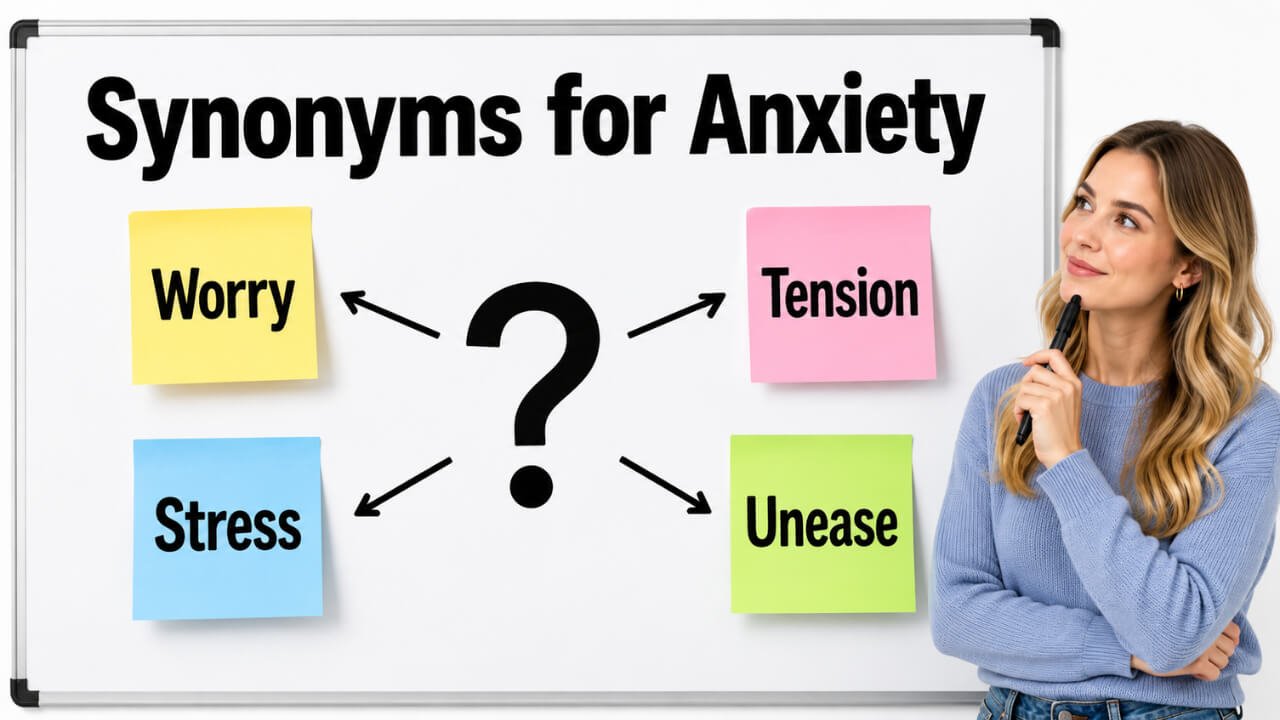
Quick Answer: The best synonyms for anxiety include worry, unease, nervousness, apprehension, fear, dread, tension, distress, restlessness, and concern. Use worry for everyday problems, unease for a mild uncomfortable feeling, nervousness before an event, and apprehension for formal or serious uncertainty. Dread describes strong fear about something expected, while tension fits pressure filled situations. In formal writing, apprehension, distress, unease, and trepidation often work well. In casual speech, worry, nerves, jitters, and concern sound more natural.
Pronunciation and Word Details
Word: Anxiety.
Pronunciation: /æŋˈzaɪ.ə.ti/
Part of Speech: Noun.
Meaning: A feeling of worry, nervousness, or unease about an uncertain event, possible problem, or expected outcome.
US Pronunciation:
UK Pronunciation:
What Does “Anxiety” Mean?
Anxiety means a feeling of worry, nervousness, fear, or unease about something that may happen. It is a noun used to describe an emotional state connected with uncertainty, pressure, danger, change, or expectation.
The word can describe mild concern before an ordinary event or a much stronger feeling of emotional distress. Someone may experience anxiety before an examination, interview, journey, difficult conversation, important decision, or uncertain result.
Anxiety can be used as an uncountable noun when referring to the general feeling.
Example: She felt anxiety before speaking to the audience.
It can also appear in the plural form, anxieties, when referring to several separate worries or concerns.
Example: Financial and family anxieties made it difficult for him to relax.
The word often appears with prepositions such as about, over, and regarding.
Example: There was growing anxiety about the approaching deadline.
Meaning, Tone, and Context of “Anxiety”
Anxiety has a neutral to serious emotional tone. It is stronger than simple concern but does not always suggest extreme fear. The exact strength depends on the situation and the surrounding words.
In everyday conversation, anxiety may describe nervous feelings about work, travel, relationships, money, studies, or future plans. In these situations, worry or nervousness may sound more natural.
In formal, academic, or professional writing, anxiety can describe public concern, emotional pressure, uncertainty, or fear connected with a particular event.
Formal Example: Economic uncertainty created anxiety among local residents.
Conversational Example: I felt a lot of anxiety before the interview.
The word can sound emotional when it refers to personal distress. It can sound analytical when used to describe a general response to uncertainty or risk.
Emotional Context: Her anxiety grew as she waited for the result.
Analytical Context: The sudden changes caused widespread anxiety within the community.
Anxiety is generally more serious than curiosity or anticipation. However, it may overlap with nervous excitement when a person is waiting for an important event.
When and How to Use “Anxiety”
For Future Uncertainty
Use: Anxiety is useful when someone feels worried about an outcome that has not yet been decided.
Example: His anxiety increased while he waited for the final decision.
For Important Events
Use: The word can describe nervousness before an examination, presentation, interview, journey, or major conversation.
Example: She experienced anxiety before giving her first public speech.
For Personal Concerns
Use: Anxiety can express emotional worry about relationships, responsibilities, money, family matters, or personal choices.
Example: Financial anxiety prevented him from enjoying the weekend.
For Pressure and Expectations
Use: The word fits situations in which high expectations create tension or nervousness.
Example: Performance anxiety affected her confidence during the competition.
For Public Concern
Use: Anxiety can describe the shared worry of a group, community, or population.
Example: The unexpected announcement caused public anxiety.
For Formal Writing
Use: Anxiety works well in reports, essays, and serious discussions about uncertainty, fear, or emotional pressure.
Example: The report examined anxiety surrounding sudden workplace changes.
For Nervous Anticipation
Use: Anxiety may describe an uncomfortable feeling while waiting for something important to happen.
Example: He watched the clock with growing anxiety.
Best Synonyms for Anxiety
1. Worry
Synonym: A troubled feeling about a possible problem or negative outcome.
Example: Her worry disappeared when she received the good news.
2. Unease
Synonym: A mild feeling of discomfort, uncertainty, or concern.
Example: He felt a sense of unease as he entered the unfamiliar building.
3. Nervousness
Synonym: An unsettled feeling before a difficult, unfamiliar, or important event.
Example: Her nervousness was obvious before the interview began.
4. Apprehension
Synonym: Worry or fear that something unpleasant may happen.
Example: The passengers viewed the approaching storm with apprehension.
5. Concern
Synonym: A feeling of interest or worry about a problem, person, or situation.
Example: His main concern was the safety of the children.
6. Dread
Synonym: Strong fear about something unpleasant that is expected to happen.
Example: She felt dread whenever she thought about the difficult meeting.
7. Tension
Synonym: Mental or emotional strain caused by pressure, conflict, or uncertainty.
Example: Tension filled the room as everyone waited for the announcement.
8. Distress
Synonym: Strong emotional suffering, worry, or discomfort.
Example: The unexpected news caused considerable distress.
9. Trepidation
Synonym: Serious nervousness or fear about something that may happen.
Example: He opened the letter with considerable trepidation.
10. Restlessness
Synonym: An inability to remain calm, relaxed, or still because of worry.
Example: Her restlessness increased as the departure time approached.
50 Synonyms for Anxiety with Short Meanings
- Worry: A troubled feeling about a possible problem.
- Concern: Uneasiness about a person, event, or situation.
- Unease: Mild discomfort or uncertainty.
- Nervousness: An unsettled feeling before an important event.
- Apprehension: Fear that something unpleasant may happen.
- Fear: An emotional response to danger or possible harm.
- Dread: Strong fear about an expected event.
- Tension: Mental pressure or emotional strain.
- Distress: Strong emotional discomfort or suffering.
- Agitation: A disturbed state that makes calmness difficult.
- Restlessness: Difficulty relaxing because of worry or nervous energy.
- Disquiet: A feeling of worry that disturbs peace of mind.
- Alarm: Sudden fear caused by possible danger.
- Panic: Intense and rapidly rising fear.
- Trepidation: Serious nervousness about a future event.
- Foreboding: A feeling that something unpleasant may happen.
- Uncertainty: Lack of confidence about what will happen.
- Insecurity: A lack of confidence, safety, or emotional stability.
- Stress: Mental or emotional pressure caused by demands.
- Strain: Pressure that makes coping or relaxing difficult.
- Edginess: A tense and easily disturbed emotional state.
- Jitters: Informal nervousness before an event.
- Butterflies: A nervous feeling in the stomach.
- Misgiving: A doubtful feeling about a decision or event.
- Uneasiness: A state of discomfort or mild worry.
- Anxiousness: The condition of feeling worried or nervous.
- Perturbation: Formal emotional disturbance or worry.
- Discomposure: Loss of calmness or emotional control.
- Discomfort: An unpleasant physical or emotional feeling.
- Upset: Emotional disturbance caused by a problem or event.
- Turmoil: Severe emotional confusion or disturbance.
- Anguish: Intense emotional pain or distress.
- Angst: Deep worry about life, identity, or the future.
- Fretfulness: A tendency to worry or become easily troubled.
- Wariness: Cautious concern about possible danger or trouble.
- Vigilance: Alert attention caused by possible risk.
- Hypervigilance: Extreme alertness to possible threats.
- Anticipation: Expectation that may include nervousness or concern.
- Dismay: Distress caused by an unexpected problem.
- Fright: Sudden fear or alarm.
- Terror: Extreme fear.
- Consternation: Sudden anxiety caused by an unexpected difficulty.
- Preoccupation: Continuous attention to a troubling thought.
- Rumination: Repeated thinking about worries or negative possibilities.
- Nervous Anticipation: Uneasy excitement about an approaching event.
- Mental Strain: Psychological pressure that makes relaxation difficult.
- Emotional Distress: Strong emotional suffering or discomfort.
- Inner Tension: A private feeling of pressure or uneasiness.
- Fearful Expectation: Concern that an unpleasant event may occur.
- Sense of Danger: A feeling that a threat or problem may be near.
Read Also:
Synonyms for Walked
Synonyms for Anxiety by Context
When Anxiety Means General Worry
Worry, concern, unease, and uneasiness are useful when anxiety refers to ordinary problems or uncertain outcomes.
Worry: Best for everyday personal concerns.
Example: Her worry about the delayed payment kept her awake.
Concern: Best when the feeling is serious but controlled.
Example: The missing information became a growing concern.
Unease: Best for a mild feeling that something is wrong.
Example: He felt unease after hearing the unusual noise.
Uneasiness: Best for an uncomfortable feeling that is difficult to explain.
Example: A sense of uneasiness spread through the room.
When Anxiety Means Fear About the Future
Apprehension, dread, trepidation, foreboding, and fearful expectation describe worry about what may happen next.
Apprehension: Suitable for formal or serious uncertainty.
Example: She approached the meeting with apprehension.
Dread: Suitable when the expected event feels deeply unpleasant.
Example: He felt dread at the thought of delivering the bad news.
Trepidation: Suitable for serious nervousness before a difficult action.
Example: She entered the unfamiliar office with trepidation.
Foreboding: Suitable when someone senses that trouble may be coming.
Example: The darkening sky gave him a feeling of foreboding.
When Anxiety Means Nervous Excitement
Nervousness, jitters, butterflies, and nervous anticipation fit events that are important, exciting, or unfamiliar.
Nervousness: A general feeling before an important event.
Example: His nervousness faded once the presentation began.
Jitters: An informal word for temporary nerves.
Example: She had the jitters before stepping onto the stage.
Butterflies: An informal expression for nervous feelings in the stomach.
Example: He had butterflies before meeting the new team.
Nervous Anticipation: A mixture of expectation and worry.
Example: They waited in nervous anticipation for the winner to be announced.
When Anxiety Means Strong Emotional Distress
Distress, anguish, turmoil, panic, and consternation describe more intense emotional discomfort.
Distress: Strong worry or suffering caused by a difficult event.
Example: The sudden disappearance caused great distress.
Anguish: Deep emotional pain.
Example: She spoke with visible anguish about the loss.
Turmoil: Intense emotional confusion.
Example: He experienced inner turmoil while making the decision.
Panic: Sudden and overwhelming fear.
Example: A moment of panic spread through the crowd.
When Anxiety Means Pressure or Restlessness
Tension, agitation, stress, strain, edginess, and restlessness describe anxiety that affects calmness, focus, or behavior.
Tension: Pressure created by uncertainty or conflict.
Example: Tension rose as the deadline approached.
Agitation: Visible emotional disturbance.
Example: His agitation became noticeable during the discussion.
Stress: Pressure caused by demands or responsibilities.
Example: Work stress made it difficult for her to relax.
Restlessness: Difficulty remaining calm or still.
Example: Restlessness kept him moving around the room.
Another Word for Anxiety
The best general replacement for anxiety is worry because it is familiar, natural, and suitable for many everyday situations. However, the best alternative depends on the strength, cause, and context of the feeling.
Use nervousness before an event, apprehension for formal uncertainty, dread for strong expected fear, and unease for mild discomfort.
Original: She felt anxiety before the examination.
Better Option: She felt nervousness before the examination.
Original: There was anxiety about the future of the project.
Better Option: There was concern about the future of the project.
Original: He approached the abandoned building with anxiety.
Better Option: He approached the abandoned building with apprehension.
Original: She experienced anxiety whenever she imagined the difficult conversation.
Better Option: She experienced dread whenever she imagined the difficult conversation.
When Not to Use “Anxiety”
Do not use anxiety when a more precise word can explain the exact feeling. Anxiety is broad, so repeated use can make writing vague or emotionally flat.
Use fear when there is a clear and immediate danger. Use stress when pressure comes from responsibilities or heavy demands. Use nervousness for temporary feelings before an event. Use concern when the feeling is controlled and based on a specific issue.
Weak: She felt anxiety because the dog suddenly ran toward her.
Better: She felt fear because the dog suddenly ran toward her.
The better sentence identifies an immediate response to danger.
Weak: He had anxiety from completing several urgent tasks.
Better: He felt stress from completing several urgent tasks.
Stress fits pressure created by workload and responsibilities.
Weak: Her anxiety before introducing herself lasted only a few seconds.
Better: Her nervousness before introducing herself lasted only a few seconds.
Nervousness sounds more natural for temporary social discomfort.
Weak: The manager expressed anxiety about a minor spelling error.
Better: The manager expressed concern about a minor spelling error.
Concern matches a controlled reaction to a specific issue.
Avoid using anxiety repeatedly in the same paragraph when worry, unease, apprehension, or tension would add precision and variety.
Words Commonly Confused With Anxiety
Anxiety vs Worry: Worry usually involves repeated thoughts about a specific problem. Anxiety may include worry, physical tension, unease, and fear about something uncertain.
Anxiety vs Fear: Fear normally responds to a clear danger or threat. Anxiety often concerns something that may happen in the future.
Anxiety vs Stress: Stress usually comes from demands, pressure, or responsibilities. Anxiety is the emotional unease or fear that may continue even when the source of pressure is unclear.
Anxiety vs Nervousness: Nervousness is often temporary and connected with a specific event. Anxiety may be broader, stronger, or longer lasting.
Anxiety vs Apprehension: Apprehension is cautious fear about a future event. Anxiety is a wider term that can describe worry, tension, nervousness, or emotional distress.
Anxiety vs Panic: Anxiety may range from mild unease to serious worry. Panic describes sudden and intense fear.
Anxiety vs Dread: Anxiety can refer to general uncertainty. Dread suggests strong fear about something unpleasant that is expected.
Anxiety vs Depression: Anxiety mainly involves worry, fear, or unease. Depression refers to a different emotional state and should not be treated as a synonym for anxiety.
Which Synonym Should You Choose?
Choose worry for common personal problems, uncertain outcomes, and everyday conversation.
Choose concern when the feeling is serious, reasonable, and connected with a specific issue.
Choose unease when the feeling is mild or when someone senses that something is not right.
Choose nervousness before interviews, examinations, meetings, performances, or unfamiliar situations.
Choose apprehension in formal writing when someone fears a possible future event.
Choose dread when a person strongly fears an unpleasant event that is expected to happen.
Choose tension when pressure, disagreement, or uncertainty creates an uncomfortable atmosphere.
Choose distress when the emotion is strong and causes visible suffering.
Choose trepidation in essays, reports, or descriptive writing when serious nervousness is involved.
Choose jitters or butterflies in casual conversation when the feeling is temporary and connected with excitement.
Choose panic only when the fear is sudden and intense.
Choose stress when responsibilities, deadlines, or demands create mental pressure.
Choose foreboding when a person feels that trouble may be approaching.
Real Life Examples of “Anxiety” in Sentences
Original: Maria felt anxiety before meeting the interview panel.
Better Option: Maria felt nervousness before meeting the interview panel.
Original: His anxiety about the unpaid bill continued throughout the week.
Better Option: His worry about the unpaid bill continued throughout the week.
Original: The sudden silence filled her with anxiety.
Better Option: The sudden silence filled her with unease.
Original: They watched the approaching storm with anxiety.
Better Option: They watched the approaching storm with apprehension.
Original: The announcement created anxiety among the workers.
Better Option: The announcement created concern among the workers.
Original: She felt anxiety whenever she thought about the difficult appointment.
Better Option: She felt dread whenever she thought about the difficult appointment.
Original: Anxiety filled the room during the heated discussion.
Better Option: Tension filled the room during the heated discussion.
Original: His anxiety made it difficult for him to sit still.
Better Option: His restlessness made it difficult for him to sit still.
Original: The family experienced anxiety after receiving the unexpected message.
Better Option: The family experienced distress after receiving the unexpected message.
Original: He opened the examination results with anxiety.
Better Option: He opened the examination results with trepidation.
Synonym Groups and Usage Differences
General Worry Group
Worry, concern, unease, and uneasiness describe common feelings about problems or uncertain outcomes. Worry is the most natural everyday choice, while concern sounds calmer and more controlled.
Example: Her concern focused on whether the work would be completed on time.
Fear Group
Fear, dread, apprehension, trepidation, foreboding, and terror describe different levels of fear. Apprehension and trepidation are useful for future uncertainty, while dread is stronger and more emotional.
Example: He approached the difficult conversation with apprehension.
Pressure Group
Stress, strain, tension, and mental strain describe pressure created by responsibilities, conflict, deadlines, or demanding situations.
Example: The approaching deadline placed the entire team under considerable strain.
Restlessness Group
Agitation, edginess, nervousness, jitters, and restlessness describe anxiety that affects behavior, movement, patience, or concentration.
Example: Her edginess became obvious as she waited for the decision.
Emotional Distress Group
Distress, anguish, turmoil, dismay, and consternation describe stronger emotional reactions to upsetting events.
Example: The unexpected setback caused considerable dismay.
Anticipation Group
Anticipation, butterflies, nervous anticipation, and fearful expectation describe feelings connected with waiting for an important event.
Example: The audience waited in nervous anticipation for the final result.
Caution Group
Wariness, vigilance, hypervigilance, and misgiving describe alertness, doubt, or concern about a possible risk.
Example: She viewed the unfamiliar offer with understandable wariness.
Thought Group
Preoccupation and rumination describe repeated attention to worrying thoughts. These words focus more on the thinking process than the emotional feeling itself.
Example: His constant rumination prevented him from focusing on the present task.
Antonyms of Anxiety
The opposite of anxiety depends on whether anxiety means worry, fear, uncertainty, nervousness, or emotional pressure. Calm and ease are the most general opposites.
- Calm: A peaceful state without worry or agitation.
- Ease: Freedom from tension, difficulty, or discomfort.
- Confidence: Belief in one’s ability or expected success.
- Certainty: Complete confidence that something is true or will happen.
- Reassurance: Comfort that reduces worry or doubt.
- Composure: The ability to remain calm and controlled.
- Peace: A state without emotional conflict or disturbance.
- Relaxation: A condition of reduced tension and pressure.
- Security: A feeling of safety and protection.
- Tranquility: A quiet and deeply peaceful condition.
- Comfort: A feeling of physical or emotional ease.
- Assurance: Confidence that removes uncertainty.
Comparison: Anxiety vs Related Words
Anxiety vs Worry
Anxiety is a broad emotional state involving unease, nervousness, or fear. Worry usually focuses on thoughts about a particular problem.
Example With Anxiety: She felt anxiety while waiting for the medical appointment.
Example With Worry: Her main worry was arriving late for the appointment.
Anxiety vs Fear
Anxiety usually concerns a possible or uncertain threat. Fear normally responds to a clear and immediate danger.
Example With Anxiety: He felt anxiety about walking through the unfamiliar area.
Example With Fear: He felt fear when someone suddenly began following him.
Anxiety vs Nervousness
Anxiety can be general, serious, or long lasting. Nervousness is often temporary and related to a specific event.
Example With Anxiety: Ongoing uncertainty caused her considerable anxiety.
Example With Nervousness: She experienced nervousness just before the presentation.
Anxiety vs Apprehension
Anxiety is a general term for worry and unease. Apprehension is more specific and usually refers to fear about an approaching event.
Example With Anxiety: He experienced anxiety throughout the uncertain period.
Example With Apprehension: He entered the meeting with apprehension.
Anxiety vs Stress
Anxiety is an emotional feeling of worry or unease. Stress is pressure caused by responsibilities, demands, or difficult circumstances.
Example With Anxiety: She felt anxiety about whether the plan would succeed.
Example With Stress: She experienced stress while managing several deadlines.
Anxiety vs Panic
Anxiety can develop gradually and may be mild or strong. Panic is sudden, intense, and often difficult to control.
Example With Anxiety: His anxiety increased as the departure time approached.
Example With Panic: A moment of panic followed the unexpected alarm.
Anxiety vs Dread
Anxiety may involve general uncertainty. Dread is strong fear about an unpleasant event that someone expects to happen.
Example With Anxiety: She felt anxiety about the coming week.
Example With Dread: She felt dread at the thought of Monday’s difficult meeting.
Common Phrases and Expressions With Anxiety
Growing Anxiety: Worry that is becoming stronger over time.
Example: Growing anxiety spread through the group as the delay continued.
Deep Anxiety: Serious or powerful emotional worry.
Example: The uncertainty caused deep anxiety within the family.
Public Anxiety: Concern shared by many people in a community.
Example: The sudden changes created public anxiety.
Performance Anxiety: Nervousness about performing, speaking, competing, or being evaluated.
Example: Performance anxiety affected his confidence before the presentation.
Social Anxiety: Strong unease connected with social situations or interactions.
Example: Social anxiety made large gatherings uncomfortable for her.
Separation Anxiety: Distress caused by being apart from a familiar person or place.
Example: The child showed separation anxiety on the first morning of school.
Test Anxiety: Nervousness or worry before or during an examination.
Example: Test anxiety made it difficult for him to concentrate.
Anxiety About the Future: Worry connected with uncertain future events.
Example: Anxiety about the future influenced her decision.
A Sense of Anxiety: A noticeable feeling of unease or worry.
Example: A sense of anxiety remained after the meeting ended.
Reduce Anxiety: To make worry, nervousness, or unease less intense.
Example: Careful preparation helped reduce anxiety before the interview.
Common Mistakes to Avoid
Using Anxiety for Every Negative Feeling
Anxiety does not mean sadness, anger, disappointment, confusion, or frustration. Choose the emotion that accurately matches the situation.
Unclear: She felt anxiety when her favorite cup broke.
Better: She felt disappointment when her favorite cup broke.
Confusing Anxiety With Immediate Fear
Use fear when the danger is clear and present. Use anxiety when the concern involves uncertainty or a possible future event.
Unclear: He felt anxiety when the car moved directly toward him.
Better: He felt fear when the car moved directly toward him.
Using Panic for Mild Nervousness
Panic is much stronger than ordinary worry or nervousness.
Unnatural: She felt panic before introducing herself.
Better: She felt nervousness before introducing herself.
Treating Stress and Anxiety as Exact Synonyms
Stress usually comes from pressure or demands. Anxiety is the emotional unease connected with uncertainty or fear.
Less Precise: Heavy workloads caused anxiety throughout the week.
More Precise: Heavy workloads caused stress throughout the week.
Repeating Anxiety Too Often
Repeated use can make a paragraph sound limited. Replace some uses with worry, concern, unease, tension, or apprehension when the meaning allows.
Repetitive: His anxiety increased, and the anxiety made him restless because the anxiety would not disappear.
Improved: His worry increased, and the resulting tension made him restless.
Choosing an Overly Strong Synonym
Do not use terror, anguish, or panic for mild concern.
Too Strong: She felt terror about arriving a few minutes late.
Better: She felt concern about arriving a few minutes late.
Using an Unnatural Preposition
In ordinary writing, anxiety about and anxiety over are usually more natural than anxiety of.
Unnatural: He felt anxiety of the coming examination.
Natural: He felt anxiety about the coming examination.
Ignoring the Plural Form
Anxiety refers to the general feeling. Anxieties refers to several separate concerns.
Singular: Financial anxiety affected his sleep.
Plural: His financial, family, and career anxieties affected his sleep.
Conclusion
Synonyms for anxiety range from mild words such as concern, worry, and unease to stronger choices such as dread, distress, panic, and anguish. Use nervousness or jitters before an important event, apprehension or trepidation for formal uncertainty, and tension or stress when pressure is involved. The best replacement depends on the cause, strength, and duration of the feeling. Choosing a precise synonym makes sentences clearer, more natural, and more emotionally accurate.
FAQs About Synonyms for Anxiety
What Is the Best Synonym for Anxiety?
Worry is the best general synonym for anxiety. It works naturally in everyday speech and writing, especially when discussing uncertain outcomes or personal concerns.
What Is a Formal Synonym for Anxiety?
Apprehension and trepidation are strong formal alternatives. Apprehension suits serious uncertainty, while trepidation suggests noticeable fear before an approaching event.
Are Anxiety and Worry the Same?
They are related but not identical. Worry often refers to repeated thoughts about a specific problem, while anxiety can include unease, fear, tension, and uncertainty.
What Is a Casual Word for Anxiety?
Nerves, jitters, worry, and butterflies are common casual choices. Jitters and butterflies work especially well before interviews, performances, or important meetings.
What Is a Stronger Word Than Anxiety?
Panic, dread, anguish, terror, and distress can express stronger emotions. The correct choice depends on whether the feeling involves sudden fear, expected trouble, or deep suffering.
Can Anxiety Be Plural?
Yes. Anxieties refers to several separate worries or concerns.
Example: She discussed her financial and professional anxieties with a trusted friend.
What Is the Difference Between Anxiety and Nervousness?
Nervousness is usually temporary and connected with a specific event. Anxiety can be broader, more intense, or connected with uncertainty that continues over time.
