
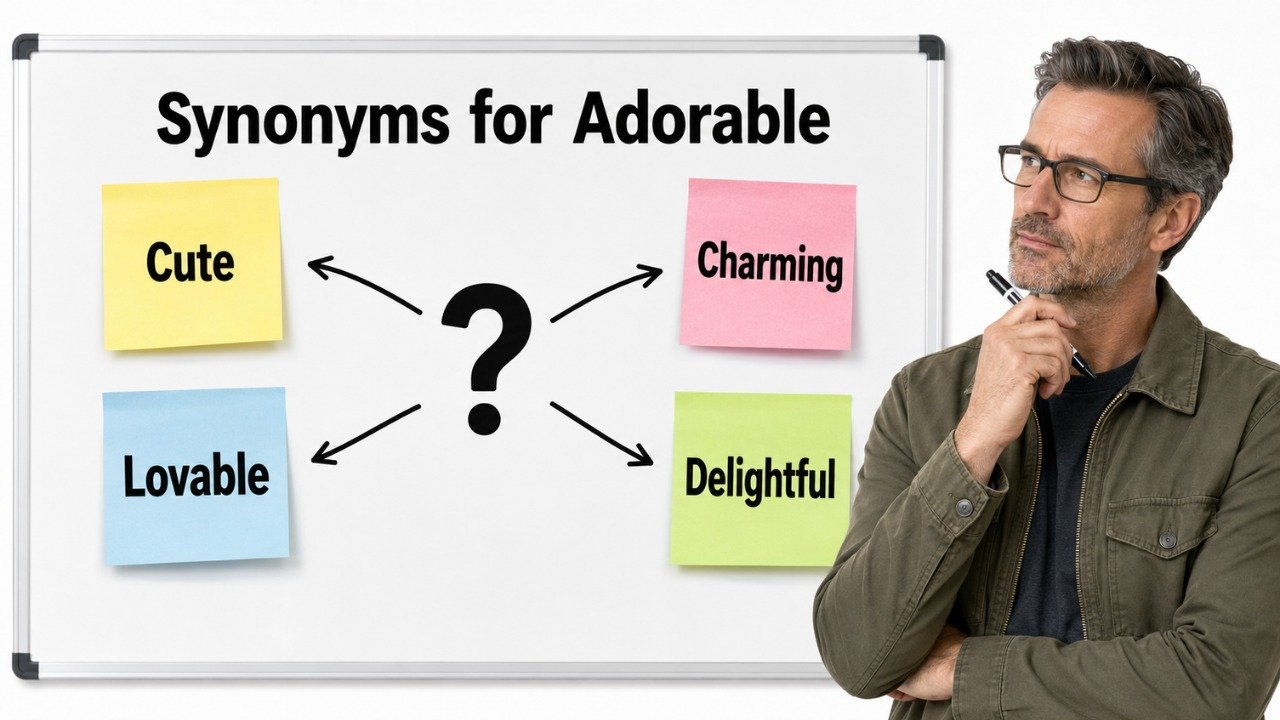
Quick Answer: The best synonyms for adorable include cute, lovable, endearing, charming, delightful, sweet, lovely, precious, enchanting, and irresistible. Use cute in casual descriptions of children, animals, clothing, and small objects. Choose lovable when someone inspires affection, endearing for behavior that creates emotional warmth, and charming for an attractive personality or manner. Lovely works well in polite conversation, delightful suits more refined writing, and irresistible adds stronger emphasis when something is exceptionally appealing.
Pronunciation and Word Details
Word: Adorable.
Pronunciation: /əˈdɔːrəbəl/.
Part of Speech: Adjective.
Meaning: Extremely attractive, charming, or easy to love.
US Pronunciation:
UK Pronunciation:
What Does “Adorable” Mean?
Adorable means very attractive, charming, sweet, or easy to love. It is an adjective used to express strong affection or approval.
The word often describes babies, children, animals, clothing, expressions, gestures, relationships, and small decorative objects.
Example: The puppy looked adorable in its tiny blanket.
Adorable may describe physical appearance, but it can also describe behavior or personality.
Example: Her habit of leaving kind notes was adorable.
The word usually carries a warm and positive meaning. It suggests that someone or something creates affection, tenderness, happiness, or admiration.
Adorable is stronger and more emotional than attractive. Attractive mainly describes something pleasing, while adorable suggests that it makes people feel affection.
Example: The room was attractive.
Example: The handmade decorations were adorable.
Meaning, Tone, and Context of “Adorable”
Adorable has a warm, affectionate, and enthusiastic tone. It is common in everyday conversation, personal writing, descriptive passages, product descriptions, compliments, and informal communication.
The word is generally conversational rather than academic or technical. It can appear in polished writing, but more precise alternatives may be better in formal reports, research, professional evaluations, or serious analysis.
Adorable is frequently used for children and animals because it expresses tenderness and affection.
Example: The baby made an adorable sound.
It can also describe clothing, accessories, homes, decorations, photographs, and other visually appealing things.
Example: She found an adorable lamp for the reading corner.
When used for an adult, adorable may sound affectionate, romantic, playful, or slightly childish. The meaning depends on the relationship and situation.
Example: His nervous attempt to cook dinner was adorable.
In some contexts, calling an adult adorable may sound patronizing because it can suggest innocence, smallness, or childlike behavior. Charming, lovely, attractive, or endearing may be more suitable alternatives.
When and How to Use “Adorable”
For Children: Use adorable to describe a child’s appearance, expression, voice, or behavior.
Example: The child gave everyone an adorable smile.
For Animals: Use adorable for animals that inspire affection because of their appearance or behavior.
Example: The kitten looked adorable while chasing its tail.
For Physical Appearance: Adorable can describe someone or something that looks especially cute and appealing.
Example: She looked adorable in her new dress.
For Sweet Behavior: Use adorable when an action seems innocent, thoughtful, playful, or emotionally appealing.
Example: His excitement about the surprise was adorable.
For Clothing and Accessories: Adorable is common when describing small, pretty, playful, or charming items.
Example: That floral handbag is absolutely adorable.
For Decorative Objects: Use adorable for decorations, toys, furniture, artwork, or household items that have a cute appearance.
Example: They placed an adorable ceramic bird beside the window.
For Affectionate Compliments: Adorable can communicate fondness toward a friend, partner, child, or family member.
Example: You look adorable when you laugh.
For Strong Enthusiasm: Use adorable when cute does not express enough excitement or affection.
Example: Those matching costumes are adorable.
Best Synonyms for Adorable
Cute: Attractive in a sweet, youthful, small, or playful way.
Example: The child wore a cute wool hat.
Lovable: Having qualities that make people feel affection.
Example: His generous and cheerful personality made him lovable.
Endearing: Inspiring affection through behavior, personality, or appearance.
Example: Her habit of remembering everyone’s birthday was endearing.
Charming: Pleasantly attractive in appearance, manner, or personality.
Example: They stayed in a charming house near the river.
Delightful: Giving pleasure, happiness, or enjoyment.
Example: The children gave a delightful performance.
Sweet: Pleasant, kind, innocent, or emotionally appealing.
Example: That was a sweet message to send your grandmother.
Lovely: Beautiful, pleasant, or enjoyable in a gentle way.
Example: She has a lovely smile.
Precious: Deeply valued, loved, or considered especially sweet.
Example: The baby’s first laugh was precious.
Enchanting: Extremely attractive or charming in a magical way.
Example: The garden looked enchanting under the evening lights.
Irresistible: So attractive, charming, or appealing that it is difficult not to like.
Example: The puppy’s curious expression was irresistible.
50 Synonyms for Adorable with Short Meanings
- Cute: Attractive in a sweet or playful way.
- Lovable: Easy to love because of pleasant qualities.
- Endearing: Inspiring affection or emotional warmth.
- Charming: Pleasantly attractive in appearance or manner.
- Delightful: Giving pleasure, happiness, or enjoyment.
- Sweet: Pleasant, kind, innocent, or affectionate.
- Lovely: Beautiful or pleasing in a gentle way.
- Precious: Deeply valued or considered especially sweet.
- Appealing: Attractive or interesting to the senses or emotions.
- Attractive: Pleasing in appearance or personality.
- Enchanting: Extremely charming or beautiful.
- Winsome: Attractive because of an innocent and cheerful manner.
- Darling: Dearly loved or considered especially cute.
- Dear: Loved, valued, or emotionally important.
- Irresistible: Extremely difficult not to like or admire.
- Captivating: Able to hold attention through beauty or charm.
- Engaging: Pleasant and able to attract interest or affection.
- Pleasing: Creating satisfaction, enjoyment, or approval.
- Heartwarming: Causing feelings of happiness, affection, or comfort.
- Huggable: Appearing soft, friendly, or easy to embrace.
- Cuddly: Soft, warm, and pleasant to hold closely.
- Dainty: Small, delicate, and attractively made.
- Pretty: Attractive in a delicate or pleasing way.
- Beautiful: Highly attractive or pleasing to look at.
- Gorgeous: Extremely beautiful or visually impressive.
- Angelic: Appearing innocent, gentle, or exceptionally sweet.
- Innocent: Showing purity, simplicity, or lack of harmful intention.
- Cherubic: Having a sweet, round, and innocent appearance.
- Fetching: Attractive and likely to gain positive attention.
- Winning: Attractive in a way that gains affection or approval.
- Likeable: Having qualities that make others respond positively.
- Amiable: Friendly, pleasant, and easy to like.
- Pleasant: Enjoyable, agreeable, or attractive.
- Cheerful: Showing happiness, brightness, or optimism.
- Sweet Faced: Having a gentle and innocent facial appearance.
- Bright Eyed: Looking lively, innocent, curious, or cheerful.
- Cute Looking: Having a visually sweet and appealing appearance.
- Lovely Looking: Appearing attractive, pleasant, or graceful.
- Picture Perfect: Looking extremely attractive and carefully arranged.
- Heart Melting: Creating strong feelings of tenderness or affection.
- Irresistibly Cute: So cute that affection is difficult to resist.
- Utterly Charming: Extremely pleasant and attractive.
- Full of Charm: Having many qualities that attract affection.
- Easy to Love: Naturally inspiring affection from others.
- Worth Cherishing: Deserving love, protection, and appreciation.
- Dearly Loved: Valued with strong emotional affection.
- Much Loved: Receiving affection from many people.
- Treasured: Deeply valued and carefully protected.
- Beloved: Deeply loved and emotionally important.
- Fondly Regarded: Remembered or viewed with affection.
Read Also:
Synonyms for Escape

Synonyms for Adorable by Context
When Adorable Means Cute in Appearance
Cute, pretty, sweet faced, cherubic, angelic, lovely looking, and fetching describe an attractive physical appearance.
Cute is the most common everyday choice. Cherubic usually describes a child with a round, innocent face. Angelic emphasizes purity and gentleness.
Example: The baby looked cherubic in the family photograph.
Example: That is a cute jacket for the winter season.
Example: The child had an angelic expression while sleeping.
When Adorable Means Easy to Love
Lovable, endearing, darling, dear, beloved, and easy to love describe someone or something that inspires affection.
Lovable focuses on the qualities that make affection natural. Endearing often describes habits, gestures, or personality traits.
Example: His cheerful personality made him instantly lovable.
Example: Her quiet concern for others was deeply endearing.
Example: The old family dog remained a beloved companion.
When Adorable Means Charming
Charming, winsome, delightful, engaging, enchanting, and captivating describe someone or something that attracts interest and admiration.
Charming works in both casual and polished writing. Winsome suggests innocent charm, while captivating is stronger and emphasizes attention.
Example: The village had a charming collection of stone houses.
Example: Her winsome smile made the audience feel comfortable.
Example: The young performer gave a captivating presentation.
When Adorable Means Small and Delicate
Dainty, cute, pretty, cuddly, huggable, and precious suit small animals, children, clothing, decorations, and delicate objects.
Dainty emphasizes small size and careful design. Cuddly and huggable are mainly used for soft animals, toys, or affectionate people.
Example: She chose a dainty silver ornament for the shelf.
Example: The soft toy was small and cuddly.
Example: The puppy looked completely huggable.
When Adorable Means Emotionally Touching
Heartwarming, heart melting, precious, sweet, touching, and endearing describe something that creates tenderness or emotional warmth.
Heartwarming often describes an event, story, action, or relationship. Heart melting is stronger and more emotional.
Example: The child’s thank you note was heartwarming.
Example: The reunion between the dog and its owner was heart melting.
Example: Their friendship produced many precious memories.
When Adorable Describes Objects or Style
Cute, charming, lovely, pretty, delightful, picture perfect, and appealing work well for clothing, rooms, decorations, accessories, and designs.
Cute sounds casual and playful. Charming feels more mature and can describe homes, gardens, furniture, or traditional details.
Example: The kitchen has charming wooden cabinets.
Example: She created a picture perfect reading corner.
Example: The small floral purse looked lovely with her outfit.
Another Word for Adorable
Cute is the most common single replacement for adorable. It works naturally for children, animals, clothing, expressions, and small objects. However, the best alternative depends on what creates the appeal.
Choose lovable for personality, endearing for behavior, charming for mature appeal, and delightful for an enjoyable experience.
Original: The puppy looked adorable in the basket.
Better Option: The puppy looked irresistibly cute in the basket.
Original: Her habit of helping new students was adorable.
Better Option: Her habit of helping new students was endearing.
Original: They rented an adorable cottage in the countryside.
Better Option: They rented a charming cottage in the countryside.
Original: The children performed an adorable song.
Better Option: The children performed a delightful song.
When Not to Use “Adorable”
Adorable may sound too casual, emotional, childish, or vague in some situations. A more specific word can improve clarity and tone.
Avoid adorable in formal reports when the writer needs an objective description.
Weak: The building has an adorable traditional design.
Better: The building has a charming traditional design.
Do not use adorable repeatedly in the same paragraph.
Weak: The adorable baby wore an adorable hat and held an adorable toy.
Better: The sweet baby wore a cute hat and held a charming handmade toy.
Avoid adorable when describing professional ability, academic quality, or serious achievement.
Weak: She gave an adorable presentation about economic policy.
Better: She gave an engaging presentation about economic policy.
Be careful when using adorable for adults. It may sound affectionate, but it can also sound patronizing.
Weak: The senior manager was adorable during the meeting.
Better: The senior manager was warm and engaging during the meeting.
Do not use adorable when attractive or beautiful gives a more accurate meaning.
Weak: The mountain landscape was adorable.
Better: The mountain landscape was breathtakingly beautiful.
Avoid adorable when the subject inspires respect rather than affection.
Weak: The historic monument looked adorable at sunset.
Better: The historic monument looked magnificent at sunset.
Words Commonly Confused With Adorable
Adorable vs Cute: Adorable is stronger and expresses deeper affection. Cute may simply mean visually attractive, small, or playful.
Adorable vs Lovable: Adorable often refers to appearance or behavior. Lovable focuses more directly on qualities that inspire lasting affection.
Adorable vs Endearing: Adorable commonly describes immediate appeal. Endearing usually describes a habit, action, or personality trait that gradually creates affection.
Adorable vs Lovely: Adorable sounds more playful and emotional. Lovely is broader, gentler, and often more suitable in polite or mature descriptions.
Adorable vs Beautiful: Adorable suggests sweetness and affection. Beautiful emphasizes visual excellence, elegance, or emotional admiration.
Adorable vs Charming: Adorable often suggests innocence or cuteness. Charming suggests pleasant attraction through personality, style, character, or atmosphere.
Adorable vs Attractive: Adorable creates feelings of tenderness. Attractive simply means pleasing or able to draw interest.
Adorable vs Precious: Adorable describes someone or something that inspires affection. Precious emphasizes value, importance, or emotional significance.
Which Synonym Should You Choose?
Choose cute in casual speech when describing children, animals, clothing, accessories, expressions, or small objects.
Choose lovable when describing a person or animal with qualities that naturally inspire affection.
Choose endearing when a behavior, habit, gesture, or personality trait makes someone easier to love.
Choose charming for houses, villages, personalities, manners, gardens, traditions, and descriptions that require a more mature tone.
Choose delightful in essays, reviews, descriptions, or polite communication when something creates enjoyment.
Choose lovely in conversation, emails, compliments, and general descriptions that need a gentle and respectful tone.
Choose precious when the subject has strong personal or emotional value.
Choose enchanting in creative writing when beauty or charm feels magical.
Choose captivating when a person, performance, voice, expression, or place strongly holds attention.
Choose heartwarming when describing emotional stories, relationships, reunions, gestures, or acts of kindness.
Choose attractive in formal or neutral writing when appearance matters more than affection.
Choose engaging in professional writing when describing a pleasant personality, presentation, speaker, or style.
Real Life Examples of “Adorable” in Sentences
Original: The baby looked adorable in the family photograph.
Better Option: The baby looked cherubic in the family photograph.
Original: The puppy made an adorable sound.
Better Option: The puppy made a sweet little sound.
Original: Her nervous laugh was adorable.
Better Option: Her nervous laugh was endearing.
Original: They stayed in an adorable cottage.
Better Option: They stayed in a charming cottage.
Original: The child gave his mother an adorable card.
Better Option: The child gave his mother a heartwarming card.
Original: She wore an adorable floral dress.
Better Option: She wore a lovely floral dress.
Original: His friendly personality was adorable.
Better Option: His friendly personality was lovable.
Original: The kittens looked adorable together.
Better Option: The kittens looked irresistibly cute together.
Original: Their reaction to the surprise was adorable.
Better Option: Their reaction to the surprise was delightful.
Original: The small table decoration was adorable.
Better Option: The small table decoration was dainty and charming.
Synonym Groups and Usage Differences
Appearance Group
Cute, pretty, beautiful, attractive, fetching, and lovely looking describe visual appeal.
Cute usually suggests sweetness, youthfulness, or small size. Beautiful is stronger and more elegant. Fetching describes an appearance that gains positive attention.
Example: She wore a fetching blue dress to the celebration.
Affection Group
Lovable, endearing, darling, beloved, precious, and dear focus on emotional attachment.
Lovable describes qualities that inspire love. Beloved and dear usually suggest an established emotional relationship.
Example: The beloved family pet had lived with them for many years.
Charm Group
Charming, enchanting, captivating, winsome, engaging, and winning describe attraction created through personality, style, or behavior.
Charming is the broadest option. Winsome suggests innocence, while captivating suggests powerful appeal.
Example: The speaker had an engaging and confident manner.
Delicacy Group
Dainty, sweet faced, cherubic, angelic, cuddly, and huggable suggest softness, innocence, smallness, or delicacy.
These words are commonly used for children, animals, toys, clothing, and decorative items.
Example: The child had a sweet faced and innocent expression.
Emotional Warmth Group
Heartwarming, heart melting, sweet, precious, and touching describe something that creates tenderness or happiness.
Heartwarming is appropriate for stories and actions. Heart melting expresses a stronger emotional response.
Example: Their quiet act of kindness was heartwarming.
Strong Praise Group
Irresistible, gorgeous, enchanting, utterly charming, and picture perfect give stronger praise than adorable.
Use these alternatives when ordinary words do not express enough admiration.
Example: The garden looked picture perfect after the rain.
Antonyms of Adorable
The opposite of adorable depends on whether the word refers to appearance, personality, behavior, or emotional appeal.
Unattractive: Not pleasing in appearance.
Unappealing: Failing to create interest, pleasure, or affection.
Ugly: Unpleasant or unattractive in appearance.
Repellent: Creating strong dislike or a desire to move away.
Unpleasant: Not enjoyable, friendly, or appealing.
Disagreeable: Difficult to like because of behavior or personality.
Harsh: Lacking softness, warmth, or gentleness.
Cold: Showing little affection, friendliness, or emotional warmth.
Irritating: Causing annoyance rather than affection.
Unlovable: Appearing difficult to love or feel affection toward.
Off Putting: Creating discomfort, dislike, or loss of interest.
Uncharming: Lacking qualities that attract affection or admiration.
Comparison: Adorable vs Related Words
Adorable vs Cute
Adorable is usually stronger and more affectionate than cute. Cute may describe simple visual appeal, while adorable suggests that the subject inspires tenderness.
Example With Adorable: The baby’s sleepy expression was adorable.
Example With Cute: The baby wore a cute striped hat.
Adorable vs Lovable
Adorable often describes appearance, gestures, or immediate behavior. Lovable describes lasting personal qualities that make affection easy.
Example With Adorable: The puppy looked adorable while sleeping.
Example With Lovable: The puppy’s gentle nature made it lovable.
Adorable vs Endearing
Adorable commonly expresses an immediate reaction. Endearing emphasizes a quality or behavior that causes affection to grow.
Example With Adorable: Her surprised expression was adorable.
Example With Endearing: Her habit of thanking everyone was endearing.
Adorable vs Charming
Adorable often sounds youthful, playful, or innocent. Charming is more mature and works well for people, places, manners, and design.
Example With Adorable: The child wore an adorable costume.
Example With Charming: The host had a charming and welcoming manner.
Adorable vs Lovely
Adorable communicates strong affection and cuteness. Lovely is softer, broader, and often sounds more polite.
Example With Adorable: The kitten is absolutely adorable.
Example With Lovely: You have a lovely garden.
Adorable vs Beautiful
Adorable suggests sweetness and emotional appeal. Beautiful emphasizes visual excellence, elegance, or deep admiration.
Example With Adorable: The toddler gave an adorable wave.
Example With Beautiful: The valley looked beautiful at sunrise.
Adorable vs Precious
Adorable describes strong appeal. Precious focuses on emotional value, rarity, or importance.
Example With Adorable: The child’s costume was adorable.
Example With Precious: That photograph is a precious family memory.
Common Phrases and Expressions With Adorable
Absolutely Adorable: Extremely cute, charming, or lovable.
Simply Adorable: Charming in a clear and uncomplicated way.
So Adorable: Very cute or emotionally appealing.
Truly Adorable: Genuinely lovable, sweet, or charming.
Adorable Little One: An affectionate description of a baby, child, or small animal.
Adorable Smile: A sweet and appealing facial expression.
Adorable Couple: Two people who appear affectionate and charming together.
Adorable Puppy: A young dog with a cute appearance or behavior.
Look Adorable: To appear especially cute or charming.
Find Someone Adorable: To feel affection because of a person’s appearance or behavior.
Common Mistakes to Avoid
Repeating Adorable Too Often: Frequent repetition can make writing sound exaggerated or limited. Use cute, charming, endearing, lovely, or delightful when they fit the meaning.
Choosing a Synonym Without Considering Context: Cute may suit a puppy, but it may not suit a formal building description. Charming or attractive may be more accurate.
Using Adorable in Highly Formal Writing: The word can sound emotional and subjective. Use appealing, attractive, engaging, or pleasing when a more neutral tone is required.
Calling Every Attractive Person Adorable: Adorable implies sweetness or affection. Beautiful, handsome, attractive, elegant, or charming may be more respectful and accurate.
Confusing Lovable With Adorable: Lovable usually refers to character and emotional connection. Adorable often describes appearance or immediate behavior.
Using Adorable for Impressive Landscapes: Large natural scenes are more often beautiful, breathtaking, spectacular, or magnificent.
Weak: The enormous waterfall was adorable.
Better: The enormous waterfall was spectacular.
Using an Adverb Instead of an Adjective: Adorable describes a noun, while adorably modifies a verb, adjective, or another adverb.
Correct: The puppy is adorable.
Correct: The puppy tilted its head adorably.
Adding Unnecessary Intensifiers: Adorable already expresses strong approval. Too many intensifiers can weaken the sentence.
Weak: The baby was really very extremely adorable.
Better: The baby was absolutely adorable.
Ignoring Possible Patronizing Tone: Describing an adult as adorable may sound affectionate in a close relationship but disrespectful in a professional setting.
Conclusion
The most useful synonyms for adorable include cute, lovable, endearing, charming, delightful, lovely, precious, and irresistible. Cute works best for casual descriptions, while endearing emphasizes behavior that inspires affection. Charming suits mature people, places, and designs, and delightful fits polished descriptions of enjoyable experiences. Lovable focuses on personality, while heartwarming describes emotional moments. Choosing the right alternative helps your writing express appearance, affection, charm, and emotional warmth with greater accuracy.
FAQs About Synonyms for Adorable
What Is the Best Synonym for Adorable?
Cute is the most common synonym for adorable. Lovable, endearing, charming, and delightful are better when personality, behavior, or emotional appeal matters.
Is Cute the Same as Adorable?
They are similar, but adorable is usually stronger. Cute describes something attractive or sweet, while adorable suggests that it inspires deep affection.
What Is a Formal Synonym for Adorable?
Charming, delightful, appealing, attractive, and engaging are more suitable for formal or polished writing.
What Is Another Word for an Adorable Person?
Lovable, endearing, charming, sweet, delightful, and winsome can describe an adorable person.
What Is a Stronger Word Than Adorable?
Irresistible, enchanting, captivating, heart melting, and utterly charming can express stronger admiration or affection.
Can Adorable Describe an Adult?
Yes, but the tone should be considered. It may sound affectionate or playful in personal relationships, but charming, attractive, or lovely may be more suitable in formal situations.
What Is the Opposite of Adorable?
Unappealing, unattractive, unpleasant, disagreeable, cold, irritating, and unlovable can function as opposites, depending on the context.
