
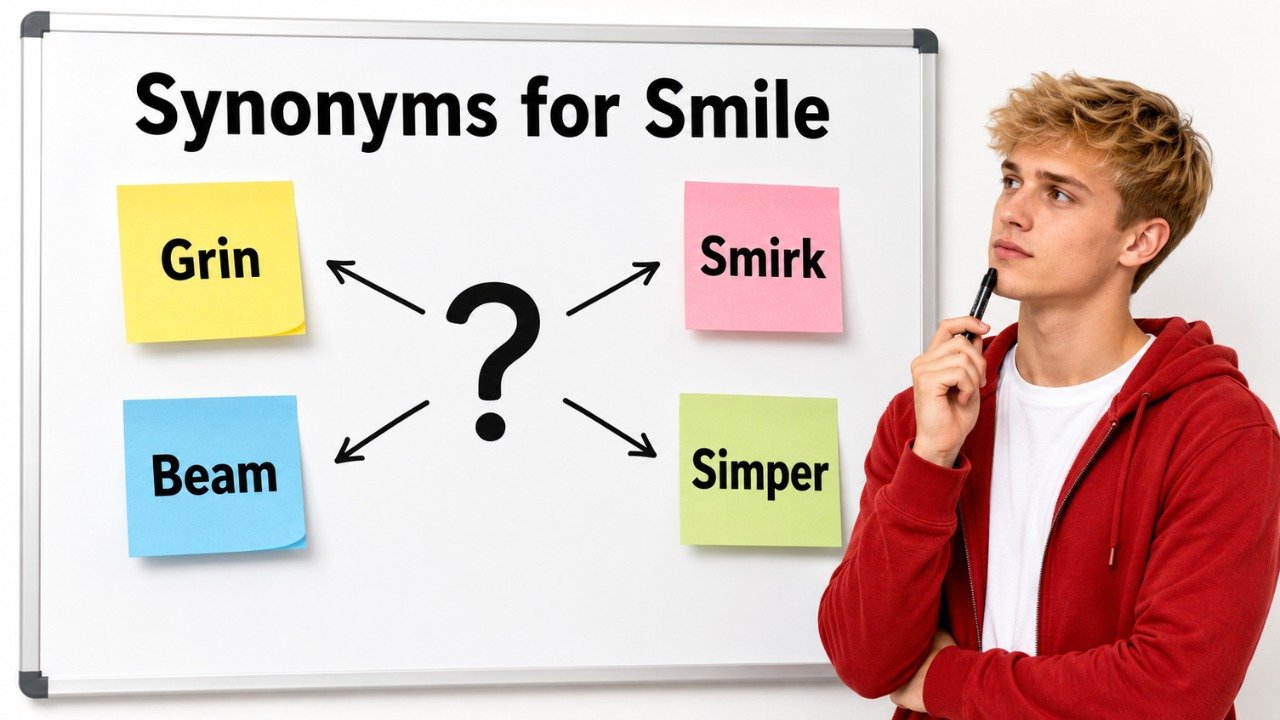
Quick Answer: The best synonyms for smile include grin, beam, glow, smirk, simper, light up, cheerful expression, radiant look, friendly expression, and reassuring smile. Use grin for an open and noticeable smile, beam for strong happiness, and glow when joy changes someone’s whole expression. Smirk suits a proud or self satisfied expression, while simper describes a shy or affected smile. Friendly expression works well in formal descriptions, and reassuring smile is best when the expression gives comfort or confidence.
Pronunciation and Word Details
Word: Smile.
Pronunciation: /smaɪl/.
Part of Speech: Noun and verb.
Meaning: An expression formed by curving the mouth upward, usually showing happiness, friendliness, amusement, affection, or politeness.
US Pronunciation:
UK Pronunciation:
What Does “Smile” Mean?
A smile is a facial expression in which the corners of the mouth turn upward. It commonly communicates happiness, friendliness, amusement, affection, approval, or politeness.
As a noun, smile refers to the expression itself.
Example: Her smile made the nervous child feel comfortable.
As a verb, smile describes the action of making that expression.
Example: He smiled when he heard the good news.
A smile does not always indicate genuine happiness. People may smile because they are nervous, embarrassed, polite, proud, amused, confident, or hiding another emotion. The surrounding situation usually reveals the intended meaning.
Meaning, Tone, and Context of “Smile”
Smile is a common, neutral, and emotionally expressive word. It appears naturally in casual conversation, formal writing, fiction, personal messages, essays, descriptions, and professional communication.
The tone of smile depends on the words surrounding it. A warm smile suggests kindness, while a forced smile suggests discomfort. A knowing smile may communicate secret understanding, and a polite smile may simply show good manners.
In descriptive writing, smile helps reveal a person’s feelings without directly naming the emotion. Instead of writing that someone was pleased, a writer may describe the character smiling softly.
Smile is normally positive, but it can also carry negative meanings. A cruel smile, cold smile, or smug smile may suggest arrogance, mockery, or hidden intentions.
When and How to Use “Smile”
For Happiness: Use smile when someone expresses pleasure, joy, or satisfaction.
Example: She smiled when her name was announced.
For Friendliness: A smile can welcome another person and create a comfortable atmosphere.
Example: The receptionist greeted every visitor with a friendly smile.
For Politeness: People sometimes smile to show respect or good manners, even when they are not especially happy.
Example: He smiled politely and thanked the guests for coming.
For Affection: A gentle smile can communicate love, tenderness, or emotional closeness.
Example: The mother smiled lovingly at her sleeping child.
For Amusement: Smile can describe a quiet reaction to something funny or entertaining.
Example: I smiled at his clever comment.
For Reassurance: A calm smile can help another person feel safe or confident.
Example: The teacher smiled reassuringly before the student began speaking.
For Nervousness: Someone may smile because they feel uncomfortable, shy, or uncertain.
Example: She smiled nervously as she entered the crowded room.
For Pride: A smile may show satisfaction with an achievement or successful result.
Example: He smiled proudly as he held the award.
Best Synonyms for Smile
Grin: A broad and noticeable smile that often shows the teeth.
Example: He wore a wide grin after winning the competition.
Beam: To smile with obvious happiness, pride, or excitement.
Example: Her parents beamed when she walked onto the stage.
Glow: To appear bright and happy because of a positive emotion.
Example: She glowed with happiness after hearing the announcement.
Light Up: To suddenly show happiness or excitement through the face and eyes.
Example: His face lit up when his friend arrived.
Smirk: A small smile showing pride, amusement, or self satisfaction.
Example: He smirked after proving that his prediction was correct.
Simper: To smile in a shy, silly, or affected manner.
Example: She simpered when the photographer complimented her dress.
Radiant Look: A bright expression that communicates strong happiness.
Example: The bride had a radiant look throughout the celebration.
Cheerful Expression: A pleasant facial appearance showing happiness or optimism.
Example: His cheerful expression improved the mood of the entire room.
Friendly Expression: A welcoming look that communicates kindness and openness.
Example: Her friendly expression encouraged the new employee to speak.
Reassuring Smile: A calm smile intended to provide comfort or confidence.
Example: The doctor gave the patient a reassuring smile.
50 Synonyms for Smile with Short Meanings
- Grin: A broad smile that often shows the teeth.
- Beam: To smile with great happiness or pride.
- Smirk: A slight smile showing pride or private amusement.
- Simper: A shy, silly, or affected smile.
- Leer: An unpleasant smile or look showing improper interest.
- Sneer: A mocking facial expression showing contempt.
- Glow: To appear bright because of happiness or pleasure.
- Brighten: To become noticeably happier in appearance.
- Light Up: To suddenly show excitement or happiness.
- Flash a Smile: To smile briefly and noticeably.
- Give a Smile: To direct a smile toward someone.
- Crack a Smile: To begin smiling after being serious.
- Break Into a Smile: To suddenly start smiling.
- Smile Warmly: To smile with kindness and affection.
- Smile Softly: To smile in a gentle and quiet way.
- Smile Brightly: To show clear and energetic happiness.
- Smile Sweetly: To smile in a pleasant and charming manner.
- Smile Politely: To smile as an act of courtesy.
- Smile Shyly: To smile while feeling nervous or embarrassed.
- Smile Knowingly: To smile because of private knowledge or understanding.
- Broad Smile: A wide and clearly visible smile.
- Warm Smile: A kind and welcoming expression.
- Gentle Smile: A soft expression showing calm affection.
- Friendly Smile: A smile showing openness and goodwill.
- Cheerful Smile: A happy expression showing optimism.
- Radiant Smile: A bright smile showing strong happiness.
- Bright Smile: A lively and attractive expression.
- Soft Smile: A quiet and delicate smile.
- Sweet Smile: A pleasant expression showing warmth or innocence.
- Polite Smile: A courteous expression used in social situations.
- Shy Smile: A smile showing modesty or nervousness.
- Bashful Smile: An embarrassed but pleased expression.
- Tender Smile: A gentle smile showing deep care.
- Loving Smile: An expression communicating love or devotion.
- Affectionate Smile: A warm smile showing fondness.
- Reassuring Smile: A smile that gives comfort or confidence.
- Welcoming Smile: A smile that makes someone feel accepted.
- Encouraging Smile: A supportive expression that gives confidence.
- Satisfied Smile: A smile showing pleasure with a result.
- Pleased Expression: A facial look showing approval or contentment.
- Happy Expression: A facial appearance showing positive emotion.
- Cheerful Expression: A lively look showing happiness.
- Delighted Look: An expression of strong pleasure.
- Amused Look: An expression showing quiet entertainment.
- Contented Look: A peaceful expression showing satisfaction.
- Joyful Look: A facial expression showing deep happiness.
- Beaming Expression: A bright expression filled with joy or pride.
- Toothy Grin: A wide smile that clearly shows the teeth.
- Broad Grin: A large and obvious smile.
- Playful Grin: A smile showing humor or mischievous enjoyment.
Read Also:
Synonyms for Collaboration

Synonyms for Smile by Context
When Smile Means Happiness
Beam, glow, grin, light up, radiant smile, joyful look, and beaming expression work well when the emotion is genuine happiness.
Beam suggests strong and visible joy. Glow describes happiness that appears across the whole face. Grin is more casual and often shows the teeth.
Example: She beamed when she received the acceptance letter.
Example: His face lit up when he saw the surprise.
Example: The children grinned after finding the hidden gifts.
When Smile Means Warmth or Friendliness
Warm smile, friendly smile, welcoming smile, gentle smile, and cheerful expression communicate kindness and openness.
These alternatives are useful when describing greetings, introductions, customer service, teaching, friendship, or emotional support.
Example: The host welcomed everyone with a warm smile.
Example: Her friendly expression made conversation easy.
Example: He offered the visitors a welcoming smile.
When Smile Means Amusement
Grin, amused look, playful grin, knowing smile, and smirk can describe a reaction to humor or private amusement.
Grin is usually positive and open. Smirk may sound proud, secretive, or slightly disrespectful. A knowing smile suggests that someone understands something others may not know.
Example: He grinned at the unexpected joke.
Example: She gave him a knowing smile across the room.
Example: The student smirked when the teacher discovered the harmless trick.
When Smile Means Pride or Satisfaction
Beam, satisfied smile, pleased expression, glow, and broad grin suit moments involving achievement, success, or approval.
Beam is especially suitable for strong pride. A satisfied smile is calmer and may suggest that the person expected the successful result.
Example: The coach beamed as the team received its medals.
Example: She wore a satisfied smile after completing the difficult project.
When Smile Means Shyness or Nervousness
Shy smile, bashful smile, soft smile, nervous smile, and simper describe expressions connected with embarrassment or uncertainty.
A shy smile is natural and modest. Simper often suggests that the smile appears affected, overly delicate, or intended to attract approval.
Example: He gave a shy smile when everyone praised his work.
Example: She smiled softly before introducing herself.
When Smile Means Pride or Superiority
Smirk, sneer, leer, and self satisfied smile describe expressions with negative or uncomfortable meanings.
A smirk communicates private pride or superiority. A sneer expresses disrespect or contempt. A leer suggests an unpleasant or intrusive interest.
Example: He smirked when his opponent made a mistake.
Example: The character sneered at the warning.
Another Word for Smile
Grin is often the best general replacement for smile, especially when the expression is broad, obvious, or cheerful. However, the most accurate alternative depends on the person’s emotion, facial expression, and situation.
Use beam for intense joy, smirk for self satisfaction, glow for visible happiness, and a warm expression for kindness.
Original: She smiled when she opened the present.
Better Option: She beamed when she opened the present.
Original: He smiled after winning the argument.
Better Option: He smirked after winning the argument.
Original: Her face smiled with happiness.
Better Option: Her face glowed with happiness.
Original: The teacher smiled at the nervous student.
Better Option: The teacher gave the nervous student a reassuring smile.
When Not to Use “Smile”
Smile is useful, but it may sound repetitive or unclear when the writer needs to describe a more specific emotion.
Avoid using smile repeatedly in the same paragraph. Choose an alternative that reveals whether the expression is cheerful, nervous, proud, affectionate, mocking, or polite.
Weak: She smiled when she saw him, and then she smiled again when he spoke.
Better: She beamed when she saw him and grinned at his cheerful greeting.
Do not use smile when the expression is clearly mocking or disrespectful.
Weak: The bully smiled at the frightened student.
Better: The bully sneered at the frightened student.
Avoid smile when intense happiness calls for a stronger verb.
Weak: His parents smiled when he returned home safely.
Better: His parents beamed when he returned home safely.
Do not assume that every smile shows genuine happiness.
Weak: She was happy because she smiled during the uncomfortable meeting.
Better: She forced a polite smile during the uncomfortable meeting.
Avoid using a dramatic synonym when the expression is small or controlled.
Weak: He beamed slightly during the serious discussion.
Better: He gave a faint smile during the serious discussion.
Words Commonly Confused With Smile
Smile vs Grin: Smile is a general expression created by turning the mouth upward. Grin is usually broader, more obvious, and more likely to show the teeth.
Smile vs Laugh: A smile is mainly a facial expression. A laugh usually includes sound and stronger physical movement.
Smile vs Beam: Smile can express mild or strong happiness. Beam specifically suggests intense joy, pride, or excitement.
Smile vs Smirk: Smile is generally positive or neutral. Smirk often suggests arrogance, private amusement, or self satisfaction.
Smile vs Sneer: A smile may show kindness or pleasure. A sneer communicates contempt, mockery, or disrespect.
Smile vs Simper: Smile is neutral and widely used. Simper describes a smile that appears shy, foolish, artificial, or overly affected.
Smile vs Glow: Smile describes a particular facial movement. Glow suggests that happiness affects the entire face or appearance.
Smile vs Grimace: A smile usually communicates a positive or socially polite emotion. A grimace shows pain, disgust, fear, or discomfort.
Which Synonym Should You Choose?
Choose grin in casual speech when the smile is broad, obvious, playful, or cheerful.
Choose beam when describing intense happiness, pride, relief, or excitement.
Choose glow when positive emotion changes the person’s entire appearance.
Choose light up when happiness or excitement appears suddenly.
Choose warm smile when describing kindness, affection, hospitality, or emotional connection.
Choose reassuring smile when someone is trying to provide comfort, support, or confidence.
Choose polite smile in professional communication, formal events, meetings, or courteous social interactions.
Choose smirk when the expression shows arrogance, private amusement, or self satisfaction.
Choose sneer when the facial expression communicates contempt or mockery.
Choose simper when describing a shy or affected expression, especially in literary writing.
Choose friendly expression in reports, formal descriptions, character profiles, or professional observations.
Choose radiant smile in descriptive writing when the expression appears especially bright, attractive, and joyful.
Real Life Examples of “Smile” in Sentences
Original: The child smiled when she saw her birthday cake.
Better Option: The child beamed when she saw her birthday cake.
Original: He smiled after answering every question correctly.
Better Option: He wore a satisfied grin after answering every question correctly.
Original: Her face smiled when her family entered the room.
Better Option: Her face lit up when her family entered the room.
Original: The receptionist smiled at the visitors.
Better Option: The receptionist welcomed the visitors with a friendly expression.
Original: She smiled because she understood the secret message.
Better Option: She gave him a knowing smile because she understood the secret message.
Original: The teacher smiled to calm the worried student.
Better Option: The teacher offered the worried student a reassuring smile.
Original: He smiled proudly while holding the trophy.
Better Option: He beamed proudly while holding the trophy.
Original: She smiled in an uncomfortable way during the conversation.
Better Option: She gave a nervous smile during the conversation.
Original: The man smiled disrespectfully at his opponent.
Better Option: The man smirked at his opponent.
Original: The baby smiled gently at her father.
Better Option: The baby gave her father a sweet smile.
Synonym Groups and Usage Differences
Happiness Group
Beam, glow, light up, radiant smile, and joyful look express clear and genuine happiness.
Beam is the strongest verb in this group. Glow emphasizes the entire appearance, while light up describes a sudden emotional change.
Example: Her face lit up when she heard her sister’s voice.
Friendliness Group
Warm smile, friendly smile, welcoming smile, and cheerful expression communicate kindness and social openness.
These alternatives are suitable for greetings, introductions, hospitality, teamwork, and supportive conversations.
Example: The manager greeted the new employees with a welcoming smile.
Amusement Group
Grin, playful grin, amused look, and knowing smile show humor or entertainment.
Grin is direct and casual. A playful grin may suggest harmless mischief, while a knowing smile suggests private understanding.
Example: He gave his friend a playful grin before revealing the surprise.
Pride and Satisfaction Group
Beam, satisfied smile, pleased expression, smirk, and broad grin can communicate pride or satisfaction.
Beam is usually positive. Smirk may suggest excessive pride or superiority. A satisfied smile is quieter and more controlled.
Example: She wore a satisfied smile after solving the problem.
Affection Group
Tender smile, loving smile, affectionate smile, gentle smile, and soft smile express emotional closeness.
These terms work well in family descriptions, romantic writing, friendships, and compassionate situations.
Example: The grandfather gave the child a tender smile.
Negative Expression Group
Smirk, sneer, and leer describe expressions that resemble smiles but carry unpleasant meanings.
Smirk suggests self satisfaction. Sneer communicates contempt. Leer implies an intrusive or inappropriate kind of attention.
Example: The dishonest character smirked after hiding the evidence.
Antonyms of Smile
The opposite of smile depends on whether smile expresses happiness, friendliness, amusement, or approval.
Frown: An expression showing worry, unhappiness, or disapproval.
Scowl: An angry or deeply displeased facial expression.
Grimace: A twisted expression showing pain, disgust, or discomfort.
Glower: An angry and threatening look.
Glare: A fixed and hostile look directed at someone.
Pout: An expression showing disappointment or annoyance.
Cry: To produce tears because of sadness, pain, or strong emotion.
Weep: To cry, often because of deep sadness.
Mournful Expression: A facial look showing sorrow or grief.
Blank Expression: A face showing no clear emotion or response.
Comparison: Smile vs Related Words
Smile vs Grin
Smile is the broadest and most neutral word. Grin describes a wider and more noticeable smile that often shows the teeth.
Example With Smile: She smiled gently at the young child.
Example With Grin: She grinned after hearing the funny story.
Smile vs Beam
Smile may communicate mild pleasure, politeness, or affection. Beam communicates obvious and intense happiness.
Example With Smile: He smiled when the meeting ended early.
Example With Beam: He beamed when he received the promotion.
Smile vs Smirk
Smile is usually friendly, pleasant, or neutral. Smirk suggests pride, superiority, or private amusement.
Example With Smile: She smiled warmly at her new neighbor.
Example With Smirk: She smirked after proving that everyone else was wrong.
Smile vs Laugh
Smile is a silent facial expression. Laugh normally involves sound and a stronger reaction to humor or joy.
Example With Smile: I smiled at the clever remark.
Example With Laugh: I laughed when he completed the entire joke.
Smile vs Sneer
Smile commonly shows happiness, affection, or friendliness. Sneer shows contempt, mockery, or disrespect.
Example With Smile: He smiled at the successful performer.
Example With Sneer: He sneered at the inexperienced performer.
Smile vs Glow
Smile refers to the shape and movement of the mouth. Glow describes an overall appearance of happiness, health, excitement, or pride.
Example With Smile: She smiled after hearing the compliment.
Example With Glow: She glowed after hearing the compliment.
Smile vs Simper
Smile is natural and neutral. Simper often implies an artificial, foolish, or overly shy manner.
Example With Smile: She smiled politely during the introduction.
Example With Simper: She simpered while waiting for another compliment.
Common Phrases and Expressions With Smile
Warm Smile: A kind expression showing friendliness or affection.
Bright Smile: A lively and cheerful facial expression.
Polite Smile: A courteous smile used in formal or social situations.
Broad Smile: A wide and clearly visible expression of happiness.
Crack a Smile: To finally begin smiling after appearing serious.
Flash a Smile: To give someone a quick and noticeable smile.
Force a Smile: To smile without feeling genuine happiness.
Smile From Ear to Ear: To smile very broadly because of great happiness.
Bring a Smile to Someone’s Face: To make another person feel happy or amused.
Smile Through the Pain: To remain positive or appear cheerful during difficulty.
Winning Smile: An attractive and confident smile that creates a positive impression.
Common Mistakes to Avoid
Using Smile Repeatedly: Repeating smile in every sentence can make writing sound plain. Replace some uses with grin, beam, glow, or another context appropriate expression.
Assuming Every Smile Means Happiness: A person may smile because of nervousness, politeness, embarrassment, pride, or discomfort. Describe the emotional quality when clarity matters.
Using Grin for Every Smile: Grin is broader and more informal than smile. It may sound unsuitable in gentle, serious, or formal situations.
Confusing Smile With Laugh: Smiling is mainly visual, while laughing usually involves sound. Choose the word that matches the actual action.
Choosing Smirk for a Friendly Expression: Smirk often carries a negative meaning. Avoid it when the person is genuinely warm or welcoming.
Overusing Adverbs: Phrases such as smiled happily or smiled joyfully may be unnecessary when a stronger verb can communicate the emotion.
Weak: She smiled very happily at the news.
Better: She beamed at the news.
Using Unnatural Combinations: Some verbs and descriptions do not work naturally together.
Weak: He strongly smiled at the audience.
Better: He smiled broadly at the audience.
Ignoring Emotional Context: The best synonym must match the situation. A reassuring smile and a satisfied smirk create very different impressions.
Conclusion
The best synonyms for smile depend on the emotion and situation being described. Grin suits a broad or playful expression, while beam communicates intense happiness or pride. Glow and light up describe joy that transforms the whole face. Warm smile, friendly expression, and reassuring smile emphasize kindness or comfort. Smirk, sneer, and leer carry more negative meanings. By selecting synonyms for smile according to tone, intensity, and context, you can make descriptions clearer, more natural, and more emotionally precise.
FAQs About Synonyms for Smile
What Is the Best Synonym for Smile?
Grin is the most common general synonym for smile. However, beam is better for intense happiness, while smirk suits a proud or self satisfied expression.
Is Grin the Same as Smile?
Not completely. A grin is usually wider, more noticeable, and more likely to show the teeth than an ordinary smile.
What Is a Formal Synonym for Smile?
Friendly expression, pleasant expression, and cheerful expression are useful formal alternatives, especially in reports or professional descriptions.
What Is a Synonym for a Happy Smile?
Beam, radiant smile, bright smile, joyful look, and broad grin can all describe a genuinely happy smile.
What Is a Negative Synonym for Smile?
Smirk, sneer, and leer are negative alternatives. Smirk shows self satisfaction, sneer shows contempt, and leer suggests unpleasant interest.
What Verb Can Replace Smile?
Grin, beam, glow, brighten, and light up can replace smile as verbs, depending on the intended emotion and sentence structure.
Can Smirk Be Used Instead of Smile?
Smirk can replace smile only when the expression shows pride, superiority, secret amusement, or self satisfaction. It is not suitable for a warm or friendly expression.
