
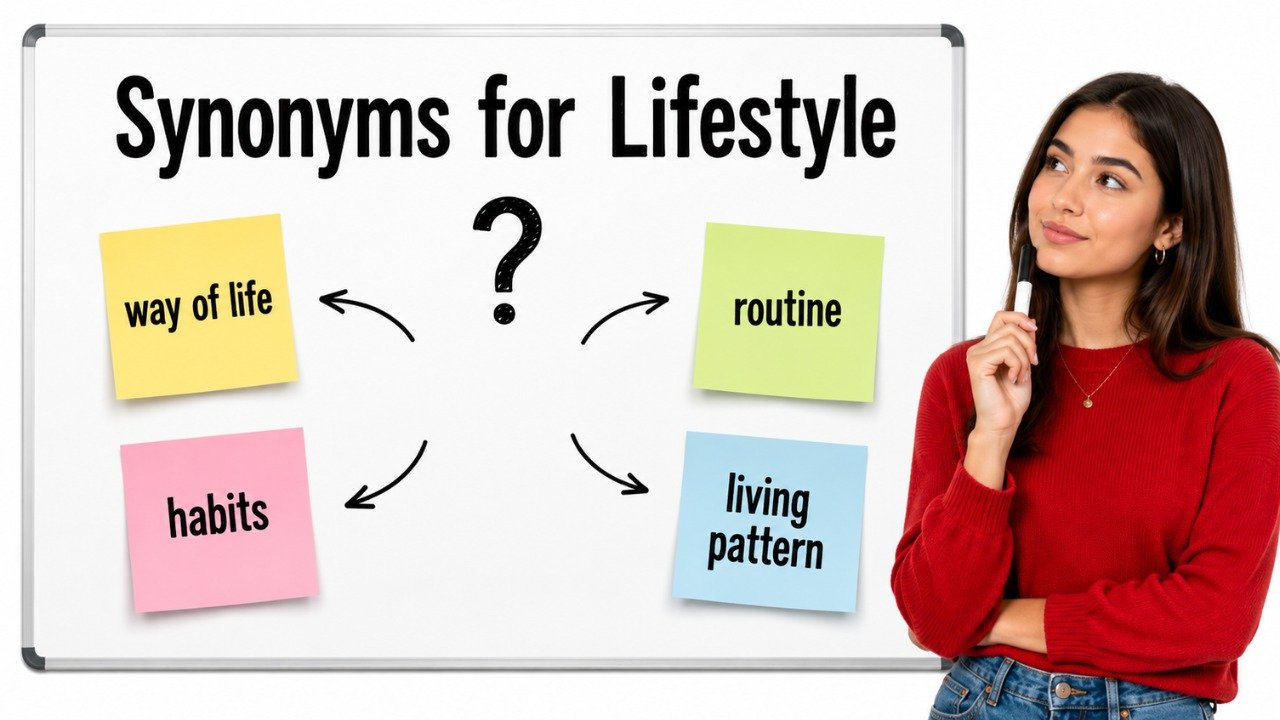
Quick Answer: The best synonyms for lifestyle include way of life, manner of living, way of living, routine, habits, living pattern, mode of life, daily life, life pattern, and standard of living. The best choice depends on context. Way of life is the strongest general replacement, routine works for repeated daily activities, habits focuses on regular behaviors, living pattern suits analytical writing, and standard of living is best when discussing material conditions or economic comfort. These synonyms for lifestyle help describe how a person or group lives, behaves, spends time, and organizes daily life.
Pronunciation and Word Details
Word: Lifestyle
Pronunciation: /ˈlaɪf.staɪl/
Part of Speech: Noun
Meaning: The typical way a person or group lives, including habits, activities, values, choices, and daily routines.
US Pronunciation:
UK Pronunciation:
What Does “Lifestyle” Mean?
Lifestyle means the usual way a person, family, community, or group lives. It is a noun that can describe daily habits, routines, interests, values, work patterns, leisure activities, spending choices, and personal priorities.
The word is broad because lifestyle can refer to many parts of life at once. A healthy lifestyle may include exercise, balanced meals, and enough rest. A busy lifestyle may involve long working hours, frequent travel, and limited free time. A simple lifestyle may focus on fewer possessions and quieter routines.
Lifestyle can also describe shared patterns within a social group or community. In these situations, it refers not to one individual habit but to an overall manner of living.
Meaning, Tone, and Context of “Lifestyle”
Lifestyle is generally a neutral and widely understood word. It works naturally in everyday conversation, professional writing, health discussions, cultural descriptions, personal development content, and academic contexts.
Neutral Use: Lifestyle can simply describe how someone lives without suggesting approval or criticism.
Example: Her lifestyle includes regular exercise and plenty of time outdoors.
Positive Use: The word can describe beneficial habits or an enjoyable way of living.
Example: He adopted a healthier lifestyle after changing his daily routine.
Critical Use: Lifestyle may also describe habits that create problems or risks.
Example: A stressful lifestyle can make it difficult to rest properly.
Formal Use: In research or professional writing, lifestyle can refer to patterns of behavior and personal choices.
Example: The survey examined lifestyle patterns among adults.
Conversational Use: In everyday speech, lifestyle often describes someone’s general routine, interests, or preferred way of living.
Example: City life suits her lifestyle well.
When and How to Use “Lifestyle”
For Daily Habits: Use lifestyle when describing a person’s regular behaviors and routines.
Example: His lifestyle includes morning walks and early evenings.
For Health: Use lifestyle when discussing habits connected with physical or emotional wellbeing.
Example: Small lifestyle changes can support better sleep.
For Personal Choices: Lifestyle works when describing decisions about work, food, leisure, travel, or social activity.
Example: Working remotely fits her lifestyle.
For Social Patterns: Use lifestyle when describing how a group or community commonly lives.
Example: The community maintains a traditional lifestyle.
For Work and Leisure: Lifestyle can describe the balance between professional responsibilities and personal interests.
Example: He wanted a lifestyle that allowed more time for family.
For Culture: Lifestyle is useful when discussing customs, routines, values, and shared behaviors.
Example: Local traditions continue to influence the region’s lifestyle.
Best Synonyms for Lifestyle
Way of Life: A person’s or group’s general manner of living.
Example: Farming is more than a job for them. It is a way of life.
Manner of Living: The way someone organizes and experiences everyday life.
Example: Her quiet manner of living reflects her preference for simplicity.
Way of Living: The typical habits and choices that shape everyday life.
Example: Moving to the countryside changed their way of living.
Routine: A regular pattern of activities repeated frequently.
Example: His morning routine includes reading and exercise.
Habits: Regular actions or behaviors that form part of everyday life.
Example: Healthy habits helped her feel more energetic.
Living Pattern: A recognizable pattern in the way someone lives.
Example: Researchers studied changing living patterns in large cities.
Mode of Life: A particular way of living, often used in formal writing.
Example: Their traditional mode of life has remained largely unchanged.
Daily Life: The ordinary activities and experiences of each day.
Example: Technology has become part of daily life for many families.
Life Pattern: The repeated structure of habits, choices, and activities in someone’s life.
Example: His life pattern changed after retirement.
Standard of Living: The level of comfort and material wellbeing available to a person or group.
Example: Higher earnings improved the family’s standard of living.
50 Synonyms for Lifestyle with Short Meanings
- Way of Life: A person’s general manner of living.
- Way of Living: The habits and choices that shape daily existence.
- Manner of Living: The particular way someone conducts everyday life.
- Mode of Life: A specific form or style of living.
- Living Pattern: A repeated pattern of daily behavior and choices.
- Life Pattern: The overall structure of a person’s regular activities.
- Daily Life: The normal activities and experiences of everyday living.
- Everyday Life: Ordinary routines and experiences from day to day.
- Routine: A regular sequence of repeated activities.
- Daily Routine: The usual activities performed each day.
- Habits: Regular behaviors developed through repetition.
- Practices: Activities or behaviors commonly followed.
- Customs: Established ways of behaving within a person or group.
- Living Habits: Regular behaviors connected with everyday life.
- Personal Habits: Individual patterns of repeated behavior.
- Daily Habits: Actions regularly performed each day.
- Life Habits: Repeated choices that influence the way someone lives.
- Pattern of Living: A recognizable structure in someone’s way of life.
- Style of Living: The particular way someone chooses to live.
- Life Style: A descriptive phrase for someone’s manner of living.
- Life Routine: The regular structure of someone’s activities.
- Life Choices: Decisions that shape the way a person lives.
- Living Choices: Decisions about habits, priorities, and daily activities.
- Personal Routine: An individual’s regular schedule or set of activities.
- Personal Practices: Behaviors a person regularly follows.
- Daily Practices: Activities consistently performed in everyday life.
- Living Practices: Regular methods or habits connected with daily living.
- Personal Way of Life: An individual’s characteristic manner of living.
- Social Pattern: A common pattern of behavior within social life.
- Social Habits: Regular behaviors connected with social interaction.
- Cultural Pattern: A shared way of behaving within a culture.
- Cultural Practices: Customs and behaviors shared by a community.
- Living Culture: Shared values and habits that influence everyday life.
- Personal Culture: Individual values, preferences, and habits that shape life.
- Life Approach: A person’s general approach to living.
- Approach to Life: The way someone thinks about and manages life.
- Life Philosophy: Beliefs and principles that guide how someone lives.
- Living Philosophy: Ideas and values used to guide everyday choices.
- Life Rhythm: The pace and repeated flow of someone’s daily activities.
- Daily Rhythm: The natural pattern and pace of everyday activities.
- Life Pace: The speed and intensity at which someone lives.
- Pace of Life: The general speed and activity level of everyday living.
- Personal Pattern: A repeated individual pattern of behavior or choice.
- Behavior Pattern: A repeated way of acting in everyday situations.
- Living Arrangement: The practical way in which a person organizes daily living.
- Life Arrangement: The way responsibilities and activities are organized.
- Standard of Living: The level of material comfort available to someone.
- Living Standard: A person’s or group’s level of material wellbeing.
- Life Condition: The circumstances in which someone lives.
- Living Condition: The practical circumstances surrounding daily life.
Read Also:
Synonyms for Understood
Synonyms for Lifestyle by Context
When Lifestyle Means a General Way of Life
Way of life, way of living, manner of living, mode of life, and style of living are useful when describing the overall way someone lives.
Example: Their rural way of life is very different from life in a large city.
Example: Her manner of living reflects a strong preference for simplicity.
When Lifestyle Means Daily Routine
Routine, daily routine, daily life, everyday life, daily rhythm, and life rhythm are better when the focus is on repeated activities.
Example: Exercise became part of his daily routine.
Example: The new job completely changed her daily rhythm.
When Lifestyle Means Habits and Behavior
Habits, living habits, daily habits, practices, behavior pattern, and personal practices work well when describing repeated actions.
Example: Better sleeping habits improved his energy.
Example: Her daily practices include meditation and reading.
When Lifestyle Means Values and Personal Choices
Life choices, approach to life, life philosophy, living philosophy, and life approach are useful when the focus is on beliefs and decisions.
Example: His approach to life emphasizes patience and balance.
Example: Traveling slowly is part of her life philosophy.
When Lifestyle Means Material Conditions
Standard of living, living standard, life condition, and living condition are useful when discussing money, housing, resources, or material comfort.
Example: The family’s standard of living improved after their income increased.
Example: Better housing created safer living conditions.
Another Word for Lifestyle
The best single replacement for lifestyle is usually way of life because it has a broad meaning and works naturally in many contexts. However, the strongest alternative depends on whether you are discussing habits, routine, culture, values, or material conditions.
Original: She enjoys an active lifestyle.
Better Option: She enjoys an active way of life.
Original: His lifestyle changed after retirement.
Better Option: His daily routine changed after retirement.
Original: Their lifestyle reflects local traditions.
Better Option: Their way of living reflects local traditions.
Original: Exercise is an important part of her lifestyle.
Better Option: Exercise is an important part of her daily habits.
When Not to Use “Lifestyle”
Lifestyle is useful, but it can become vague when a more specific word would communicate the idea better.
Weak: His lifestyle changed.
Better: His daily routine changed after he started working from home.
Lifestyle may also be too broad when you are discussing one particular habit.
Weak: Drinking more water improved her lifestyle.
Better: Drinking more water improved her daily habits.
Avoid using lifestyle when you specifically mean income, housing, or material comfort.
Weak: Their lifestyle increased after their income rose.
Better: Their standard of living improved after their income rose.
Lifestyle may also sound repetitive when used several times in a short paragraph.
Weak: Her lifestyle is healthy because her lifestyle includes exercise and her lifestyle allows enough sleep.
Better: Her way of life is healthy because her routine includes exercise and enough sleep.
Words Commonly Confused With Lifestyle
Lifestyle vs Routine: Lifestyle is broader and includes habits, values, interests, and choices. Routine mainly refers to activities repeated regularly.
Lifestyle vs Habit: A habit is one repeated behavior, while a lifestyle is the larger pattern created by many habits and choices.
Lifestyle vs Standard of Living: Lifestyle describes how someone lives. Standard of living refers mainly to material comfort, income, resources, and living conditions.
Lifestyle vs Culture: Lifestyle describes patterns of living, while culture includes shared traditions, beliefs, values, language, and customs.
Lifestyle vs Life Philosophy: Lifestyle describes actual ways of living, while life philosophy describes the beliefs or principles guiding those choices.
Lifestyle vs Living Conditions: Lifestyle usually involves choices and habits, while living conditions describe the circumstances in which a person lives.
Which Synonym Should You Choose?
Choose way of life when you need a natural general synonym that works in most contexts.
Choose manner of living when you want a slightly more formal expression.
Choose way of living when discussing overall habits, choices, or personal arrangements.
Choose routine when the focus is on repeated daily activities.
Choose habits when describing regular individual behaviors.
Choose living pattern in analytical, research, or formal writing.
Choose mode of life when writing about communities, traditions, or historical ways of living.
Choose daily life when discussing ordinary everyday experiences.
Choose life philosophy when the focus is on values or beliefs that guide behavior.
Choose standard of living when writing about income, housing, resources, or material comfort.
Real Life Examples of “Lifestyle” in Sentences
Original: She follows a healthy lifestyle.
Better Option: She follows a healthy way of life.
Original: His lifestyle involves frequent travel.
Better Option: His way of living involves frequent travel.
Original: Retirement changed his lifestyle.
Better Option: Retirement changed his daily routine.
Original: Their lifestyle is strongly connected with local traditions.
Better Option: Their way of life is strongly connected with local traditions.
Original: A busy lifestyle can leave little time for rest.
Better Option: A busy daily routine can leave little time for rest.
Original: She changed her lifestyle by exercising regularly.
Better Option: She changed her habits by exercising regularly.
Original: The family prefers a simple lifestyle.
Better Option: The family prefers a simple manner of living.
Original: His lifestyle reflects his personal values.
Better Option: His approach to life reflects his personal values.
Original: The new schedule suits her lifestyle.
Better Option: The new schedule suits her daily routine.
Original: Their lifestyle improved as their financial situation became stronger.
Better Option: Their standard of living improved as their financial situation became stronger.
Synonym Groups and Usage Differences
General Living Group
Way of life, manner of living, way of living, and mode of life describe someone’s overall manner of living.
These alternatives work when the subject includes several areas of life rather than one specific habit.
Example: Their way of life combines work, family activities, and community traditions.
Routine Group
Routine, daily routine, daily life, everyday life, and daily rhythm focus on repeated activities.
Use these when discussing schedules, repeated tasks, or regular patterns.
Example: Reading before bed became part of her daily routine.
Habit Group
Habits, daily habits, living habits, practices, and personal practices focus on repeated behaviors.
These words are more specific than lifestyle.
Example: Healthy eating habits can become easier with planning.
Values Group
Life philosophy, approach to life, living philosophy, and life approach describe the beliefs or principles behind someone’s choices.
Example: Simplicity is central to his approach to life.
Material Living Group
Standard of living, living standard, living condition, and life condition focus on practical or material circumstances.
Example: Better employment opportunities helped improve their standard of living.
Antonyms of Lifestyle
Lifestyle does not have one perfect opposite because it refers to a way of living. However, several contrasting words or ideas can work depending on the meaning.
Disorder: A lack of regular structure or organization.
Inactivity: A state involving little physical movement or activity.
Instability: A condition in which routines or circumstances change frequently.
Irregularity: A lack of consistent habits or patterns.
Chaos: A state without clear order or routine.
Neglect: Failure to maintain healthy or responsible habits.
Hardship: Difficult living circumstances with limited comfort or resources.
Deprivation: A lack of important resources or necessities.
Unhealthy Habits: Behaviors that may negatively affect wellbeing.
Poor Living Conditions: Difficult or inadequate circumstances in which someone lives.
Comparison: Lifestyle vs Related Words
Lifestyle vs Way of Life
Lifestyle and way of life are often interchangeable. Lifestyle may sound slightly more modern and can emphasize choices, habits, and activities. Way of life can feel broader and may describe personal, cultural, or traditional patterns.
Example With Lifestyle: She prefers a quiet lifestyle near the countryside.
Example With Way of Life: Farming has been their way of life for generations.
Lifestyle vs Routine
Lifestyle includes many parts of life, while routine describes repeated activities or schedules.
Example With Lifestyle: An active lifestyle can include exercise, outdoor activities, and regular movement.
Example With Routine: Her morning routine begins with a walk.
Lifestyle vs Habits
Lifestyle is the overall pattern of living, while habits are individual repeated behaviors.
Example With Lifestyle: He adopted a healthier lifestyle.
Example With Habits: He developed healthier eating habits.
Lifestyle vs Standard of Living
Lifestyle describes how someone chooses or tends to live. Standard of living describes material comfort and access to resources.
Example With Lifestyle: She enjoys a simple lifestyle.
Example With Standard of Living: Their standard of living improved after their income increased.
Lifestyle vs Culture
Lifestyle relates to living patterns and choices. Culture is broader and includes shared beliefs, customs, traditions, values, and behaviors.
Example With Lifestyle: Their lifestyle includes frequent outdoor gatherings.
Example With Culture: Hospitality is an important part of their culture.
Common Phrases and Expressions With “Lifestyle”
Healthy Lifestyle: A way of living that supports physical and emotional wellbeing.
Active Lifestyle: A way of life involving frequent movement or physical activity.
Busy Lifestyle: A life filled with many responsibilities, activities, or commitments.
Sedentary Lifestyle: A way of living involving long periods of sitting and limited physical activity.
Balanced Lifestyle: A way of living that gives reasonable attention to work, rest, relationships, and personal needs.
Simple Lifestyle: A way of living focused on fewer possessions, fewer complications, or quieter routines.
Modern Lifestyle: A manner of living shaped by current habits, technology, work patterns, and social changes.
Traditional Lifestyle: A way of living based on established customs or long standing practices.
Urban Lifestyle: A way of living associated with cities and city activities.
Rural Lifestyle: A way of living associated with the countryside, smaller communities, or agricultural areas.
Common Mistakes to Avoid
One common mistake is treating every synonym for lifestyle as completely interchangeable. Some alternatives are broader, while others focus on only one part of life.
Do not replace lifestyle with routine when you are describing values, interests, and long term choices. Routine usually refers only to repeated activities.
Avoid using standard of living as a general synonym for lifestyle. Standard of living specifically concerns material comfort and economic circumstances.
Another mistake is using lifestyle when a more precise word would make the sentence clearer. If you mean sleeping habits, exercise habits, or work routine, name that specific idea.
Avoid repeating lifestyle several times in the same paragraph. Words such as way of life, routine, habits, and manner of living can create smoother writing when they accurately match the context.
Finally, do not force unusual alternatives simply to avoid repetition. A familiar and precise word is usually better than a distant synonym that changes the intended meaning.
Conclusion
The best synonyms for lifestyle depend on what part of life you want to describe. Way of life is the strongest general alternative, while routine works for repeated activities, habits focuses on regular behavior, and manner of living suits more formal writing. Life philosophy is useful for values and beliefs, while standard of living refers to material comfort. Understanding these synonyms for lifestyle helps you choose clearer words for conversations, essays, reports, health writing, and descriptions of personal or cultural living patterns.
FAQs About Synonyms for Lifestyle
What is the best synonym for lifestyle?
The best general synonym is way of life. It describes the overall manner in which a person or group lives.
What is another word for a healthy lifestyle?
Useful alternatives include healthy way of life, healthy habits, healthy routine, and healthy living practices. The best choice depends on what part of health you are describing.
Can routine be used as a synonym for lifestyle?
Yes, but only when the focus is on repeated daily activities. Lifestyle is broader because it can also include values, interests, choices, and social behavior.
Is way of life the same as lifestyle?
They are very close in meaning. Way of life can sound broader or more traditional, while lifestyle often emphasizes personal habits and choices.
What is a formal synonym for lifestyle?
Manner of living, mode of life, and living pattern are useful formal alternatives. Living pattern is especially suitable for analytical or research based contexts.
Is standard of living a synonym for lifestyle?
Only in certain contexts. Standard of living refers mainly to material comfort, income, housing, and resources, while lifestyle describes a broader way of living.
What word describes someone’s daily lifestyle?
Daily routine is often the clearest choice when describing someone’s regular schedule and repeated everyday activities.
