
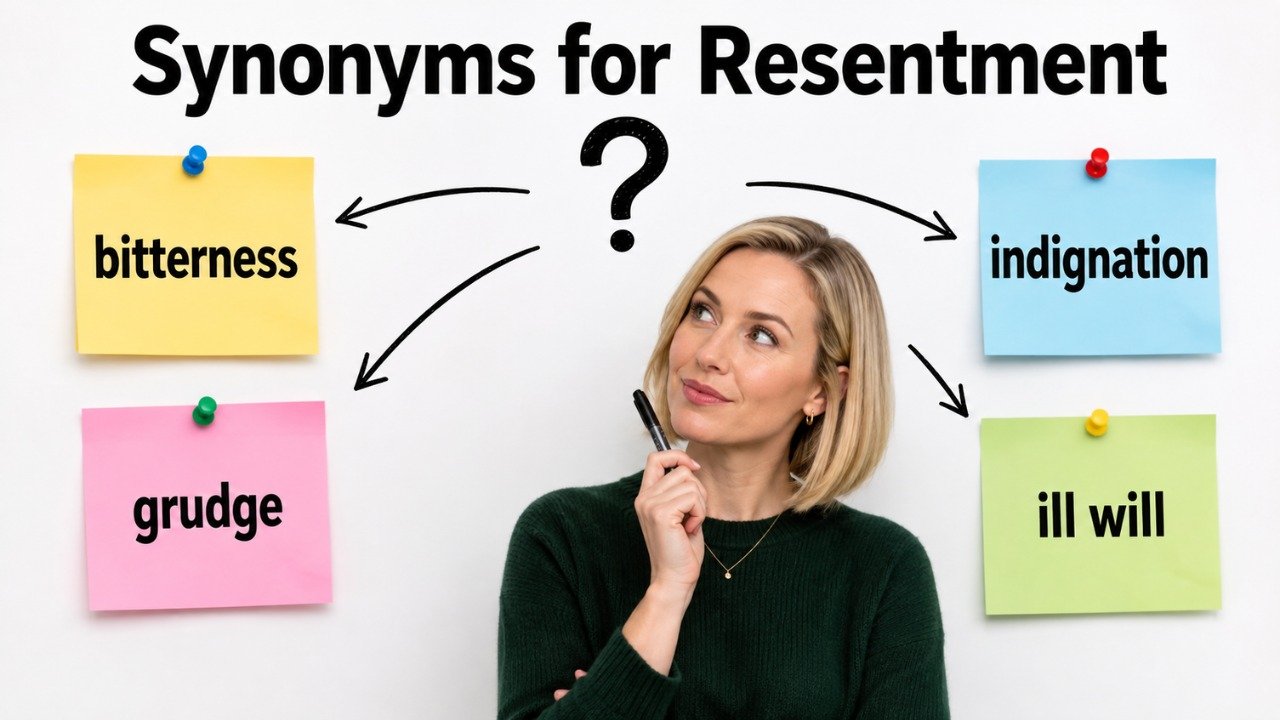
Quick Answer: The best synonyms for resentment include bitterness, indignation, grudge, animosity, rancor, hostility, ill will, displeasure, anger, and umbrage. Use bitterness for lasting emotional pain, indignation for anger about unfair treatment, and grudge for resentment directed toward a particular person. Animosity and hostility express stronger opposition, while rancor suggests deep and persistent bitterness. Displeasure suits mild or formal contexts, anger works in casual speech, and umbrage describes offense caused by a remark or action.
Pronunciation and Word Details
Word: Resentment.
Pronunciation: /rɪˈzent.mənt/.
Part of Speech: Noun.
Meaning: Resentment is a lasting feeling of anger, bitterness, or hurt caused by unfair treatment, insult, or disappointment.
US Pronunciation:
UK Pronunciation:
What Does “Resentment” Mean?
Resentment means a persistent feeling of anger, bitterness, or emotional hurt toward someone or something believed to be unfair.
Resentment is a noun. It usually develops when a person feels ignored, mistreated, insulted, disadvantaged, or denied something they deserve.
Example: She felt resentment toward her manager after being repeatedly overlooked for promotion.
Unlike sudden anger, resentment often remains for a long time. A person may continue thinking about the event that caused the feeling, even after the immediate conflict has ended.
Example: Years of unequal treatment created deep resentment within the community.
Resentment can be personal, social, professional, political, or emotional. It may exist between family members, friends, coworkers, groups, or communities.
Example: His unfair criticism caused resentment among the team members.
The word can also describe bitterness about another person’s success, privilege, authority, or freedom.
Example: He struggled with resentment when his colleague received the opportunity he wanted.
The exact meaning depends on the cause and intensity of the emotion. Resentment may express quiet hurt, moral indignation, lasting bitterness, personal grievance, or open hostility.
Meaning, Tone, and Context of “Resentment”
Resentment has a serious, emotional, and generally negative tone. It is more formal and psychologically detailed than ordinary words such as annoyance or anger.
The word is common in personal relationships, workplace communication, literary analysis, social discussion, emotional writing, essays, reports, and conversations about conflict.
In personal contexts, resentment often describes unresolved hurt between people.
Example: Unspoken resentment gradually damaged their friendship.
In workplace contexts, it may develop because of unequal treatment, poor communication, unfair workloads, or lack of recognition.
Example: The unequal distribution of responsibilities created resentment among employees.
In social and political writing, resentment can describe dissatisfaction felt by a large group.
Example: Rising costs contributed to public resentment.
In literary analysis, the word helps explain a character’s motivation, emotional conflict, or changing relationships.
Example: The character’s resentment influences many of his later decisions.
Resentment is stronger and more lasting than irritation. However, it is not always as intense as hatred or rage. It often suggests that anger has been held inside rather than expressed directly.
The word can sound accusatory when used about another person’s emotions. Writers should provide context instead of assuming why someone feels resentful.
When and How to Use “Resentment”
For Lasting Emotional Hurt
Use resentment when anger or hurt continues after an unfair or painful experience.
Example: She carried resentment for years after the family dispute.
For Unfair Treatment
Use resentment when someone believes that another person or system has treated them unjustly.
Example: The unfair decision caused considerable resentment among the applicants.
For Workplace Conflict
Use resentment to describe negative feelings caused by unequal workloads, poor recognition, favoritism, or unfair policies.
Example: Favoritism can create resentment within a team.
For Relationship Problems
Use resentment when unresolved disappointment or hurt affects a friendship, marriage, or family relationship.
Example: Their failure to discuss the issue allowed resentment to grow.
For Social Dissatisfaction
Use resentment when a group feels ignored, disadvantaged, or treated without respect.
Example: The new restrictions increased resentment among local residents.
For Jealous or Competitive Feelings
Use resentment when someone feels bitter about another person’s success, privilege, or opportunity.
Example: He felt resentment toward the colleague who received the award.
For Literary Analysis
Use resentment when explaining a character’s lasting anger or motivation.
Example: The protagonist’s resentment develops after years of rejection.
For Formal Reports
Use resentment when describing a sustained negative reaction rather than a brief complaint.
Example: The survey revealed growing resentment about unequal access to resources.
For Emotional Reflection
Use resentment when discussing feelings that have remained unresolved.
Example: Recognizing her resentment helped her understand why the conversation felt difficult.
Best Synonyms for Resentment
Bitterness
Synonym: Bitterness is lasting anger, disappointment, or emotional pain caused by an unpleasant experience.
Example: He spoke with bitterness about the way he had been treated.
Indignation
Synonym: Indignation is anger caused by something considered unfair, insulting, or morally wrong.
Example: The decision was met with widespread indignation.
Grudge
Synonym: A grudge is a lasting feeling of resentment toward a particular person because of a past offense.
Example: She refused to hold a grudge after the disagreement.
Animosity
Synonym: Animosity is strong dislike or hostility toward another person or group.
Example: Years of competition created animosity between the two teams.
Rancor
Synonym: Rancor is deep and persistent bitterness caused by past conflict.
Example: The discussion reopened old feelings of rancor.
Hostility
Synonym: Hostility is open or strongly felt opposition, anger, or unfriendliness.
Example: His suggestion was received with unexpected hostility.
Ill Will
Synonym: Ill will is an unfriendly or resentful feeling toward someone.
Example: Despite the argument, there was no lasting ill will between them.
Displeasure
Synonym: Displeasure is a mild or formal feeling of annoyance, dissatisfaction, or disapproval.
Example: The director expressed displeasure with the delayed report.
Anger
Synonym: Anger is a strong feeling of irritation or outrage caused by a wrong or unpleasant event.
Example: Her anger faded after they discussed the misunderstanding.
Umbrage
Synonym: Umbrage is offense or resentment caused by a perceived insult.
Example: He took umbrage at the suggestion that he had been careless.
50 Synonyms for Resentment with Short Meanings
- Bitterness: Lasting anger or disappointment caused by hurt.
- Indignation: Anger caused by unfair or insulting behavior.
- Grudge: Persistent resentment toward someone for a past offense.
- Animosity: Strong dislike or hostility toward a person or group.
- Rancor: Deep and continuing bitterness.
- Hostility: Strong opposition, anger, or unfriendliness.
- Ill Will: Unfriendly or resentful feelings toward someone.
- Displeasure: Mild annoyance, dissatisfaction, or disapproval.
- Anger: A strong emotional reaction to wrongdoing or frustration.
- Umbrage: Offense taken because of an insult or slight.
- Grievance: A complaint or feeling caused by unfair treatment.
- Spite: A desire to hurt or annoy someone because of resentment.
- Malice: A wish to cause harm because of hostility.
- Enmity: Deep and lasting hostility between people or groups.
- Antipathy: A strong feeling of dislike.
- Antagonism: Active opposition or hostility.
- Acrimony: Bitter anger expressed through harsh words.
- Irritation: A mild feeling of anger or annoyance.
- Annoyance: Displeasure caused by an irritating event.
- Frustration: Anger or disappointment caused by blocked goals.
- Discontent: Dissatisfaction with a situation or condition.
- Dissatisfaction: A feeling that something is unfair or inadequate.
- Disaffection: Loss of loyalty caused by disappointment or resentment.
- Offense: Hurt or anger caused by an insult.
- Hurt: Emotional pain caused by another person’s words or actions.
- Outrage: Strong anger caused by injustice or wrongdoing.
- Ire: Formal or literary anger.
- Vexation: Annoyance caused by difficulty or mistreatment.
- Exasperation: Intense irritation caused by repeated problems.
- Disgruntlement: Dissatisfaction that produces irritation or complaint.
- Aggrievement: A feeling of having been treated unfairly.
- Hard Feelings: Unfriendly emotions remaining after a disagreement.
- Bad Blood: Lasting hostility between people or groups.
- Animus: Strong dislike or hostile feeling.
- Resentful Anger: Anger that continues because of remembered unfairness.
- Wounded Pride: Hurt caused by embarrassment, rejection, or insult.
- Sense of Injustice: Anger arising from perceived unfairness.
- Sense of Grievance: A belief that one has been wronged.
- Lingering Anger: Anger that remains after an event has ended.
- Suppressed Anger: Anger that is felt but not openly expressed.
- Smoldering Anger: Quiet but continuing anger that may grow stronger.
- Hostile Feeling: An emotion of opposition or unfriendliness.
- Personal Grievance: Resentment connected to a particular wrong.
- Deep Displeasure: Strong dissatisfaction or disapproval.
- Emotional Hurt: Pain caused by rejection, insult, or unfair treatment.
- Sourness: A bitter or unpleasant emotional attitude.
- Resentfulness: The state of feeling bitter about unfair treatment.
- Rankling: A persistent feeling of irritation or resentment.
- Alienation: Emotional separation caused by disappointment or conflict.
- Distrust: Lack of confidence caused by past hurt or unfairness.
Read Also:
Synonyms for Traverse
Synonyms for Resentment by Context
When Resentment Means Lasting Bitterness
When resentment describes anger that continues over time, suitable synonyms include bitterness, rancor, rankling, lingering anger, smoldering anger, and resentfulness.
Bitterness: Best for emotional pain that has become deeply rooted.
Example: Years of rejection left him with considerable bitterness.
Rancor: Best for intense resentment connected to an old dispute.
Example: The agreement finally ended decades of rancor.
Lingering Anger: Best when the feeling continues after the event has passed.
Example: Lingering anger made it difficult for them to rebuild trust.
Smoldering Anger: Best when the emotion remains quiet but could become more intense.
Example: Smoldering anger remained beneath their polite conversation.
When Resentment Means Anger About Unfairness
When resentment comes from perceived injustice, use indignation, outrage, aggrievement, grievance, displeasure, or a sense of injustice.
Indignation: Best for morally justified anger about unfair or insulting conduct.
Example: The unfair accusation caused immediate indignation.
Outrage: Best for strong public or personal anger about serious wrongdoing.
Example: The decision provoked outrage throughout the community.
Aggrievement: Best for a formal description of feeling wronged.
Example: His sense of aggrievement increased after the complaint was ignored.
Grievance: Best when the resentment involves a specific complaint.
Example: Employees submitted a formal grievance about unequal treatment.
When Resentment Means a Personal Grudge
When resentment is directed toward a specific person, useful synonyms include grudge, hard feelings, personal grievance, ill will, wounded pride, and spite.
Grudge: Best for resentment maintained because of a past offense.
Example: He still holds a grudge over an argument that happened years ago.
Hard Feelings: Best for conversational descriptions of tension after a disagreement.
Example: I hope there are no hard feelings after our discussion.
Ill Will: Best for a polite or formal description of unfriendly feelings.
Example: They separated without any lasting ill will.
Wounded Pride: Best when resentment comes from embarrassment or rejection.
Example: His harsh response appeared to come from wounded pride.
When Resentment Means Strong Hostility
When resentment becomes stronger or more openly aggressive, choose animosity, hostility, enmity, antagonism, animus, or malice.
Animosity: Best for strong dislike between individuals or groups.
Example: The dispute created lasting animosity between the neighbors.
Hostility: Best for open anger, opposition, or unfriendly behavior.
Example: She was surprised by the hostility directed toward her proposal.
Enmity: Best for deep and lasting hostility.
Example: The conflict produced years of enmity.
Antagonism: Best for active opposition between people, ideas, or groups.
Example: Personal antagonism made cooperation almost impossible.
When Resentment Means Mild Displeasure
When the feeling is less intense, suitable alternatives include displeasure, annoyance, irritation, dissatisfaction, discontent, and vexation.
Displeasure: Best for formal communication about dissatisfaction.
Example: The supervisor expressed displeasure with the repeated delays.
Annoyance: Best for a brief and relatively mild emotional reaction.
Example: Her annoyance disappeared once the mistake was corrected.
Dissatisfaction: Best when expectations, services, or conditions are inadequate.
Example: The survey revealed dissatisfaction with the new schedule.
Vexation: Best for irritation caused by repeated difficulty or inconvenience.
Example: The constant interruptions caused considerable vexation.
When Resentment Comes From Disappointment
When resentment develops because someone feels overlooked, rejected, or prevented from achieving a goal, use frustration, hurt, discontent, wounded pride, alienation, or dissatisfaction.
Frustration: Best when blocked progress produces anger.
Example: Repeated delays created frustration among the participants.
Hurt: Best when emotional pain is more important than anger.
Example: Her criticism caused more hurt than resentment.
Alienation: Best when disappointment causes emotional distance from a group or relationship.
Example: Poor communication led to alienation among several employees.
Discontent: Best for general dissatisfaction with circumstances.
Example: Growing discontent eventually led to demands for change.
Another Word for Resentment
The best general replacement for resentment is bitterness because both words describe lasting anger or hurt caused by an unpleasant experience.
However, the best alternative depends on the situation. Use indignation for anger about injustice, grudge for resentment toward a particular person, displeasure for a milder formal tone, and animosity for stronger hostility.
Original: She felt resentment about being excluded from the meeting.
Better Option: She felt bitterness about being excluded from the meeting.
Original: The unfair decision caused resentment among residents.
Better Option: The unfair decision caused indignation among residents.
Original: He still carries resentment toward his former partner.
Better Option: He still holds a grudge against his former partner.
Original: The manager expressed resentment about the criticism.
Better Option: The manager expressed displeasure about the criticism.
When Not to Use “Resentment”
When the Feeling Is Brief
Resentment usually lasts longer than ordinary annoyance or anger. Do not use it for a momentary irritation that quickly disappears.
Weak: She felt resentment when the bus arrived five minutes late.
Better: She felt annoyance when the bus arrived five minutes late.
When the Anger Is Immediate and Intense
Use outrage, fury, or anger when the reaction is sudden and powerful rather than quiet and lasting.
Weak: The dangerous decision caused immediate resentment.
Better: The dangerous decision caused immediate outrage.
When the Emotion Is Mainly Sadness
Resentment includes anger or bitterness. Use hurt, sadness, disappointment, or grief when anger is not central.
Weak: He felt resentment after saying goodbye to his family.
Better: He felt sadness after saying goodbye to his family.
When the Feeling Is Envy
Envy is a desire for something another person has. Resentment may accompany envy, but the words are not identical.
Weak: She felt resentment because she wanted her friend’s new house.
Better: She felt envy because she wanted a similar house.
When the Sentence Needs a Specific Cause
Resentment can sound vague when the reader does not know what caused it.
Weak: There was resentment in the office.
Better: Employees felt resentment because promotions were awarded without a clear process.
When the Word Sounds Accusatory
Avoid claiming that another person feels resentment unless the evidence or context supports that conclusion.
Weak: He disagreed because he was full of resentment.
Better: His repeated comments suggested that he remained upset about the earlier decision.
When a More Precise Formal Word Is Available
In reports, identify whether the response was dissatisfaction, opposition, outrage, or a formal grievance.
Weak: The policy created resentment.
Better: The policy created widespread dissatisfaction among affected employees.
When Repetition Makes the Writing Heavy
Use related terms to describe different shades of the emotion.
Weak: Her resentment caused resentment in others, and that resentment damaged the team.
Better: Her bitterness created hostility in others, and the resulting tension damaged the team.
Words Commonly Confused With Resentment
Resentment vs Anger: Anger may be immediate and temporary. Resentment usually lasts longer and is connected to remembered unfairness, insult, or disappointment.
Resentment vs Bitterness: Resentment is anger toward a person, action, or situation. Bitterness is a broader condition of lasting disappointment or emotional pain.
Resentment vs Grudge: Resentment is the feeling itself. A grudge is resentment deliberately maintained against a particular person because of a past wrong.
Resentment vs Indignation: Resentment is often personal and long lasting. Indignation is anger caused by behavior judged to be unfair, insulting, or morally wrong.
Resentment vs Hostility: Resentment may remain hidden. Hostility is more likely to appear through unfriendly words, behavior, or active opposition.
Resentment vs Jealousy: Resentment arises from perceived unfairness or mistreatment. Jealousy often involves fear of losing attention, affection, status, or a valued relationship.
Resentment vs Envy: Resentment focuses on feeling wronged. Envy focuses on wanting an advantage, possession, or quality that another person has.
Resentment vs Hatred: Resentment is lasting anger or bitterness. Hatred is a much stronger feeling of intense dislike.
Resentment vs Offense: Offense is hurt or anger caused by a particular insult. Resentment may continue long after that offense occurs.
Resentment vs Discontent: Resentment usually has a clear emotional cause involving unfairness. Discontent is broader dissatisfaction with conditions or circumstances.
Which Synonym Should You Choose?
Choose bitterness when describing lasting emotional pain, disappointment, or anger.
Choose indignation when the emotion is a response to unfair, insulting, or morally wrong behavior.
Choose grudge when resentment is directed toward a specific person because of a past offense.
Choose animosity when describing strong dislike between individuals, communities, or groups.
Choose rancor in formal writing when bitterness is deep, intense, and connected to an old conflict.
Choose hostility when resentment is visible through opposition, unfriendliness, or aggressive behavior.
Choose ill will in polite communication when referring to unfriendly feelings without sounding overly dramatic.
Choose displeasure in reports, emails, or professional writing when the reaction is mild and formal.
Choose anger in casual speech when the length or cause of the emotion is not important.
Choose umbrage when someone feels offended by a remark, criticism, or perceived insult.
Choose grievance when the feeling involves a specific complaint about unfair treatment.
Choose outrage when the reaction is intense and connected to serious wrongdoing.
Choose frustration when anger develops because progress, achievement, or communication has been blocked.
Choose hurt when emotional pain matters more than hostility.
Choose dissatisfaction when discussing poor service, conditions, policies, or unmet expectations.
Choose hard feelings in casual conversation when tension remains after a disagreement.
Choose bad blood when describing a long history of conflict between people or groups.
Choose wounded pride when resentment comes from embarrassment, rejection, or loss of status.
Real Life Examples of “Resentment” in Sentences
Original: She felt resentment after being excluded from the project.
Better Option: She felt bitterness after being excluded from the project.
Original: The unfair rule caused resentment among the students.
Better Option: The unfair rule caused indignation among the students.
Original: He carried resentment toward his former business partner.
Better Option: He held a grudge against his former business partner.
Original: Years of conflict created resentment between the families.
Better Option: Years of conflict created animosity between the families.
Original: The decision produced resentment within the department.
Better Option: The decision produced dissatisfaction within the department.
Original: Her resentment became clear during the meeting.
Better Option: Her hostility became clear during the meeting.
Original: The criticism left him with resentment.
Better Option: The criticism left him with wounded pride.
Original: Public resentment increased after the announcement.
Better Option: Public outrage increased after the announcement.
Original: Their conversation helped reduce the resentment between them.
Better Option: Their conversation helped reduce the hard feelings between them.
Original: He expressed resentment about the repeated delays.
Better Option: He expressed frustration about the repeated delays.
Synonym Groups and Usage Differences
Lasting Bitterness Group
Bitterness, rancor, resentfulness, lingering anger, smoldering anger, and rankling belong to the lasting bitterness group.
These words describe emotions that remain after the original event. Bitterness is broad and natural, while rancor is stronger and more formal. Rankling suggests that the memory continues to cause irritation.
Example: The unresolved dispute left both sides with lasting bitterness.
Injustice Group
Indignation, outrage, grievance, aggrievement, umbrage, and a sense of injustice belong to the injustice group.
These words connect anger to unfairness, insult, or wrongdoing. Indignation often carries moral force, while grievance refers to a specific complaint.
Example: The unexplained decision caused widespread indignation.
Personal Conflict Group
Grudge, hard feelings, bad blood, personal grievance, ill will, and wounded pride belong to the personal conflict group.
These expressions describe resentment between particular people. Grudge suggests that someone continues remembering an offense, while hard feelings is more conversational and less intense.
Example: They resolved the disagreement without any lasting hard feelings.
Hostility Group
Animosity, hostility, enmity, antagonism, animus, spite, and malice belong to the hostility group.
These words are stronger than resentment. Hostility may be openly expressed, while animosity can remain as a strong internal dislike. Malice includes a desire to cause harm.
Example: Political differences gradually developed into personal animosity.
Mild Displeasure Group
Displeasure, irritation, annoyance, dissatisfaction, discontent, and vexation belong to the mild displeasure group.
These alternatives are useful when resentment would sound too intense. Displeasure works well in formal communication, while annoyance is common in everyday speech.
Example: The repeated errors caused considerable annoyance.
Emotional Pain Group
Hurt, frustration, alienation, disappointment, wounded pride, and emotional hurt belong to the emotional pain group.
These words focus on the experience beneath resentment. Hurt emphasizes pain, frustration emphasizes blocked progress, and alienation describes emotional separation.
Example: A lack of recognition led to frustration and emotional distance.
Antonyms of Resentment
The opposites of resentment describe forgiveness, goodwill, acceptance, trust, satisfaction, and emotional peace.
Forgiveness: The decision to release anger about a past wrong.
Goodwill: Friendly and helpful feelings toward another person.
Acceptance: Willingness to recognize a situation without continued resistance.
Contentment: A peaceful feeling of satisfaction.
Gratitude: Appreciation for kindness, support, or benefit.
Affection: Warm feelings of care or fondness.
Sympathy: Understanding and concern for another person’s difficulty.
Understanding: Awareness of another person’s feelings or reasons.
Reconciliation: The restoration of a peaceful relationship after conflict.
Peace: Freedom from emotional conflict or hostility.
Satisfaction: A feeling that expectations or needs have been met.
Approval: A positive judgment about an action or decision.
Trust: Confidence in another person’s honesty or reliability.
Compassion: Concern for another person’s suffering.
Admiration: Respect and warm approval for someone or something.
Comparison: Resentment vs Related Words
Resentment vs Bitterness
Resentment is lasting anger directed toward a person, event, or condition believed to be unfair. Bitterness is a broader state of disappointment, cynicism, or emotional pain.
Example With Resentment: She felt resentment toward the supervisor who ignored her work.
Example With Bitterness: Years of disappointment filled him with bitterness.
Resentment vs Anger
Anger can be sudden and temporary. Resentment usually develops over time or continues because a wrong has not been resolved.
Example With Resentment: His resentment continued long after the argument ended.
Example With Anger: His anger faded once he learned the truth.
Resentment vs Grudge
Resentment is an emotional feeling. A grudge is resentment that a person continues to hold against someone for a specific offense.
Example With Resentment: She felt resentment about the unfair accusation.
Example With Grudge: She held a grudge against the person who accused her.
Resentment vs Indignation
Resentment often involves personal hurt and can remain hidden. Indignation is a strong response to behavior considered unjust, offensive, or morally wrong.
Example With Resentment: He developed resentment after being repeatedly ignored.
Example With Indignation: He expressed indignation when the false claim became public.
Resentment vs Hostility
Resentment may be quiet and internal. Hostility is stronger and often appears through aggressive, unfriendly, or opposing behavior.
Example With Resentment: She concealed her resentment during the meeting.
Example With Hostility: She responded to every suggestion with open hostility.
Resentment vs Jealousy
Resentment usually follows perceived unfairness. Jealousy often involves fear of losing attention, affection, status, or an important relationship.
Example With Resentment: He felt resentment because his efforts were never recognized.
Example With Jealousy: He felt jealousy when his closest friend began spending time with someone else.
Resentment vs Envy
Resentment is anger about being wronged or disadvantaged. Envy is dissatisfaction caused by wanting something another person possesses.
Example With Resentment: She resented the unfair way the opportunity was awarded.
Example With Envy: She envied the person who received the opportunity.
Resentment vs Rancor
Resentment can vary in intensity. Rancor refers to especially deep and persistent bitterness, often connected to a long conflict.
Example With Resentment: The change caused resentment among several employees.
Example With Rancor: The old dispute continued to produce rancor between the families.
Resentment vs Displeasure
Resentment is deeper and more lasting. Displeasure is usually milder, more controlled, and suitable for formal communication.
Example With Resentment: Years of unequal treatment created resentment.
Example With Displeasure: The manager expressed displeasure with the late submission.
Common Phrases and Expressions With “Resentment”
Harbor Resentment: To keep feelings of bitterness or anger inside.
Deep Resentment: Strong resentment that has developed over time.
Growing Resentment: Resentment that is becoming increasingly intense.
Lingering Resentment: Resentment that remains after a conflict or event.
Bitter Resentment: Resentment mixed with deep disappointment or emotional pain.
Simmering Resentment: Quiet resentment that may eventually become openly expressed.
Widespread Resentment: Resentment shared by many people.
Public Resentment: Negative public feeling about an action, policy, or decision.
Resentment Toward Someone: Lasting anger directed at a particular person.
Feelings of Resentment: Emotional bitterness caused by perceived unfairness or hurt.
Common Mistakes to Avoid
Using Resentment as a Verb
Resentment is a noun. Resent is the related verb, and resentful is the adjective.
Incorrect: I resentment the way he treated me.
Better: I resent the way he treated me.
Correct Noun Use: I feel resentment about the way he treated me.
Confusing Resentment With Resent
Use resentment to name the feeling. Use resent to describe the action of feeling bitterness.
Incorrect: She resentment her colleague’s success.
Better: She resents her colleague’s success.
Confusing Resentment With Anger
Do not use resentment for every angry reaction. The word usually suggests that anger continues over time.
Weak: His resentment lasted for three minutes.
Better: His irritation lasted for three minutes.
Confusing Resentment With Envy
Envy involves wanting what another person has. Resentment involves anger about unfairness or mistreatment.
Incorrect: He felt resentment because he admired her talent.
Better: He felt envy because he wished he had her talent.
Choosing an Overly Strong Synonym
Hatred, malice, and enmity are much stronger than resentment. Use them only when the context supports intense hostility.
Weak: She felt malice because her invitation arrived late.
Better: She felt annoyance because her invitation arrived late.
Using a Synonym That Changes the Cause
Indignation requires perceived unfairness or moral wrongdoing. Frustration usually results from blocked progress. Grudge requires a specific remembered offense.
Weak: She felt indignation because the weather changed.
Better: She felt frustration because the weather disrupted her plans.
Failing to Explain the Source
Resentment becomes clearer when the sentence identifies the action, decision, or relationship that caused it.
Vague: His resentment increased.
Better: His resentment increased when the same employees continued receiving special treatment.
Repeating the Word Too Often
Use bitterness, grievance, hard feelings, hostility, or dissatisfaction when they accurately express the intended shade of meaning.
Repetitive: Resentment spread through the team because one person’s resentment encouraged more resentment.
Better: Bitterness spread through the team because one person’s grievance encouraged wider hostility.
Using Unnatural Prepositions
Resentment toward and resentment against are both possible, but resentment toward is often more natural when referring to a person.
Less Natural: She felt resentment on her manager.
Better: She felt resentment toward her manager.
Confusing Resentful and Resented
Resentful describes the person who feels resentment. Resented describes the person or action that receives that feeling.
Example With Resentful: He became resentful after being excluded.
Example With Resented: He resented the decision to exclude him.
Conclusion
The most useful synonyms for resentment include bitterness, indignation, grudge, animosity, rancor, hostility, ill will, and displeasure. Choose bitterness for lasting emotional pain, indignation for anger about injustice, grudge for a remembered personal offense, and animosity for strong dislike. Displeasure suits mild formal contexts, while hard feelings sounds natural in conversation. Understanding these differences helps you select synonyms for resentment that accurately express the cause, strength, duration, and direction of the emotion.
FAQs About Synonyms for Resentment
What Is the Best Synonym for Resentment?
Bitterness is the best general synonym because it describes lasting anger or hurt. Grudge is better when the feeling is directed toward a specific person.
What Is a Stronger Word for Resentment?
Rancor, animosity, hostility, enmity, and malice can express stronger forms of resentment. Their intensity and meaning differ, so context matters.
Is Anger the Same as Resentment?
No. Anger may be immediate and temporary, while resentment usually lasts and develops from remembered unfairness, disappointment, or insult.
What Is Another Word for Hidden Resentment?
Suppressed anger, simmering resentment, smoldering anger, concealed bitterness, and lingering hostility can describe hidden resentment.
What Is the Difference Between Resentment and a Grudge?
Resentment is the emotional feeling. A grudge is resentment that someone continues to hold against a particular person because of a past offense.
Can Indignation Replace Resentment?
Indignation can replace resentment when the emotion is caused by unfair, insulting, or morally wrong behavior. It often describes a more immediate and openly justified reaction.
What Is the Opposite of Resentment?
Forgiveness is the clearest opposite. Goodwill, acceptance, gratitude, reconciliation, contentment, and compassion are also useful antonyms.
