
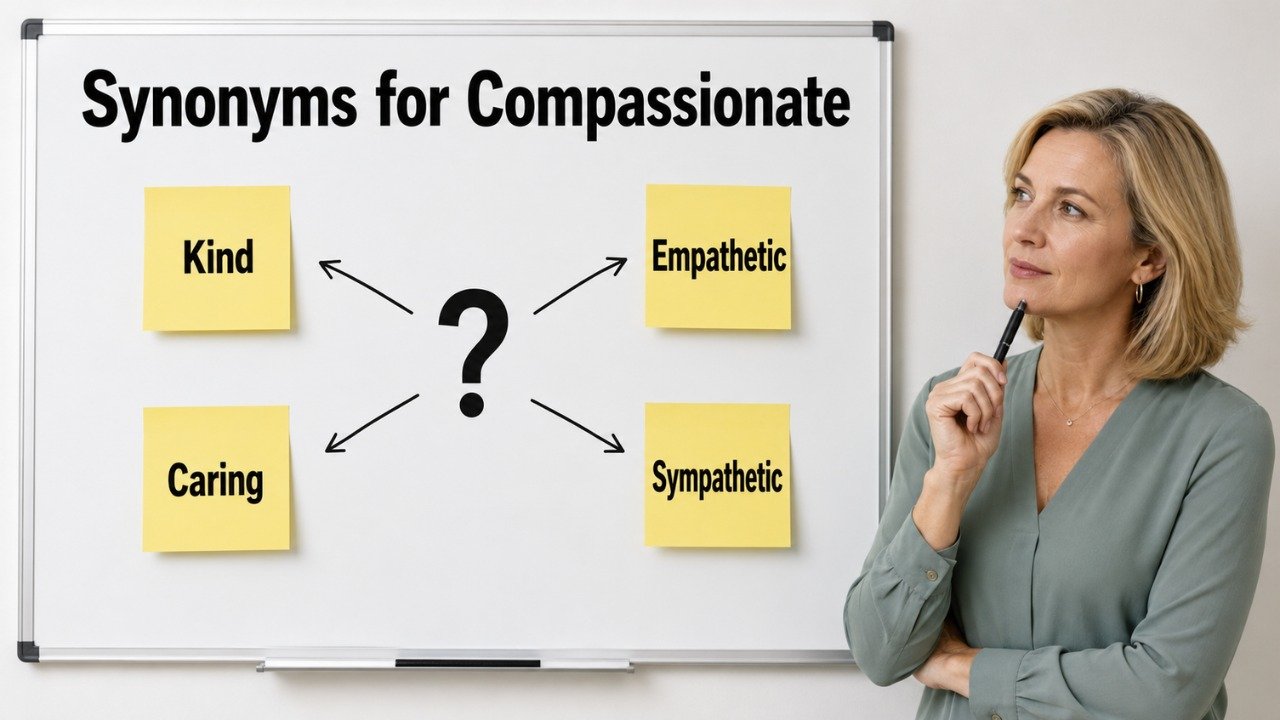
Quick Answer: The best synonyms for compassionate include caring, kind, empathetic, sympathetic, merciful, considerate, tenderhearted, humane, understanding, and benevolent. Caring is the most natural general alternative in everyday conversation. Empathetic suits emotional understanding, while sympathetic emphasizes concern for another person’s difficulty. Merciful is best when punishment or forgiveness is involved. Humane fits treatment, policies, and social issues. Considerate works for thoughtful behavior, while benevolent has a more formal tone and suggests a desire to help others.
Pronunciation and Word Details
Word: Compassionate.
Pronunciation: /kəmˈpæʃ.ən.ət/.
Part of Speech: Adjective.
Meaning: Showing concern for another person’s pain and a sincere desire to help.
US Pronunciation:
UK Pronunciation:
What Does “Compassionate” Mean?
Compassionate means recognizing another person’s pain, difficulty, or need and responding with kindness and a desire to help.
Compassionate is an adjective. It describes a person, action, response, attitude, decision, or system that shows care for those who are suffering.
The word combines emotional understanding with helpful concern. A compassionate person does not simply notice that someone is struggling. That person also feels concern and may offer comfort, patience, protection, or practical support.
Describing a Person: Compassionate can describe someone who regularly treats others with kindness and understanding.
Example: She is a compassionate teacher who listens carefully to her students.
Describing an Action: It can describe behavior intended to reduce pain or difficulty.
Example: Giving the family more time was a compassionate decision.
Describing Communication: It may refer to words spoken with sensitivity and care.
Example: He gave a compassionate response to the upsetting news.
Describing Leadership: Compassionate can describe authority used with fairness, patience, and concern for people.
Example: Compassionate leadership helped the team recover from a difficult period.
Describing Care: The word is often used when discussing emotional support, health care, education, family relationships, and community assistance.
Example: Every patient deserves respectful and compassionate care.
Compassionate does not mean ignoring rules, avoiding responsibility, or agreeing with every request. A compassionate response can still be firm, as long as it recognizes the feelings, needs, and dignity of the people involved.
Meaning, Tone, and Context of “Compassionate”
Compassionate has a warm, positive, respectful, and emotionally strong tone. It is suitable for both formal and conversational writing.
In everyday speech, compassionate usually describes a caring person.
Example: He is compassionate and always notices when someone needs help.
In formal writing, compassionate can describe leadership, policies, treatment, care, communication, or social responsibility.
Example: The organization adopted a more compassionate approach to employee support.
In personal writing, the word often expresses admiration for someone’s kindness.
Example: Her compassionate nature made others feel safe around her.
In academic writing, compassionate may appear in discussions of ethics, psychology, education, leadership, health care, and human behavior.
Example: Compassionate communication can strengthen trust between individuals.
In professional communication, compassionate is useful when discussing sensitive situations, difficult feedback, personal loss, illness, stress, or conflict.
Example: The manager addressed the employee’s concerns in a compassionate manner.
The word is emotional, but it is not overly dramatic. It usually suggests sincere care supported by understanding or action.
Compassionate is stronger than polite because politeness may involve only good manners. It is also more active than sympathetic because compassion often includes a desire to help.
When and How to Use “Compassionate”
For Emotional Support: Use compassionate when someone responds carefully to another person’s sadness, fear, or distress.
Example: Her compassionate words helped him feel less alone.
For Helpful Actions: Use compassionate when kindness leads to practical assistance.
Example: The neighbors made a compassionate effort to support the family.
For Patient Care: Use compassionate when describing respectful and sensitive treatment of people who are ill, injured, or vulnerable.
Example: The nurse provided calm and compassionate care.
For Leadership: Use compassionate when a leader considers both results and human needs.
Example: A compassionate manager listens before making a difficult decision.
For Education: Use compassionate when teachers support students with patience and understanding.
Example: His compassionate teaching style encouraged students to ask questions.
For Difficult Conversations: Use compassionate when someone communicates honestly without being harsh.
Example: She gave compassionate feedback while clearly explaining what needed to improve.
For Forgiveness: Use compassionate when a person considers another individual’s circumstances before judging or punishing.
Example: The coach took a compassionate view of the player’s mistake.
For Community Support: Use compassionate when people respond to hardship with care and practical help.
Example: Residents organized a compassionate response after the fire.
For Ethical Decisions: Use compassionate when a choice protects dignity and reduces unnecessary suffering.
Example: The committee sought a compassionate solution that treated everyone fairly.
For Personal Character: Use compassionate to describe a person who consistently notices and responds to the needs of others.
Example: She is known as a thoughtful and compassionate friend.
Best Synonyms for Compassionate
Caring: Showing concern for the comfort, safety, and well being of others.
Example: He is a caring father who makes time to listen.
Kind: Treating people with generosity, warmth, and respect.
Example: The receptionist gave the worried visitor a kind response.
Empathetic: Able to understand and share another person’s feelings.
Example: Her empathetic reply showed that she understood his frustration.
Sympathetic: Feeling concern or sorrow for someone experiencing difficulty.
Example: The supervisor was sympathetic to the employee’s situation.
Merciful: Showing forgiveness or choosing not to punish someone harshly.
Example: The judge took a merciful view of the minor mistake.
Considerate: Thinking carefully about another person’s feelings, needs, or convenience.
Example: It was considerate of him to lower his voice while others worked.
Tenderhearted: Easily moved by another person’s suffering and eager to help.
Example: The tenderhearted volunteer cared for every frightened animal.
Humane: Showing kindness and avoiding unnecessary pain or cruelty.
Example: They searched for a humane way to solve the problem.
Understanding: Patient and accepting because of awareness of another person’s circumstances.
Example: Her parents were understanding when she explained what had happened.
Benevolent: Kind, generous, and motivated by a desire to help others.
Example: The benevolent leader supported programs for families in need.
50 Synonyms for Compassionate with Short Meanings
- Caring: Concerned about the needs and well being of others.
- Kind: Treating people with warmth, generosity, and respect.
- Empathetic: Able to understand and share another person’s feelings.
- Sympathetic: Feeling concern for someone facing pain or difficulty.
- Merciful: Willing to forgive or reduce punishment.
- Considerate: Thoughtful about another person’s feelings and needs.
- Tenderhearted: Easily moved by suffering and willing to help.
- Humane: Showing kindness and avoiding unnecessary cruelty.
- Understanding: Patient and accepting of another person’s circumstances.
- Benevolent: Motivated by kindness and a desire to do good.
- Charitable: Generous and willing to help people in need.
- Gentle: Calm, kind, and careful in behavior.
- Warmhearted: Naturally kind, friendly, and emotionally generous.
- Softhearted: Easily affected by another person’s pain.
- Gracious: Kind, polite, and generous toward others.
- Thoughtful: Carefully considering how actions affect other people.
- Sensitive: Aware of another person’s emotions and needs.
- Concerned: Showing sincere interest in another person’s welfare.
- Supportive: Giving encouragement, help, or emotional strength.
- Comforting: Helping someone feel calmer or less distressed.
- Nurturing: Encouraging growth, safety, and emotional well being.
- Forgiving: Willing to release anger after a mistake or offense.
- Lenient: Less severe in punishment or judgment.
- Patient: Calm and tolerant during difficulty or delay.
- Tolerant: Accepting differences, mistakes, or challenging behavior.
- Generous: Willing to give time, help, attention, or resources.
- Altruistic: Concerned with the welfare of others rather than personal gain.
- Selfless: Placing another person’s needs before personal advantage.
- Kindhearted: Naturally caring, generous, and considerate.
- Loving: Showing deep affection, care, and emotional warmth.
- Affectionate: Expressing fondness and emotional closeness.
- Warm: Friendly, welcoming, and emotionally supportive.
- Tender: Showing gentle affection and concern.
- Pitying: Feeling sorrow for someone’s suffering or misfortune.
- Commiserating: Expressing shared sorrow about another person’s difficulty.
- Consoling: Offering comfort to someone who is sad or distressed.
- Attentive: Carefully noticing another person’s needs or feelings.
- Mindful: Aware of how actions may affect other people.
- Responsive: Reacting promptly and appropriately to someone’s needs.
- Helpful: Willing to provide useful assistance.
- Protective: Seeking to keep someone safe from harm.
- Bighearted: Generous, forgiving, and emotionally warm.
- Magnanimous: Generous and forgiving, especially toward a rival or offender.
- Beneficent: Actively doing good or providing help.
- Philanthropic: Seeking to improve the welfare of other people.
- Humanitarian: Concerned with reducing suffering and protecting human welfare.
- Solicitous: Showing careful concern for another person’s comfort or safety.
- Clement: Merciful and mild when punishment could be severe.
- Forbearing: Patient and restrained when facing mistakes or irritation.
- Reassuring: Helping someone feel safer, calmer, or more hopeful.
Read Also:
Synonyms for Writing

Synonyms for Compassionate by Context
When Compassionate Means Caring
Caring, kind, kindhearted, warmhearted, and thoughtful describe a person who shows concern for others.
Caring: The broadest and most natural alternative in everyday language.
Example: She is a caring neighbor who regularly checks on older residents.
Kind: Focuses on friendly, generous, and respectful behavior.
Example: His kind words made the new student feel welcome.
Kindhearted: Describes a naturally generous and caring personality.
Example: The kindhearted woman offered the family a place to rest.
Thoughtful: Emphasizes careful attention to another person’s feelings or needs.
Example: Sending a handwritten message was a thoughtful gesture.
When Compassionate Means Emotionally Understanding
Empathetic, understanding, sensitive, sympathetic, and perceptive suit situations involving emotions.
Empathetic: Best when someone understands how another person feels.
Example: Her empathetic response made him feel heard.
Understanding: Suggests patience and acceptance based on awareness of the situation.
Example: The teacher was understanding about the student’s anxiety.
Sensitive: Emphasizes awareness of emotional needs and delicate circumstances.
Example: He took a sensitive approach to the difficult subject.
Sympathetic: Describes concern or sorrow for another person’s hardship.
Example: Her colleagues were sympathetic after hearing about the loss.
When Compassionate Means Merciful
Merciful, forgiving, lenient, clement, and forbearing work when punishment, blame, or mistakes are involved.
Merciful: Describes a decision that avoids severe punishment.
Example: The ruler was merciful toward those who admitted their mistakes.
Forgiving: Focuses on releasing anger or resentment.
Example: She was forgiving after receiving a sincere apology.
Lenient: Means less strict or severe than expected.
Example: The instructor was lenient about the first late assignment.
Forbearing: Suggests patient self control in response to annoyance or wrongdoing.
Example: He remained forbearing despite repeated interruptions.
When Compassionate Means Humane
Humane, humanitarian, benevolent, beneficent, and philanthropic fit broader social, ethical, or institutional contexts.
Humane: Best for treatment that avoids cruelty and respects dignity.
Example: The shelter follows humane methods of animal care.
Humanitarian: Describes concern with protecting people and reducing suffering.
Example: The volunteers joined a humanitarian relief effort.
Benevolent: A formal word for kindness and a desire to help.
Example: The benevolent founder supported educational programs.
Beneficent: Describes actions that actively produce good results for others.
Example: The beneficent program provided meals to vulnerable families.
When Compassionate Means Supportive
Supportive, comforting, consoling, reassuring, and nurturing describe emotional or practical assistance.
Supportive: Suitable when someone encourages or assists another person.
Example: Her family remained supportive throughout the difficult year.
Comforting: Describes words or actions that reduce sadness or fear.
Example: His calm voice was comforting.
Consoling: Specifically refers to comforting someone after sadness, disappointment, or loss.
Example: She offered a consoling embrace after the announcement.
Reassuring: Helps someone feel safer or more confident.
Example: The doctor gave a reassuring explanation of the procedure.
When Compassionate Means Gentle
Gentle, tender, warm, affectionate, and loving describe soft and emotionally caring behavior.
Gentle: Suggests calm, careful, and nonthreatening treatment.
Example: She used a gentle tone with the frightened child.
Tender: Expresses soft affection and emotional care.
Example: He gave his daughter a tender smile.
Warm: Describes friendliness and emotional openness.
Example: The visitors received a warm welcome.
Loving: Communicates deep affection and care.
Example: The child grew up in a loving home.
When Compassionate Means Generous
Generous, charitable, altruistic, selfless, and bighearted emphasize giving or helping.
Generous: Refers to freely giving time, attention, money, or assistance.
Example: She was generous with both her time and advice.
Charitable: Often describes help given to people in need.
Example: The charitable group provided warm meals.
Altruistic: Suggests helping others without seeking personal reward.
Example: His decision was motivated by altruistic concern.
Selfless: Focuses on putting another person’s needs first.
Example: The rescue worker made a selfless effort to help the trapped family.
When Compassionate Means Considerate
Considerate, thoughtful, mindful, attentive, and solicitous fit situations where someone notices and respects another person’s needs.
Considerate: Best for practical behavior that avoids causing discomfort.
Example: It was considerate of her to call before visiting.
Mindful: Emphasizes awareness of possible effects on others.
Example: Managers should be mindful of how sudden changes affect employees.
Attentive: Describes careful attention to needs, words, or emotions.
Example: The attentive listener noticed that something was wrong.
Solicitous: A formal word for showing careful concern.
Example: The host was solicitous about every guest’s comfort.
Another Word for Compassionate
The best single replacement for compassionate is caring. It is natural, widely understood, and suitable for people, behavior, relationships, and support.
The most accurate alternative still depends on context. Empathetic is better for emotional understanding, merciful suits forgiveness or punishment, humane fits ethical treatment, and considerate describes thoughtful everyday behavior.
Original: She is a compassionate teacher.
Better Option: She is a caring teacher.
Original: He gave a compassionate response to her frustration.
Better Option: He gave an empathetic response to her frustration.
Original: The leader made a compassionate decision about the punishment.
Better Option: The leader made a merciful decision about the punishment.
Original: They developed a compassionate policy for vulnerable residents.
Better Option: They developed a humane policy for vulnerable residents.
When Not to Use “Compassionate”
Compassionate can sound too broad when the sentence needs a more precise description of the person’s behavior.
Avoid compassionate when you mean that someone understands another person’s emotions.
Weak: She gave a compassionate response because she understood exactly how he felt.
Better: She gave an empathetic response because she understood exactly how he felt.
Avoid compassionate when forgiveness is the main idea.
Weak: The authority was compassionate and reduced the punishment.
Better: The authority was merciful and reduced the punishment.
Avoid compassionate when you are describing simple politeness.
Weak: He was compassionate enough to hold the door open.
Better: He was considerate enough to hold the door open.
Avoid compassionate when the focus is financial or material giving.
Weak: The donor made a compassionate contribution.
Better: The donor made a generous contribution.
Avoid compassionate when you mean fair treatment that avoids cruelty.
Weak: The organization introduced a compassionate method of animal care.
Better: The organization introduced a humane method of animal care.
Avoid using compassionate repeatedly in the same paragraph.
Weak: The compassionate supervisor created a compassionate plan and gave every employee a compassionate response.
Better: The caring supervisor created a humane plan and responded to every employee with understanding.
Compassionate may also feel too strong for ordinary preferences or minor conveniences.
Weak: She made the compassionate choice to sit near the window.
Better: She made the practical choice to sit near the window.
Do not use compassionate as a direct replacement for emotional. A person can be emotional without being caring or helpful.
Weak: He became compassionate when he heard the surprising news.
Better: He became emotional when he heard the surprising news.
Words Commonly Confused With Compassionate
Compassionate vs Empathetic: Compassionate means caring about another person’s pain and often wanting to help. Empathetic means understanding or sharing that person’s feelings.
Compassionate vs Sympathetic: Compassionate suggests concern that may lead to action. Sympathetic mainly describes feelings of sorrow or concern.
Compassionate vs Kind: Kind is a broad word for friendly and generous behavior. Compassionate specifically relates to recognizing suffering, difficulty, or need.
Compassionate vs Merciful: Compassionate is broad and may involve care, understanding, or support. Merciful specifically involves forgiveness or reduced punishment.
Compassionate vs Considerate: Compassionate focuses on suffering and emotional need. Considerate means thinking about how actions affect another person.
Compassionate vs Caring: Caring is a broad and natural word for concern about others. Compassionate is stronger and often implies awareness of pain or hardship.
Compassionate vs Humane: Compassionate often describes a person or emotional response. Humane commonly describes treatment, methods, decisions, and policies that avoid cruelty.
Compassionate vs Benevolent: Compassionate emphasizes concern for suffering. Benevolent describes a general desire to help or do good and has a more formal tone.
Compassionate vs Generous: Compassionate describes emotional concern and a desire to help. Generous emphasizes freely giving time, attention, assistance, or resources.
Compassionate vs Pitying: Compassionate is respectful and often encourages helpful action. Pitying can sound distant or suggest that someone is looking down on another person.
Which Synonym Should You Choose?
Choose caring for general conversation, personal descriptions, and everyday writing.
Choose kind when you want a simple and familiar word for positive behavior.
Choose empathetic when someone understands another person’s emotions or perspective.
Choose sympathetic when expressing concern about another person’s hardship.
Choose merciful when discussing forgiveness, punishment, blame, or authority.
Choose considerate when describing manners, convenience, personal boundaries, or thoughtful actions.
Choose humane for ethical treatment, care systems, policies, and decisions that avoid cruelty.
Choose understanding when someone reacts with patience because they know the circumstances.
Choose benevolent in formal writing about a person or institution motivated by kindness.
Choose charitable when the context involves giving help or resources to people in need.
Choose tenderhearted when describing a person who is easily moved by suffering.
Choose supportive for encouragement, emotional assistance, workplace communication, and relationships.
Choose nurturing for parenting, teaching, mentoring, care, and personal development.
Choose altruistic in essays or reports when help is given without personal benefit.
Choose gracious when kindness is combined with politeness and dignity.
Choose gentle when describing tone, touch, behavior, or treatment.
Choose compassionate when you need a strong general word that combines concern, emotional understanding, and a desire to help.
Real Life Examples of “Compassionate” in Sentences
Original: The compassionate teacher stayed after class to help the student.
Better Option: The caring teacher stayed after class to help the student.
Original: Her compassionate reply showed that she understood his disappointment.
Better Option: Her empathetic reply showed that she understood his disappointment.
Original: The manager was compassionate about the employee’s family emergency.
Better Option: The manager was understanding about the employee’s family emergency.
Original: The judge made a compassionate decision.
Better Option: The judge made a merciful decision.
Original: They created a compassionate system for caring for injured animals.
Better Option: They created a humane system for caring for injured animals.
Original: He was compassionate enough to change the meeting time.
Better Option: He was considerate enough to change the meeting time.
Original: The volunteer gave compassionate support to the family.
Better Option: The volunteer gave comforting support to the family.
Original: Her compassionate nature inspired her to donate regularly.
Better Option: Her charitable nature inspired her to donate regularly.
Original: The nurse spoke in a compassionate voice.
Better Option: The nurse spoke in a gentle and reassuring voice.
Original: The director introduced a compassionate leadership style.
Better Option: The director introduced a caring and supportive leadership style.
Synonym Groups and Usage Differences
Emotional Understanding Group
Empathetic, understanding, sensitive, sympathetic, and attentive describe awareness of another person’s emotions.
Empathetic is strongest when someone understands another person’s inner experience. Sympathetic expresses concern, while sensitive emphasizes awareness of delicate feelings.
Example: The counselor gave an empathetic response to the student’s fears.
Kindness Group
Caring, kind, kindhearted, warmhearted, and gracious describe positive treatment of others.
Caring emphasizes concern, kind is broad and familiar, and gracious combines kindness with politeness and dignity.
Example: The kindhearted neighbor delivered food to the family.
Mercy Group
Merciful, forgiving, lenient, clement, and forbearing relate to mistakes, punishment, and patience.
Merciful means choosing not to punish severely. Forgiving concerns releasing resentment, while lenient means being less strict.
Example: The supervisor was lenient after hearing the full explanation.
Ethical Treatment Group
Humane, humanitarian, benevolent, beneficent, and philanthropic suit formal discussions of welfare and social responsibility.
Humane describes treatment that avoids cruelty. Humanitarian relates to reducing human suffering, while philanthropic often involves organized generosity.
Example: The group developed a humanitarian program for displaced families.
Emotional Support Group
Supportive, comforting, consoling, reassuring, and nurturing describe actions that strengthen or calm another person.
Supportive is broad, comforting reduces distress, and reassuring restores confidence or hope.
Example: Her reassuring words helped the child feel safe.
Gentle Affection Group
Gentle, tender, loving, affectionate, and warm describe emotional softness and care.
Gentle focuses on calm behavior. Tender and affectionate express closeness, while warm suggests friendliness and openness.
Example: He gave his worried friend a warm and encouraging welcome.
Generosity Group
Generous, charitable, altruistic, selfless, and bighearted describe a willingness to give or help.
Generous is the broadest choice. Altruistic and selfless emphasize helping without seeking personal gain.
Example: The selfless volunteer worked throughout the night.
Thoughtfulness Group
Considerate, thoughtful, mindful, solicitous, and responsive focus on noticing needs and acting carefully.
Considerate works naturally in daily situations. Solicitous is more formal and indicates close concern for someone’s welfare.
Example: Her thoughtful message arrived at exactly the right time.
Patience Group
Patient, tolerant, forbearing, understanding, and gentle describe calm behavior during difficulty.
Patient means remaining calm over time. Tolerant means accepting differences or mistakes, while forbearing suggests controlled patience under strain.
Example: The instructor remained patient while the beginners practiced.
Antonyms of Compassionate
The opposites of compassionate describe cruelty, emotional distance, selfishness, or a lack of concern.
Cruel: Willing to cause pain or ignore suffering.
Callous: Emotionally hardened and unconcerned about another person’s pain.
Heartless: Showing no kindness, sympathy, or emotional concern.
Indifferent: Not interested in or concerned about what happens.
Insensitive: Unaware of or unconcerned about another person’s feelings.
Merciless: Showing no forgiveness or reduction in punishment.
Harsh: Severe, rough, or unkind in treatment or judgment.
Unkind: Not friendly, generous, or considerate.
Selfish: Concerned mainly with personal needs or advantage.
Cold: Emotionally distant and lacking warmth.
Uncaring: Showing no concern for another person’s welfare.
Ruthless: Pursuing an aim without pity or concern for harm.
Inconsiderate: Failing to think about another person’s feelings or needs.
Unsympathetic: Showing little concern for another person’s difficulty.
Inhumane: Causing or allowing unnecessary suffering.
Spiteful: Intentionally trying to hurt or upset someone.
Unforgiving: Unwilling to excuse mistakes or release resentment.
Severe: Extremely strict or harsh in judgment.
Comparison: Compassionate vs Related Words
Compassionate vs Caring
Caring is a broad word for concern about another person. Compassionate more clearly suggests awareness of suffering and a desire to reduce it.
Example With Compassionate: The compassionate volunteer comforted families after the storm.
Example With Caring: The caring volunteer checked on the families every week.
Compassionate vs Empathetic
Compassionate emphasizes concern and the desire to help. Empathetic emphasizes understanding another person’s feelings.
Example With Compassionate: She offered compassionate support after hearing the news.
Example With Empathetic: She gave an empathetic response because she understood the same feeling.
Compassionate vs Sympathetic
Compassionate may lead to helpful action. Sympathetic mainly describes feeling concern or sorrow.
Example With Compassionate: The compassionate neighbor brought meals to the family.
Example With Sympathetic: The sympathetic neighbor expressed sorrow about their loss.
Compassionate vs Kind
Kind applies to many positive actions, including politeness and generosity. Compassionate is more closely connected to pain, need, or hardship.
Example With Compassionate: He gave compassionate assistance to the injured traveler.
Example With Kind: He gave the traveler a kind greeting.
Compassionate vs Merciful
Compassionate has a broad meaning involving care and concern. Merciful applies when someone has the power to punish but chooses forgiveness or restraint.
Example With Compassionate: The leader listened compassionately to the worker’s concerns.
Example With Merciful: The leader was merciful and reduced the penalty.
Compassionate vs Considerate
Compassionate responds to suffering or emotional need. Considerate prevents inconvenience, discomfort, or hurt through thoughtful behavior.
Example With Compassionate: She comforted the grieving visitor with a compassionate response.
Example With Considerate: She was considerate and gave the visitor a quiet place to sit.
Compassionate vs Humane
Compassionate often describes people, feelings, and personal responses. Humane commonly describes ethical treatment, practices, or policies.
Example With Compassionate: The compassionate worker cared patiently for the animals.
Example With Humane: The shelter introduced humane treatment standards.
Compassionate vs Benevolent
Compassionate focuses on concern for those who are suffering. Benevolent describes a general intention to help people or do good.
Example With Compassionate: The doctor showed compassionate concern for the patient’s fear.
Example With Benevolent: The benevolent donor funded a community health program.
Common Phrases and Expressions With “Compassionate”
Compassionate Care: Treatment that combines skill with respect, sensitivity, and emotional support.
Example: The patient received compassionate care throughout her recovery.
Compassionate Response: A reply or action that recognizes pain and offers understanding.
Example: The difficult situation required a compassionate response.
Compassionate Person: Someone who notices suffering and sincerely wants to help.
Example: Everyone described her as a compassionate person.
Compassionate Approach: A method based on patience, dignity, and concern for human needs.
Example: The teacher used a compassionate approach to discipline.
Compassionate Leadership: Leadership that balances responsibilities with concern for people.
Example: Compassionate leadership improved trust within the team.
Compassionate Support: Emotional or practical help given with sensitivity.
Example: The family received compassionate support from its neighbors.
Compassionate Understanding: Awareness of another person’s circumstances without harsh judgment.
Example: He responded with compassionate understanding.
Compassionate Action: A helpful act motivated by concern for suffering.
Example: Donating supplies was a compassionate action.
Compassionate Listener: Someone who listens patiently and without judgment.
Example: A compassionate listener can make a distressed person feel less isolated.
Compassionate Communication: Honest communication delivered with sensitivity, respect, and care.
Example: Compassionate communication helped resolve the conflict.
Common Mistakes to Avoid
A common mistake is treating compassionate and empathetic as exact synonyms. Empathy involves understanding feelings, while compassion also includes concern and often a desire to help.
Incorrect: She was compassionate because she experienced the exact same emotion.
Better: She was empathetic because she experienced the exact same emotion.
Another mistake is using compassionate when kind or considerate is sufficient.
Unnatural: He made the compassionate choice to return the borrowed pen.
Better: He made the considerate choice to return the borrowed pen.
Avoid using compassionate for actions motivated only by generosity.
Vague: She made a compassionate donation to the school.
Clear: She made a generous donation to the school.
Do not confuse compassionate with passionate. Compassionate means caring about suffering. Passionate means having strong enthusiasm, emotion, or belief.
Incorrect: He is compassionate about learning new languages.
Better: He is passionate about learning new languages.
Use the correct preposition and sentence structure. A person is usually compassionate toward someone, compassionate to those in need, or compassionate in a particular response. A person shows compassion for someone.
Awkward: She felt compassionate for the injured traveler.
Better: She felt compassion for the injured traveler.
Better: She was compassionate toward the injured traveler.
Avoid excessive repetition.
Repetitive: The compassionate nurse gave compassionate care and used a compassionate tone.
Improved: The caring nurse provided sensitive treatment and used a reassuring tone.
Do not use pitying when you want to communicate respect. Pity can sometimes suggest emotional distance or superiority.
Weak: She gave the struggling student a pitying look.
Better: She gave the struggling student an understanding look.
Avoid describing every helpful action as compassionate. Sometimes supportive, generous, thoughtful, merciful, or humane gives readers a clearer meaning.
Conclusion
Synonyms for compassionate express different forms of kindness, emotional awareness, mercy, and support. Caring is the strongest general alternative, while empathetic emphasizes shared understanding and sympathetic expresses concern. Merciful suits forgiveness, considerate describes thoughtful behavior, and humane fits ethical treatment. Benevolent and altruistic work well in formal contexts involving service to others. Choosing a precise synonym helps readers understand whether someone is offering comfort, recognizing emotions, reducing punishment, giving assistance, or protecting another person from suffering.
FAQs About Synonyms for Compassionate
What Is the Best Synonym for Compassionate?
Caring is the best general synonym for compassionate. It is natural, clear, and suitable for both people and behavior.
What Is a Stronger Word Than Compassionate?
Tenderhearted, selfless, altruistic, and deeply empathetic can sound stronger, depending on the kind of care being described.
Is Empathetic the Same as Compassionate?
Not exactly. Empathetic means understanding another person’s feelings. Compassionate adds concern and often a desire to help.
What Is a Formal Synonym for Compassionate?
Benevolent, humane, altruistic, beneficent, and humanitarian are useful formal alternatives.
What Is a Casual Synonym for Compassionate?
Caring, kind, warmhearted, kindhearted, and understanding are natural choices in casual conversation.
What Is the Opposite of Compassionate?
Common opposites include cruel, callous, heartless, indifferent, insensitive, merciless, and uncaring.
Can Compassionate Describe a Decision?
Yes. A compassionate decision considers human needs, emotional circumstances, dignity, and the possible effect on people who are struggling.
