
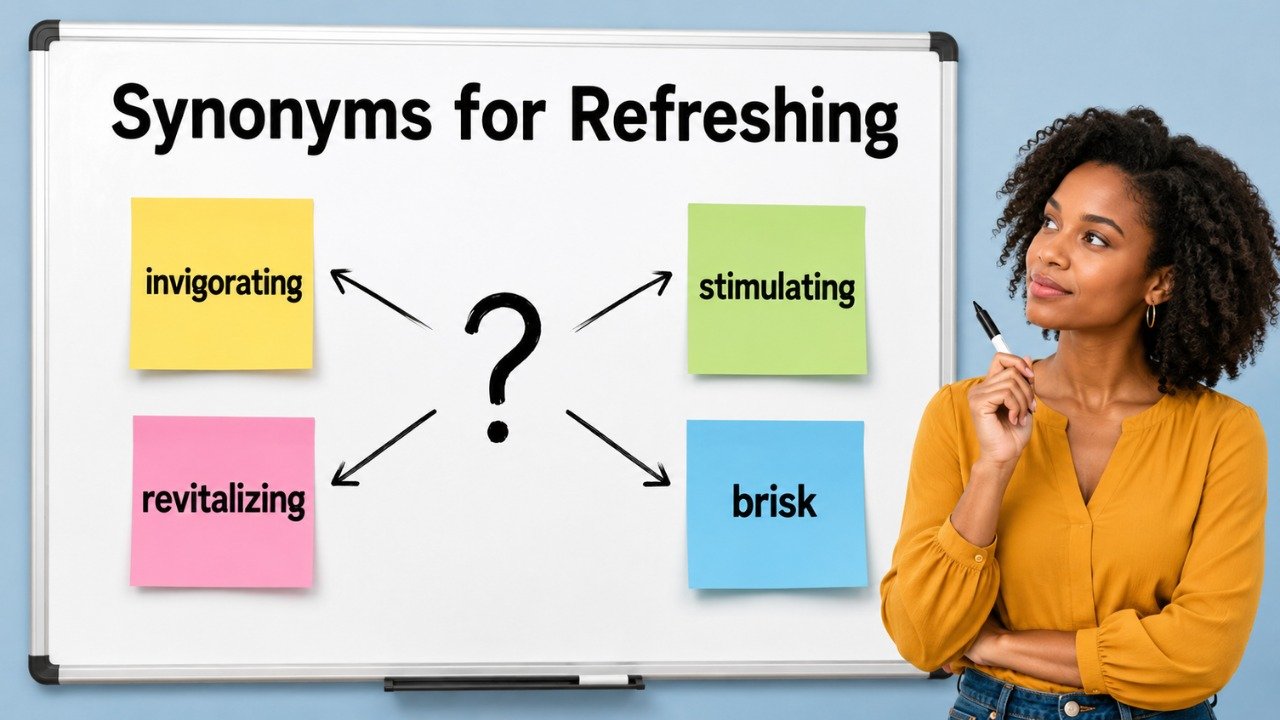
Quick Answer: The best synonyms for refreshing include invigorating, revitalizing, rejuvenating, energizing, reviving, restorative, cooling, uplifting, original, and welcome. Use invigorating for an experience that increases energy, revitalizing for renewed strength, rejuvenating for restored freshness, and cooling for drinks or air. Uplifting suits positive feelings, original describes a fresh idea, and welcome fits a pleasant change. These synonyms for refreshing help you express physical comfort, emotional renewal, new energy, honesty, or originality more precisely.
Pronunciation and Word Details
Word: Refreshing.
Pronunciation: /rɪˈfreʃ.ɪŋ/.
Part of Speech: Adjective.
Meaning: Pleasantly renewing, cooling, energizing, original, or different from what is usual.
US Pronunciation:
UK Pronunciation:
What Does “Refreshing” Mean?
Refreshing means making someone feel renewed, cooler, more energetic, or pleasantly surprised.
The word is most commonly used as an adjective. It can describe drinks, weather, rest, activities, ideas, attitudes, conversations, and changes.
When used for food or drink, refreshing means pleasantly cool, light, or satisfying.
Example: The cold fruit drink was refreshing after the long walk.
When used for weather or air, it means cool, clean, or comfortable.
Example: A refreshing breeze entered through the open window.
When used for sleep, exercise, or relaxation, it means restoring energy and reducing tiredness.
Example: She felt better after a refreshing afternoon rest.
When used for an idea, opinion, or approach, refreshing means pleasantly new, honest, original, or different.
Example: His simple approach to the problem was refreshing.
Refreshing can also be the present participle of the verb refresh.
Example: She is refreshing the page to view the latest information.
As an adjective, refreshing usually communicates approval. It suggests that something produces a positive change in a person’s physical condition, mood, thoughts, or surroundings.
Meaning, Tone, and Context of “Refreshing”
Refreshing generally has a positive, warm, and approving tone. It suggests relief, comfort, renewal, or pleasant change.
In everyday conversation, the word is commonly used for drinks, cool air, sleep, showers, and relaxing activities.
Example: That cool shower was refreshing.
In descriptive writing, refreshing can create a clear sensory image. It may suggest coolness, lightness, freshness, or renewed strength.
Example: The refreshing mountain air made the morning walk enjoyable.
In professional or formal writing, refreshing may describe an honest opinion, a practical approach, or a welcome improvement.
Example: The report offered a refreshing perspective on the issue.
In reviews and personal opinions, the word often praises something that feels original or different from familiar choices.
Example: The story takes a refreshing approach to a familiar subject.
Refreshing can also express emotional approval. A sincere answer, cheerful attitude, or simple solution may feel refreshing because it removes confusion or negativity.
Example: Her willingness to admit the mistake was refreshing.
The word is neutral enough for formal writing but warm enough for casual speech. However, it can become vague when the writer does not explain what creates the refreshing effect.
When and How to Use “Refreshing”
For Cool Drinks
Use refreshing for drinks that reduce thirst or make someone feel cooler.
Example: A glass of cold water was refreshing after the exercise session.
For Pleasant Weather
Use refreshing for cool air, gentle wind, or comfortable weather after heat.
Example: The refreshing evening breeze made the outdoor meal more enjoyable.
For Renewed Energy
Use refreshing for sleep, rest, exercise, or an activity that restores strength.
Example: A short walk through the garden was surprisingly refreshing.
For Emotional Improvement
Use refreshing for experiences that improve someone’s mood or reduce stress.
Example: Spending a quiet afternoon with family was refreshing.
For Original Ideas
Use refreshing when an idea, style, or approach feels new and interesting.
Example: The writer presented a refreshing interpretation of the familiar story.
For Honest Communication
Use refreshing for comments or behavior that feel sincere, direct, and free from pretension.
Example: Her honest response was refreshing.
For Positive Change
Use refreshing when a new situation provides relief from something repetitive or unpleasant.
Example: The flexible schedule was a refreshing change for the employees.
For Pleasant Simplicity
Use refreshing when something feels clear, natural, or uncomplicated.
Example: The design was refreshing in its simplicity.
For Clean Sensations
Use refreshing for products, scents, or experiences that create a clean and renewed feeling.
Example: The light citrus scent was refreshing without being overpowering.
For Welcome Differences
Use refreshing when a person, event, or idea differs positively from what is expected.
Example: His calm attitude was refreshing during the tense discussion.
Best Synonyms for Refreshing
Invigorating
Synonym: Giving new energy, strength, or enthusiasm.
Example: The morning swim was invigorating.
Revitalizing
Synonym: Restoring energy, activity, or freshness.
Example: The weekend break was revitalizing for the entire team.
Rejuvenating
Synonym: Making someone feel younger, healthier, or renewed.
Example: She found the quiet retreat deeply rejuvenating.
Energizing
Synonym: Increasing physical or mental energy.
Example: The lively music created an energizing atmosphere.
Reviving
Synonym: Restoring strength, alertness, or interest.
Example: The cool air had a reviving effect after the tiring journey.
Restorative
Synonym: Helping the body or mind recover strength.
Example: A full night of sleep was restorative.
Cooling
Synonym: Reducing heat or creating a pleasantly cool feeling.
Example: The cooling drink provided relief from the afternoon heat.
Uplifting
Synonym: Improving mood, hope, or emotional energy.
Example: Their encouraging conversation was uplifting.
Original
Synonym: New, creative, and different from familiar ideas.
Example: The author offered an original solution to the problem.
Welcome
Synonym: Pleasant, appreciated, or received with relief.
Example: The quiet morning provided a welcome break from the noise.
50 Synonyms for Refreshing with Short Meanings
- Invigorating: Giving new physical or mental energy.
- Revitalizing: Restoring strength, activity, or freshness.
- Rejuvenating: Making someone feel renewed or youthful.
- Energizing: Increasing energy, motivation, or enthusiasm.
- Enlivening: Making something more active, interesting, or cheerful.
- Stimulating: Encouraging energy, thought, or interest.
- Reviving: Restoring strength, alertness, or enthusiasm.
- Restorative: Helping the body or mind recover.
- Renewing: Making something feel fresh or strong again.
- Reinvigorating: Giving new strength after tiredness or decline.
- Bracing: Pleasantly cool, fresh, and energizing.
- Cooling: Reducing heat and creating physical comfort.
- Crisp: Pleasantly cool, clean, or fresh.
- Fresh: Clean, new, pleasant, or recently renewed.
- Thirst quenching: Effectively satisfying thirst.
- Hydrating: Providing the body with needed moisture.
- Soothing: Creating comfort, calmness, or relief.
- Cleansing: Producing a clean or purified feeling.
- Purifying: Removing unpleasant or unwanted elements.
- Uplifting: Improving someone’s mood or confidence.
- Heartening: Giving hope, comfort, or encouragement.
- Cheering: Making someone feel happier or more positive.
- Inspiring: Encouraging new ideas, energy, or enthusiasm.
- Encouraging: Creating confidence, hope, or motivation.
- Pleasant: Producing enjoyment, comfort, or satisfaction.
- Delightful: Highly enjoyable, charming, or pleasing.
- Welcome: Appreciated because it provides relief or improvement.
- Agreeable: Pleasant and easy to enjoy.
- Satisfying: Providing comfort, pleasure, or fulfillment.
- Relaxing: Reducing tension, stress, or tiredness.
- Calming: Making someone feel peaceful and less anxious.
- Restful: Helping the body or mind recover through rest.
- Serene: Calm, peaceful, and free from disturbance.
- Breezy: Light, fresh, relaxed, or pleasantly informal.
- Airy: Light, open, fresh, or comfortable.
- Bright: Cheerful, lively, or full of positive energy.
- Lively: Full of energy, movement, or interest.
- Vibrant: Bright, energetic, and full of life.
- Sparkling: Lively, bright, fresh, or pleasantly exciting.
- Zesty: Lively, flavorful, and full of energy.
- Tangy: Having a pleasantly sharp and fresh flavor.
- Minty: Having a cool, clean, or fresh mint flavor.
- Cool: Pleasantly low in temperature.
- Original: New, creative, and unlike familiar choices.
- Novel: New, unusual, and interesting.
- Innovative: Introducing a useful new idea or method.
- Candid: Honest, direct, and sincere.
- Honest: Truthful and free from deception.
- Frank: Open and direct in communication.
- Straightforward: Clear, honest, and uncomplicated.
Read Also:
Synonyms for Thesis

Synonyms for Refreshing by Context
When Refreshing Means Energizing
Invigorating, revitalizing, rejuvenating, energizing, reviving, reinvigorating, and stimulating describe something that restores physical or mental energy.
Invigorating often refers to exercise, weather, or an active experience.
Example: The brisk morning walk was invigorating.
Revitalizing suggests that energy or enthusiasm returns after tiredness or inactivity.
Example: The short vacation was revitalizing.
Rejuvenating often describes rest, relaxation, travel, or personal care that makes someone feel renewed.
Example: The peaceful weekend was rejuvenating.
Energizing emphasizes an immediate increase in activity or motivation.
Example: The speech was energizing and encouraged everyone to participate.
When Refreshing Means Cooling
Cooling, crisp, bracing, fresh, cool, breezy, hydrating, and thirst quenching fit drinks, air, weather, and physical sensations.
Cooling directly describes a reduction in heat.
Example: The cooling water helped the runners recover.
Crisp often describes cool air that feels clean and pleasant.
Example: The crisp morning air felt refreshing.
Bracing describes cool weather that increases alertness and energy.
Example: We enjoyed a bracing walk along the coast.
Thirst quenching is most suitable for drinks.
Example: The fruit drink was light and thirst quenching.
When Refreshing Means Relaxing
Restorative, soothing, calming, restful, serene, relaxing, and cleansing describe experiences that reduce stress or restore balance.
Restorative suggests recovery after physical or mental tiredness.
Example: The quiet evening was restorative.
Soothing emphasizes relief from discomfort, worry, or irritation.
Example: The sound of gentle rain was soothing.
Restful describes something that supports relaxation and recovery.
Example: The room had a peaceful and restful atmosphere.
Cleansing may describe an emotional, physical, or symbolic sense of renewal.
Example: The long walk felt mentally cleansing.
When Refreshing Means Pleasantly New
Original, novel, innovative, lively, vibrant, bright, and sparkling describe ideas or styles that feel new and interesting.
Original is suitable for creative work, solutions, opinions, and approaches.
Example: The designer presented an original concept.
Novel suggests that something is unusual because it has not been experienced before.
Example: The team tested a novel method for organizing the information.
Innovative emphasizes useful creativity and improvement.
Example: The project introduced an innovative teaching approach.
Vibrant describes something full of color, energy, or life.
Example: The room had a vibrant and refreshing appearance.
When Refreshing Means Honest
Candid, honest, frank, straightforward, and sincere alternatives describe open communication that feels pleasantly genuine.
Candid suggests honesty without unnecessary concealment.
Example: Her candid response improved the discussion.
Frank is direct and may sound stronger than refreshing.
Example: He gave a frank assessment of the plan.
Straightforward emphasizes clarity and simplicity.
Example: The manager provided a straightforward explanation.
Honest is the broadest choice for truthful behavior or speech.
Example: Her honest admission was appreciated.
When Refreshing Means Emotionally Positive
Uplifting, cheering, heartening, inspiring, encouraging, delightful, and welcome describe experiences that improve mood or create hope.
Uplifting suggests increased happiness or emotional strength.
Example: The story was warm and uplifting.
Heartening is useful when something restores hope.
Example: The improvement in attendance was heartening.
Welcome describes something pleasant because it offers needed relief or change.
Example: The quiet afternoon was a welcome break.
Delightful emphasizes strong enjoyment.
Example: The garden was a delightful place to rest.
Another Word for Refreshing
Invigorating is one of the best general alternatives to refreshing when something restores energy or alertness. However, the best single replacement depends on the context.
Use cooling for temperature, revitalizing for renewed strength, uplifting for an improved mood, original for a fresh idea, and candid for pleasantly honest communication.
Original: The cool morning air was refreshing.
Better Option: The cool morning air was invigorating.
Original: Her new approach to the lesson was refreshing.
Better Option: Her new approach to the lesson was original.
Original: The quiet break was refreshing after a stressful week.
Better Option: The quiet break was restorative after a stressful week.
Original: His willingness to answer honestly was refreshing.
Better Option: His candid response was appreciated.
When Not to Use “Refreshing”
Refreshing is a useful positive word, but it may become vague, repetitive, or inaccurate when a more precise synonym is available.
When Describing Serious Recovery
Refreshing may sound too weak when someone has experienced major physical or emotional exhaustion.
Weak: The extended period of rest was refreshing after the illness.
Better: The extended period of rest was restorative after the illness.
When Describing Physical Coldness Only
Use cooling, cold, crisp, or bracing when temperature is the main point.
Weak: The refreshing wind made everyone reach for a coat.
Better: The cold wind made everyone reach for a coat.
When Praising a New Idea
Refreshing can be less precise than original, innovative, or novel.
Weak: The researcher introduced a refreshing method.
Better: The researcher introduced an innovative method.
When Describing Honest Speech
Use candid, frank, sincere, or straightforward when honesty is the important quality.
Weak: Her refreshing statement addressed the real issue.
Better: Her candid statement addressed the real issue.
When the Word Is Repeated
Too much repetition weakens the description.
Weak: We enjoyed a refreshing drink in the refreshing breeze after a refreshing walk.
Better: We enjoyed a cooling drink in the crisp breeze after an invigorating walk.
When the Experience Is Merely Pleasant
Not everything enjoyable is refreshing. Use pleasant, delightful, relaxing, or satisfying when no renewal or freshness is involved.
Weak: The comedy performance was refreshing because it was funny.
Better: The comedy performance was delightful because it was funny.
When Writing Technical Instructions
Refreshing can mean loading updated digital content, but technical writing should clearly state the action.
Weak: Try refreshing the device.
Better: Restart the device and reload the application.
Words Commonly Confused With Refreshing
Refreshing vs Invigorating: Refreshing can describe coolness, renewal, originality, or honesty. Invigorating mainly describes something that increases energy and alertness.
Refreshing vs Rejuvenating: Refreshing may provide brief relief or renewed energy. Rejuvenating suggests a deeper or longer lasting restoration of youthfulness, strength, or vitality.
Refreshing vs Revitalizing: Refreshing is broad and often describes a pleasant immediate effect. Revitalizing emphasizes restoring energy, activity, or effectiveness after decline.
Refreshing vs Cooling: Refreshing may involve physical comfort, emotional renewal, or originality. Cooling only refers to reducing heat or temperature.
Refreshing vs Relaxing: Refreshing restores energy or creates pleasant freshness. Relaxing reduces tension or stress. An activity may be both refreshing and relaxing, but the meanings are not identical.
Refreshing vs Restorative: Refreshing suggests a pleasant renewed feeling. Restorative emphasizes healing, recovery, or the return of strength.
Refreshing vs Original: Refreshing can praise an idea because it feels pleasantly different. Original directly means new, creative, or not copied.
Refreshing vs Candid: Refreshing may describe honesty as a positive quality. Candid specifically means open, direct, and truthful.
Which Synonym Should You Choose?
Choose invigorating when describing exercise, fresh air, outdoor activity, or an experience that increases energy.
Choose revitalizing when something restores strength, enthusiasm, activity, or effectiveness.
Choose rejuvenating when rest, travel, relaxation, or personal care creates a deeper sense of renewal.
Choose energizing when something immediately increases motivation, excitement, or physical energy.
Choose restorative when writing about recovery, sleep, rest, or emotional healing.
Choose cooling when describing a drink, breeze, fabric, or product that reduces heat.
Choose crisp when describing pleasantly cool air, clean flavors, or clear sensory qualities.
Choose thirst quenching when a drink successfully reduces thirst.
Choose soothing when an experience reduces discomfort, tension, or irritation.
Choose uplifting when a story, conversation, message, or event improves someone’s mood.
Choose heartening when a result or development restores hope.
Choose welcome when a change provides relief from an unpleasant or repetitive situation.
Choose original when praising an idea, design, argument, or creative approach.
Choose innovative when a method or solution introduces useful improvement.
Choose candid when someone speaks openly and honestly.
Choose straightforward when communication is both clear and uncomplicated.
In essays and reports, original, innovative, restorative, revitalizing, and candid are often more precise than refreshing.
In professional emails, welcome, encouraging, positive, and revitalizing sound measured and respectful.
In casual conversation, fresh, cool, relaxing, energizing, and nice are natural choices.
In descriptive writing, crisp, bracing, soothing, vibrant, sparkling, and zesty create stronger sensory images.
Real Life Examples of “Refreshing” in Sentences
Original: The cold water was refreshing after the run.
Better Option: The cold water was thirst quenching after the run.
Original: The morning breeze felt refreshing.
Better Option: The morning breeze felt crisp and invigorating.
Original: Her positive attitude was refreshing.
Better Option: Her positive attitude was uplifting.
Original: The short holiday was refreshing.
Better Option: The short holiday was rejuvenating.
Original: His honest explanation was refreshing.
Better Option: His candid explanation was appreciated.
Original: The new design looked refreshing.
Better Option: The new design looked original and vibrant.
Original: A full night of sleep was refreshing.
Better Option: A full night of sleep was restorative.
Original: The change in routine was refreshing.
Better Option: The change in routine was welcome.
Original: The light citrus flavor was refreshing.
Better Option: The light citrus flavor was crisp and zesty.
Original: Their practical solution was refreshing.
Better Option: Their practical solution was innovative.
Synonym Groups and Usage Differences
Energy Group
Invigorating, energizing, stimulating, enlivening, reviving, and reinvigorating describe increased strength, interest, or activity.
Invigorating works well for physical experiences, while stimulating may refer to mental activity or discussion.
Example: The lively debate was intellectually stimulating.
Renewal Group
Revitalizing, rejuvenating, renewing, restorative, and reviving describe the return of freshness, health, energy, or effectiveness.
Rejuvenating often suggests personal renewal, while revitalizing can describe people, places, plans, or organizations.
Example: The new community program had a revitalizing effect on the area.
Coolness Group
Cooling, crisp, bracing, cool, breezy, hydrating, and thirst quenching relate to temperature, air, weather, and drinks.
Bracing combines coolness with energy, while hydrating focuses on moisture.
Example: The crisp air made the walk more enjoyable.
Relaxation Group
Soothing, calming, relaxing, restful, serene, and restorative describe reduced tension and increased comfort.
Soothing focuses on relief, while restful suggests conditions that support recovery.
Example: The quiet music created a calming atmosphere.
Positive Emotion Group
Uplifting, heartening, cheering, inspiring, encouraging, delightful, and welcome describe improved mood or hope.
Heartening is especially useful for positive news or progress.
Example: The steady improvement was heartening.
Originality Group
Original, novel, innovative, bright, lively, vibrant, and sparkling describe something that feels new, creative, or full of life.
Original focuses on newness, while vibrant emphasizes energy and color.
Example: The presentation offered a novel interpretation of the evidence.
Honesty Group
Candid, honest, frank, and straightforward describe sincere and direct communication.
Candid is open and natural, while frank may sound more forceful.
Example: The interviewer appreciated her straightforward answer.
Flavor Group
Fresh, crisp, zesty, tangy, minty, sparkling, and thirst quenching describe enjoyable food and drink qualities.
Zesty and tangy refer to lively sharp flavors, while minty suggests a cool taste.
Example: The sauce had a fresh and tangy flavor.
Antonyms of Refreshing
The opposite of refreshing depends on whether the word refers to energy, temperature, mood, originality, or honesty.
Exhausting: Causing physical or mental tiredness.
Draining: Gradually removing energy or enthusiasm.
Tiring: Making someone feel physically or mentally weary.
Fatiguing: Producing significant tiredness or strain.
Stifling: Uncomfortably hot, airless, or restrictive.
Sweltering: Extremely and unpleasantly hot.
Dehydrating: Causing the body to lose needed moisture.
Stale: No longer fresh, lively, or interesting.
Dull: Lacking energy, brightness, or interest.
Boring: Failing to create interest or enjoyment.
Repetitive: Repeating familiar ideas or actions too often.
Unoriginal: Lacking creativity or new ideas.
Conventional: Following familiar methods without much originality.
Depressing: Causing sadness or reduced hope.
Discouraging: Reducing confidence, motivation, or optimism.
Stressful: Causing worry, tension, or pressure.
Unpleasant: Producing discomfort or dislike.
Oppressive: Uncomfortably heavy, hot, or emotionally restrictive.
Insincere: Not honestly expressing true thoughts or feelings.
Evasive: Avoiding a clear, direct, or truthful answer.
Comparison: Refreshing vs Related Words
Refreshing vs Invigorating
Refreshing describes something pleasantly renewing, cooling, or original. Invigorating more specifically means increasing strength, energy, or alertness.
Example With Refreshing: The cool drink was refreshing.
Example With Invigorating: The morning workout was invigorating.
Refreshing vs Rejuvenating
Refreshing may describe a brief renewed feeling. Rejuvenating suggests deeper restoration that makes someone feel healthier, younger, or fully renewed.
Example With Refreshing: The short break was refreshing.
Example With Rejuvenating: The peaceful retreat was rejuvenating.
Refreshing vs Revitalizing
Refreshing describes a pleasant sense of freshness or relief. Revitalizing emphasizes the return of energy, activity, or effectiveness.
Example With Refreshing: The cool breeze felt refreshing.
Example With Revitalizing: The new leadership had a revitalizing effect on the organization.
Refreshing vs Restorative
Refreshing suggests pleasant renewal. Restorative suggests recovery from tiredness, illness, stress, or weakness.
Example With Refreshing: The shower was refreshing.
Example With Restorative: The extended rest was restorative.
Refreshing vs Cooling
Refreshing may refer to physical, emotional, or intellectual renewal. Cooling only describes a decrease in heat or temperature.
Example With Refreshing: Her cheerful company was refreshing.
Example With Cooling: The cooling gel reduced the feeling of heat.
Refreshing vs Relaxing
Refreshing helps someone feel renewed or energized. Relaxing helps someone feel less tense or anxious.
Example With Refreshing: The morning walk was refreshing.
Example With Relaxing: The quiet evening was relaxing.
Refreshing vs Original
Refreshing praises something because it feels pleasantly new or different. Original directly identifies something as creative or new.
Example With Refreshing: The article offered a refreshing viewpoint.
Example With Original: The article offered an original viewpoint.
Refreshing vs Candid
Refreshing may describe honest communication as pleasant or unusual. Candid directly means honest and open.
Example With Refreshing: Her honesty was refreshing.
Example With Candid: She gave a candid answer.
Common Phrases and Expressions With Refreshing
Refreshing Drink: A beverage that cools the body or satisfies thirst.
Refreshing Breeze: A pleasant current of cool air.
Refreshing Change: A welcome difference from a familiar or unpleasant situation.
Refreshing Honesty: Openness that feels pleasant because it is sincere and direct.
Refreshing Perspective: A new and interesting way of viewing a subject.
Refreshing Approach: A pleasantly original method or style.
Refreshing Sleep: Rest that restores energy and alertness.
Refreshing Shower: A shower that creates a cool, clean, and renewed feeling.
Refreshing Taste: A light, cool, crisp, or pleasant flavor.
Refreshing Simplicity: Clear and uncomplicated qualities that provide relief from complexity.
Common Mistakes to Avoid
Using Refreshing for Every Positive Experience
Refreshing usually involves renewal, relief, freshness, or pleasant originality. Use enjoyable, pleasant, delightful, or satisfying when those meanings are more accurate.
Weak: The dramatic movie was refreshing.
Better: The dramatic movie was compelling.
Choosing an Inaccurate Synonym
Invigorating, soothing, original, and candid express different meanings. Select the synonym that matches the source of the refreshing effect.
Weak: Her invigorating answer was honest.
Better: Her candid answer was honest.
Repeating Refreshing Too Often
Repeated use can make descriptive writing sound limited.
Weak: The refreshing air and refreshing water made the refreshing trip enjoyable.
Better: The crisp air and cooling water made the rejuvenating trip enjoyable.
Confusing Refreshing With Relaxing
A refreshing activity may increase energy, while a relaxing activity reduces tension.
Example: The run was invigorating, but the quiet bath was relaxing.
Using Rejuvenating for Small Effects
Rejuvenating often suggests deeper restoration than a brief pleasant sensation.
Weak: The first sip of water was rejuvenating.
Better: The first sip of water was refreshing.
Using Cooling for Emotional Experiences
Cooling refers mainly to temperature and physical relief.
Unnatural: Her kind words were cooling.
Natural: Her kind words were uplifting.
Using Candid for Drinks or Weather
Candid only describes open and honest communication.
Incorrect: The candid breeze felt pleasant.
Correct: The crisp breeze felt pleasant.
Leaving the Meaning Unclear
Explain why an idea or experience feels refreshing when readers may not understand the intended meaning.
Vague: The meeting was refreshing.
Clear: The meeting was refreshing because everyone shared practical solutions instead of repeating old complaints.
Forgetting the Verb Form
Refreshing can also describe the action of updating, renewing, or reloading something.
Example: She is refreshing the information before preparing the final report.
Conclusion
The best synonyms for refreshing depend on whether the word describes energy, coolness, relaxation, originality, or honesty. Invigorating and energizing suit active experiences, while revitalizing and rejuvenating express deeper renewal. Cooling, crisp, and thirst quenching fit drinks and weather. Uplifting describes positive emotions, original suits new ideas, and candid highlights honest communication. Choosing a precise alternative makes your sentences clearer, more vivid, and better suited to the intended context.
FAQs About Synonyms for Refreshing
What Is the Best Synonym for Refreshing?
Invigorating is a strong general synonym when something restores energy. Cooling, rejuvenating, uplifting, original, or candid may be more accurate in other contexts.
What Is a Formal Synonym for Refreshing?
Revitalizing, rejuvenating, restorative, invigorating, innovative, and candid are useful formal alternatives.
What Is Another Word for a Refreshing Drink?
Cooling, thirst quenching, hydrating, crisp, fresh, and invigorating can describe a refreshing drink.
What Is a Synonym for a Refreshing Change?
Welcome change, positive change, pleasant change, encouraging development, and revitalizing improvement are natural alternatives.
Can Original Be a Synonym for Refreshing?
Yes. Original can replace refreshing when an idea, design, style, or approach feels pleasantly new and different.
What Is the Difference Between Refreshing and Rejuvenating?
Refreshing suggests pleasant renewal or relief. Rejuvenating usually describes a deeper restoration of strength, freshness, or youthful energy.
What Is the Opposite of Refreshing?
Common opposites include exhausting, draining, tiring, stale, dull, stifling, unpleasant, unoriginal, and discouraging.
