
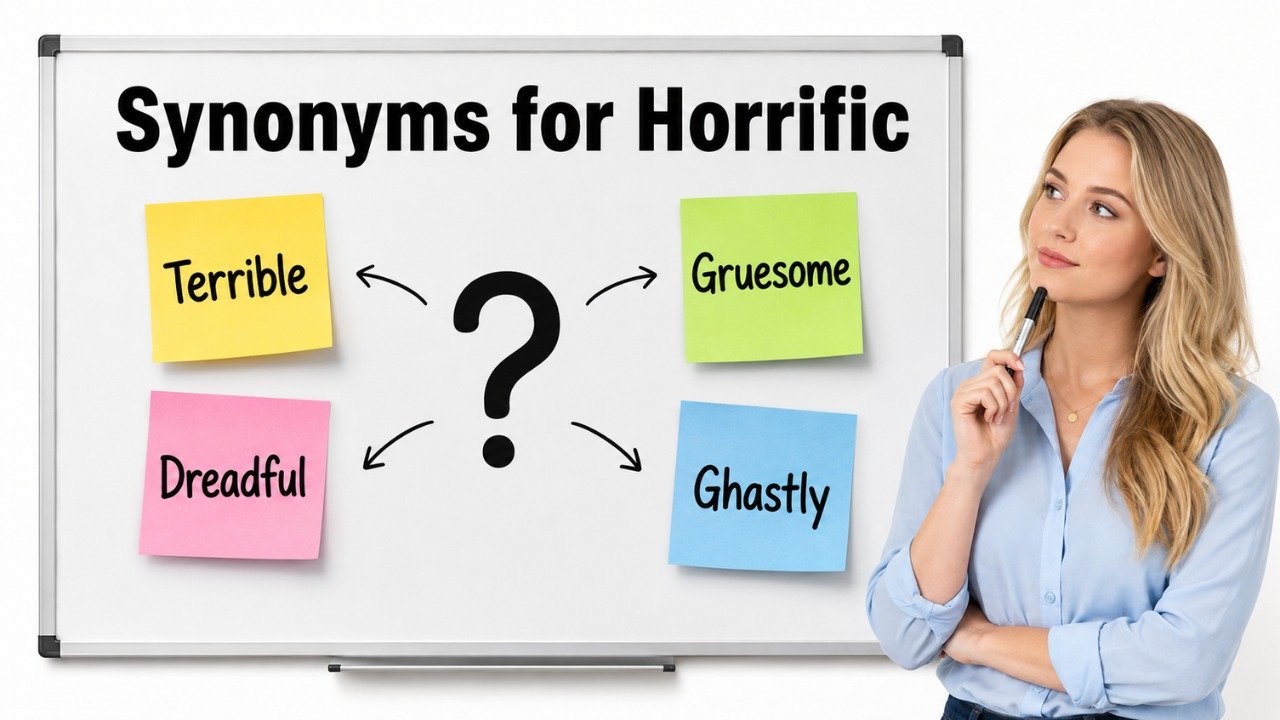
Quick Answer: The best synonyms for horrific include horrifying, terrible, dreadful, appalling, gruesome, ghastly, horrendous, shocking, atrocious, and nightmarish. Horrifying works well when something causes intense fear, while appalling is better for shocking behavior or conditions. Gruesome suits disturbing physical details, dreadful is useful in general conversation, atrocious fits extremely bad actions or conditions, and nightmarish describes experiences that feel frightening, chaotic, or almost unreal.
Pronunciation and Word Details
Word: Horrific
Pronunciation: /həˈrɪfɪk/
Part of Speech: Adjective
Meaning: Extremely frightening, shocking, disturbing, or unpleasant.
US Pronunciation:
UK Pronunciation:
What Does “Horrific” Mean?
Horrific means extremely frightening, shocking, disturbing, or unpleasant. It is an adjective used when an event, experience, condition, injury, crime, accident, image, or situation causes a powerful feeling of horror or distress.
The word is stronger than ordinary adjectives such as bad, unpleasant, or worrying. It suggests that something is severe enough to produce fear, shock, disgust, or emotional pain.
Example: The witnesses described the crash as horrific.
Horrific can describe physical events, emotional experiences, living conditions, acts of violence, disasters, and shocking discoveries.
Example: Families endured horrific conditions during the emergency.
It can also describe information or details that are deeply upsetting.
Example: The report revealed horrific details about the incident.
In everyday conversation, horrific may sometimes be used more broadly to emphasize that something was exceptionally unpleasant.
Example: The journey home was horrific because of the storm.
However, the word usually sounds strongest when the situation genuinely involves fear, suffering, danger, or serious distress.
Meaning, Tone, and Context of “Horrific”
Horrific has a strong, negative, and emotional tone. It communicates much more intensity than words such as unpleasant, difficult, or unfortunate.
Formal Context: Horrific may appear in serious writing about disasters, violence, dangerous conditions, suffering, or major accidents.
Conversational Context: Speakers use horrific when describing an extremely frightening or upsetting experience.
Emotional Context: The word expresses a strong reaction of fear, horror, shock, or distress.
Descriptive Context: Horrific can make a sentence more vivid by emphasizing the severity of an event or condition.
Literary Context: Writers may use horrific when building tension, fear, danger, or emotional intensity.
News Context: Horrific can describe extremely serious events, although more neutral language may sometimes be preferable when precision is important.
Horrific is not usually technical. In medical, legal, academic, or scientific writing, a more specific adjective such as severe, traumatic, dangerous, fatal, or disturbing may communicate the facts more precisely.
When and How to Use “Horrific”
For Frightening Events: Use horrific when an event causes intense fear, horror, or distress.
Example: Residents described the explosion as a horrific event.
For Serious Accidents: Horrific works when emphasizing the frightening or devastating nature of an accident.
Example: The highway was closed after a horrific collision.
For Shocking Conditions: Use horrific when living or working conditions are extremely disturbing.
Example: Inspectors discovered horrific conditions inside the building.
For Violent Actions: Horrific can emphasize the cruelty or severity of an action.
Example: Witnesses reported horrific acts of violence.
For Emotional Experiences: Use horrific when an experience is deeply distressing or frightening.
Example: She described the evacuation as a horrific experience.
For Disturbing Details: Horrific can introduce information that creates intense shock.
Example: The investigation uncovered horrific details.
For Major Disasters: The word suits devastating events that cause widespread fear or suffering.
Example: Survivors remembered the horrific destruction caused by the storm.
For Strong Emphasis: In conversation, horrific can strongly emphasize how unpleasant something felt.
Example: The journey through the flooded area was horrific.
Best Synonyms for Horrific
Horrifying
Synonym: Causing intense fear, horror, or shock.
Example: The documentary contained several horrifying accounts.
Horrifying is one of the closest replacements for horrific when the focus is on the emotional reaction something causes.
Terrible
Synonym: Extremely bad, unpleasant, or serious.
Example: The storm caused terrible damage across the region.
Terrible is broader and more common in everyday speech than horrific.
Dreadful
Synonym: Extremely bad, frightening, or unpleasant.
Example: They experienced dreadful conditions during the journey.
Dreadful is useful when the situation is very unpleasant but does not necessarily involve extreme horror.
Appalling
Synonym: Causing intense shock, disgust, or disapproval.
Example: Investigators found appalling conditions inside the facility.
Appalling works especially well for behavior, treatment, standards, or conditions that provoke moral outrage.
Gruesome
Synonym: Horrifying or disgusting because of disturbing physical details.
Example: The report avoided describing the gruesome injuries.
Gruesome is best when visible injury, violence, death, or disturbing physical details are involved.
Ghastly
Synonym: Extremely unpleasant, shocking, frightening, or ugly.
Example: Witnesses were confronted by a ghastly sight.
Ghastly can describe appearances, scenes, experiences, mistakes, or situations.
Horrendous
Synonym: Extremely bad, shocking, frightening, or unpleasant.
Example: The workers faced horrendous conditions.
Horrendous is close to horrific but is also commonly used for extremely bad circumstances that are not necessarily frightening.
Shocking
Synonym: Causing sudden surprise, distress, or strong disapproval.
Example: The inquiry revealed shocking failures.
Shocking emphasizes emotional impact and surprise rather than fear alone.
Atrocious
Synonym: Extremely bad, cruel, or unacceptable.
Example: The prisoners were kept in atrocious conditions.
Atrocious is particularly effective for behavior, treatment, conditions, performance, or standards.
Nightmarish
Synonym: Extremely frightening, distressing, or chaotic like a nightmare.
Example: The evacuation became a nightmarish experience.
Nightmarish creates a vivid sense of fear, confusion, or overwhelming difficulty.
50 Synonyms for Horrific with Short Meanings
- Horrifying: Causing intense horror or fear.
- Terrible: Extremely bad or unpleasant.
- Dreadful: Very bad, frightening, or distressing.
- Appalling: Causing strong shock or disgust.
- Gruesome: Horrifying because of disturbing physical details.
- Ghastly: Extremely unpleasant, frightening, or shocking.
- Horrendous: Extremely bad or horrifying.
- Shocking: Causing sudden distress or surprise.
- Atrocious: Shockingly bad, cruel, or unacceptable.
- Nightmarish: Extremely frightening or distressing.
- Awful: Very bad or unpleasant.
- Horrible: Extremely unpleasant or frightening.
- Frightful: Extremely bad or frightening.
- Terrifying: Causing extreme fear.
- Frightening: Making someone feel afraid.
- Fearsome: Inspiring strong fear or dread.
- Alarming: Causing fear or serious concern.
- Disturbing: Causing emotional discomfort or worry.
- Distressing: Causing anxiety, pain, or sadness.
- Harrowing: Extremely distressing or painful.
- Traumatic: Causing severe emotional distress.
- Chilling: Causing fear or uneasiness.
- Bloodcurdling: Causing extreme fear or horror.
- Petrifying: Causing overwhelming fear.
- Grisly: Horrifying because of death or violence.
- Gory: Showing blood or violent physical detail.
- Macabre: Disturbingly associated with death.
- Grotesque: Distorted, strange, and disturbing.
- Repulsive: Causing strong disgust or rejection.
- Revolting: Extremely disgusting or offensive.
- Disgusting: Causing strong disgust.
- Sickening: Causing intense disgust or distress.
- Nauseating: Extremely disgusting or upsetting.
- Hideous: Extremely ugly, offensive, or horrible.
- Monstrous: Shockingly cruel, frightening, or unnatural.
- Brutal: Extremely violent, cruel, or harsh.
- Savage: Fiercely violent or cruel.
- Vicious: Deliberately cruel or violent.
- Barbaric: Extremely cruel and uncivilized.
- Abominable: Extremely unpleasant or morally offensive.
- Vile: Extremely unpleasant, wicked, or disgusting.
- Loathsome: Causing intense hatred or disgust.
- Deplorable: Shockingly bad and deserving condemnation.
- Abysmal: Extremely bad in quality or condition.
- Dire: Extremely serious, dangerous, or urgent.
- Devastating: Causing severe destruction or emotional pain.
- Catastrophic: Causing enormous damage or failure.
- Sinister: Suggesting danger, evil, or harm.
- Eerie: Strange and frightening.
- Unsettling: Causing discomfort, concern, or nervousness.
Read Also:
Synonyms for Union

Synonyms for Horrific by Context
When Horrific Means Extremely Frightening
When horrific describes something that causes fear, useful synonyms include horrifying, terrifying, frightening, chilling, petrifying, bloodcurdling, and fearsome.
Example: Witnesses described the sound as terrifying.
Example: The survivors shared horrifying memories of the disaster.
Horrifying is usually the closest choice when the emphasis is on causing horror.
When Horrific Means Extremely Bad
When horrific simply emphasizes that something is exceptionally bad, choose terrible, dreadful, horrendous, awful, abysmal, or atrocious.
Example: The roads were in terrible condition.
Example: Workers faced horrendous delays.
These alternatives are useful when actual fear or horror is not central to the meaning.
When Horrific Means Shocking or Unacceptable
Appalling, shocking, atrocious, deplorable, vile, and abominable work well for behavior or conditions that create strong moral disapproval.
Example: The investigation uncovered appalling treatment of vulnerable residents.
Example: Officials condemned the atrocious conditions.
These choices often work better than horrific when the main emotion is outrage rather than fear.
When Horrific Means Graphic or Gruesome
For disturbing scenes involving injury, blood, violence, or death, use gruesome, grisly, gory, ghastly, or sickening.
Example: The report omitted the grisly details of the incident.
Example: The film contains several gory scenes.
Grisly and gruesome are particularly close when disturbing physical details are involved.
When Horrific Means Emotionally Distressing
Harrowing, traumatic, distressing, devastating, disturbing, and unsettling emphasize emotional pain.
Example: Survivors gave harrowing accounts of the evacuation.
Example: Losing the family home was devastating.
These choices are often more precise when the emotional consequences matter more than fear.
When Horrific Means Destructive
Catastrophic, devastating, dire, terrible, and disastrous alternatives emphasize serious damage or consequences.
Example: The flood had devastating effects on local communities.
Example: The failure could have catastrophic consequences.
These synonyms suit reports and formal writing when describing large scale damage or serious outcomes.
Another Word for Horrific
Another word for horrific is horrifying. It is one of the closest replacements because both words describe something connected with intense horror, fear, or shock.
However, the best synonym depends on what makes the situation horrific. Appalling emphasizes shock or moral disapproval. Gruesome emphasizes disturbing physical details. Harrowing focuses on emotional suffering, while catastrophic emphasizes severe consequences or destruction.
Original: The witnesses described the accident as horrific.
Better Option: The witnesses described the accident as horrifying.
Original: The residents were living in horrific conditions.
Better Option: The residents were living in appalling conditions.
Original: The report contained horrific details about the injuries.
Better Option: The report contained gruesome details about the injuries.
Original: Survivors endured a horrific journey to safety.
Better Option: Survivors endured a harrowing journey to safety.
When Not to Use “Horrific”
Horrific is a strong word, so it can sound exaggerated when describing ordinary problems, minor inconveniences, or mildly unpleasant experiences.
Weak: My coffee tasted horrific this morning.
Better: My coffee tasted awful this morning.
Awful sounds more natural when the problem is unpleasant but not truly horrifying.
Weak: I had a horrific wait at the office.
Better: I had a frustrating wait at the office.
Frustrating gives the reader more accurate information about the experience.
Avoid horrific when a precise technical word would communicate the facts better.
Weak: The machine suffered a horrific failure.
Better: The machine suffered a critical failure.
Critical is more appropriate in technical writing because it describes the severity without unnecessary emotion.
Horrific may also be less suitable in sensitive medical contexts.
Weak: The patient had a horrific injury.
Better: The patient had a severe injury.
Severe provides a more objective description.
Avoid repeating horrific when several different aspects of a situation are being described.
Weak: The horrific storm caused horrific damage and created horrific conditions.
Better: The devastating storm caused severe damage and created dangerous conditions.
Choosing precise alternatives makes writing clearer and less repetitive.
Words Commonly Confused With Horrific
Horrific vs Horrifying: Horrific describes something that is extremely frightening or shocking. Horrifying emphasizes the effect of causing horror. In many sentences, the two words are interchangeable.
Horrific vs Horrible: Horrific is generally stronger and more closely associated with extreme fear, shock, suffering, or violence. Horrible is broader and can describe ordinary unpleasant experiences.
Horrific vs Horrendous: Both can mean extremely bad. Horrific more strongly suggests horror, while horrendous often emphasizes how extremely bad a condition or situation is.
Horrific vs Gruesome: Horrific is a broad term for extreme horror or shock. Gruesome specifically suggests disturbing physical details involving injury, violence, or death.
Horrific vs Ghastly: Horrific focuses on horror and shock. Ghastly can describe something frightening, extremely unpleasant, ugly, or shockingly bad.
Horrific vs Appalling: Horrific emphasizes horror or fear, while appalling often emphasizes shock, disgust, or moral disapproval.
Horrific vs Terrifying: Horrific can cause fear, shock, or disgust. Terrifying specifically emphasizes extreme fear.
Horrific vs Traumatic: Horrific describes an event or situation, while traumatic emphasizes the lasting emotional or psychological distress connected with an experience.
Which Synonym Should You Choose?
Choose horrifying when something directly causes intense horror or fear.
Choose terrifying when fear is the main emotional reaction.
Choose terrible for general conversation when something is extremely bad but not necessarily frightening.
Choose dreadful when describing highly unpleasant experiences, conditions, or outcomes.
Choose appalling when emphasizing shocking behavior, poor treatment, terrible standards, or moral disapproval.
Choose gruesome when disturbing physical details involving injury, death, or violence are important.
Choose grisly when describing especially disturbing details of death, injury, or violence.
Choose gory when blood and graphic physical violence are specifically involved.
Choose harrowing when describing an emotionally painful or deeply distressing experience.
Choose traumatic when emphasizing emotional harm caused by a serious experience.
Choose catastrophic when describing enormous damage, destruction, or failure in reports or formal writing.
Choose severe when you need a more neutral adjective in medical, technical, academic, or professional writing.
Choose shocking when surprise and distress are more important than fear.
Choose horrendous when you want a strong but broad synonym for something exceptionally bad.
In essays and reports, appalling, devastating, severe, catastrophic, disturbing, or traumatic may provide greater precision depending on the subject. In everyday conversation, terrible, dreadful, awful, and horrible often sound more natural.
Real Life Examples of “Horrific” in Sentences
Original: The witnesses described the collision as horrific.
Better Option: The witnesses described the collision as horrifying.
Original: Families were forced to live in horrific conditions.
Better Option: Families were forced to live in appalling conditions.
Original: The report revealed horrific injuries.
Better Option: The report revealed gruesome injuries.
Original: The travelers endured a horrific journey through the storm.
Better Option: The travelers endured a harrowing journey through the storm.
Original: The disaster caused horrific damage across the area.
Better Option: The disaster caused devastating damage across the area.
Original: The investigation exposed horrific treatment of workers.
Better Option: The investigation exposed atrocious treatment of workers.
Original: She remembered the horrific sound of the explosion.
Better Option: She remembered the terrifying sound of the explosion.
Original: The documentary included horrific descriptions of the event.
Better Option: The documentary included disturbing descriptions of the event.
Original: The town faced horrific consequences after the flood.
Better Option: The town faced catastrophic consequences after the flood.
Original: Residents reported a horrific smell coming from the building.
Better Option: Residents reported a revolting smell coming from the building.
Synonym Groups and Usage Differences
Fear Group
Horrifying, terrifying, frightening, petrifying, bloodcurdling, chilling, and fearsome emphasize fear.
Use these words when the emotional reaction of being frightened is the main idea.
Example: The sudden scream was terrifying.
Extreme Badness Group
Terrible, dreadful, awful, horrendous, atrocious, and abysmal describe something that is exceptionally bad.
These words are broader than horrific and can describe quality, conditions, experiences, or results.
Example: The building was in atrocious condition.
Shock and Disapproval Group
Appalling, shocking, deplorable, vile, and abominable emphasize strong disapproval, disgust, or outrage.
These alternatives are useful for unethical behavior, poor treatment, or unacceptable conditions.
Example: The inquiry revealed appalling negligence.
Graphic Horror Group
Gruesome, grisly, gory, ghastly, and sickening describe disturbing physical imagery, violence, injury, or death.
These words are more specific than horrific.
Example: The writer avoided unnecessary gruesome details.
Emotional Distress Group
Harrowing, traumatic, distressing, disturbing, devastating, and unsettling focus on emotional suffering or discomfort.
Use them when the lasting emotional effect matters more than immediate fear.
Example: Survivors shared harrowing stories of their escape.
Disaster Group
Catastrophic, devastating, dire, dreadful, and terrible can emphasize severe consequences or widespread destruction.
These choices often work well in formal descriptions of emergencies and major failures.
Example: The earthquake had devastating consequences.
Antonyms of Horrific
The opposite of horrific depends on whether the contrast involves fear, emotional effect, quality, or pleasantness.
Pleasant: Enjoyable or agreeable.
Wonderful: Extremely good or enjoyable.
Delightful: Giving great pleasure or enjoyment.
Excellent: Extremely good in quality.
Beautiful: Pleasing to see or experience.
Lovely: Pleasant, attractive, or enjoyable.
Comforting: Making someone feel calmer or safer.
Reassuring: Reducing fear, worry, or uncertainty.
Peaceful: Calm and free from disturbance.
Safe: Free from serious danger or risk.
Harmless: Unable or unlikely to cause harm.
Calming: Reducing fear, stress, or anxiety.
Uplifting: Creating hope or positive feelings.
Encouraging: Giving confidence or hope.
Enjoyable: Providing pleasure or satisfaction.
Comparison: Horrific vs Related Words
Horrific vs Horrifying
Horrific describes something extremely frightening or shocking. Horrifying focuses slightly more on the effect that something has on a person.
Example With Horrific: The accident caused horrific damage.
Example With Horrifying: Witnesses described the scene as horrifying.
Horrific vs Horrible
Horrific is usually stronger than horrible. Horrible can describe anything very unpleasant, while horrific often suggests severe horror, shock, suffering, or danger.
Example With Horrific: The survivors witnessed a horrific event.
Example With Horrible: We had horrible weather during the trip.
Horrific vs Horrendous
Horrific is closely associated with horror, while horrendous broadly means extremely bad or unpleasant.
Example With Horrific: The explosion left a horrific scene behind.
Example With Horrendous: The workers endured horrendous conditions.
Horrific vs Gruesome
Horrific is broad, while gruesome usually describes disturbing physical details connected with injury, death, or violence.
Example With Horrific: The attack was horrific.
Example With Gruesome: The report contained gruesome details.
Horrific vs Terrifying
Horrific can involve fear, disgust, distress, or shock. Terrifying specifically means causing extreme fear.
Example With Horrific: They discovered horrific conditions inside the building.
Example With Terrifying: The roar of the approaching storm was terrifying.
Horrific vs Appalling
Horrific emphasizes intense horror or shock. Appalling emphasizes strong shock, disgust, or disapproval.
Example With Horrific: The accident was horrific.
Example With Appalling: The treatment of the residents was appalling.
Horrific vs Traumatic
Horrific describes the terrible nature of an event. Traumatic emphasizes the severe emotional effect that an event has on someone.
Example With Horrific: They survived a horrific crash.
Example With Traumatic: The crash was a traumatic experience for the passengers.
Horrific vs Catastrophic
Horrific focuses on fear, shock, or suffering. Catastrophic focuses on enormous damage, destruction, or failure.
Example With Horrific: Witnesses described the fire as horrific.
Example With Catastrophic: The fire caused catastrophic damage to the area.
Common Phrases and Expressions With Horrific
Horrific Accident: An extremely serious or frightening accident.
Horrific Crime: A crime that causes intense horror or shock.
Horrific Scene: A sight or situation that is deeply frightening or disturbing.
Horrific Injuries: Extremely severe or disturbing injuries.
Horrific Conditions: Extremely bad, dangerous, or disturbing circumstances.
Horrific Experience: An event that causes severe fear, shock, or distress.
Horrific Discovery: Something found that causes intense horror or shock.
Horrific Details: Information that is deeply disturbing or frightening.
Horrific Attack: An extremely violent or shocking attack.
Horrific Consequences: Extremely serious, damaging, or distressing results.
Common Mistakes to Avoid
One common mistake is treating horrific as a general replacement for bad in every situation. Horrific is much stronger and should usually describe something extremely frightening, shocking, disturbing, or unpleasant.
Weak: The meeting was horrific because it lasted ten minutes longer than expected.
Better: The meeting was frustrating because it lasted longer than expected.
Another mistake is using horrific when a more precise synonym explains the situation better.
Weak: The company reported horrific financial results.
Better: The company reported disastrous financial results.
Disastrous tells the reader that the results were severely unsuccessful, while horrific adds unnecessary emotional intensity.
Do not automatically replace horrific with gory. Gory specifically refers to blood, wounds, or graphic violence.
Wrong Choice: The storm caused gory damage to several houses.
Better: The storm caused devastating damage to several houses.
Avoid confusing horrific with horrifying. They are close, but horrifying often focuses more directly on what causes horror.
Do not repeat horrific several times within a short passage.
Repetitive: The horrific fire created horrific conditions and caused horrific damage.
Better: The devastating fire created dangerous conditions and caused catastrophic damage.
Writers should also avoid using horrific when objective language is required. Severe, dangerous, traumatic, critical, or catastrophic may be more precise in professional reports.
Finally, consider the exact emotional meaning. Terrifying emphasizes fear, appalling emphasizes disapproval, gruesome emphasizes graphic physical details, and harrowing emphasizes emotional suffering.
Conclusion
Synonyms for horrific help you express different kinds of fear, shock, suffering, disgust, and extreme unpleasantness more precisely. Horrifying is one of the closest general replacements, while terrifying emphasizes fear, appalling expresses shock or disapproval, gruesome suits disturbing physical details, and harrowing describes emotional suffering. For severe consequences, devastating or catastrophic may be clearer. Choosing the right synonym depends on whether you want to emphasize fear, graphic detail, moral outrage, emotional distress, or the seriousness of an event.
FAQs About Synonyms for Horrific
What Is the Best Synonym for Horrific?
Horrifying is one of the closest synonyms for horrific because both words describe something that causes intense horror, fear, or shock.
What Is a Stronger Word for Horrific?
Terrifying, gruesome, appalling, atrocious, and catastrophic can sound especially strong depending on the context. No single synonym is stronger in every situation.
What Is Another Word for a Horrific Experience?
Harrowing, traumatic, terrifying, dreadful, or nightmarish may describe a horrific experience. Harrowing is especially useful when emotional suffering is the main focus.
What Is the Difference Between Horrific and Horrible?
Horrific is generally stronger and suggests extreme horror, shock, danger, or suffering. Horrible is broader and can describe ordinary unpleasant situations as well as serious ones.
Are Horrific and Horrifying the Same?
They are very similar. Horrific describes something extremely frightening or shocking, while horrifying places slightly more emphasis on the fact that something causes horror.
Can Horrific Describe Something That Is Not Frightening?
Yes. Horrific can describe extremely bad, disturbing, shocking, or unpleasant conditions even when fear is not the main emotion.
Is Horrific Suitable for Formal Writing?
Yes, but it is emotionally strong. In academic, technical, medical, or professional writing, more precise alternatives such as severe, traumatic, catastrophic, disturbing, or dangerous may sometimes be better.
