
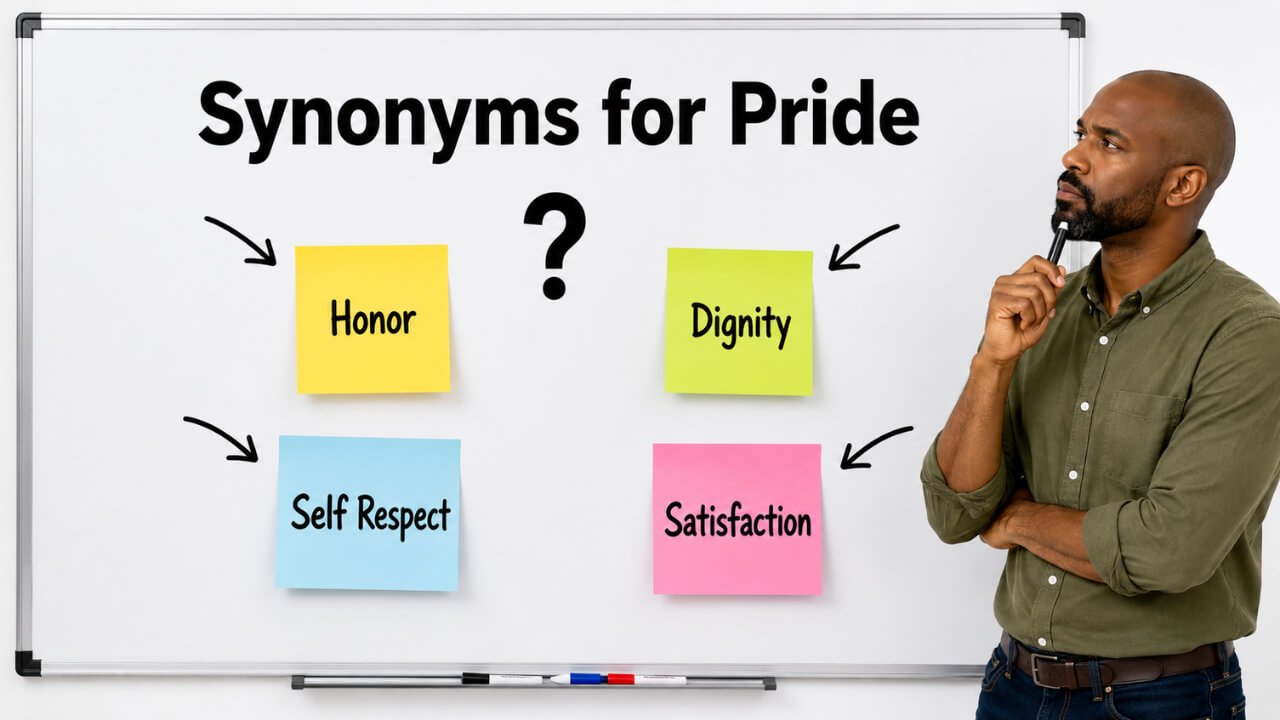
Quick Answer: Synonyms for pride include dignity, self respect, honor, confidence, satisfaction, fulfillment, delight, self esteem, achievement, and conceit. Use dignity when you mean personal worth, satisfaction when you feel pleased with success, honor in formal or respectful writing, confidence for belief in yourself, and conceit or arrogance when pride becomes negative or excessive.
Pronunciation and Word Details
Word: Pride
Pronunciation: /praɪd/
Part of Speech: Noun and verb
Meaning: Pride means a feeling of satisfaction, self respect, or sometimes an overly high opinion of oneself.
US Pronunciation:
UK Pronunciation:
What Does “Pride” Mean?
Direct Answer: Pride means a strong feeling of pleasure, dignity, or self respect connected to who you are, what you have done, or what someone close to you has achieved.
As a noun, pride can describe a positive feeling of achievement, such as pride in your work, family, culture, or progress. It can also describe a negative attitude when someone thinks too highly of themselves. As a verb, pride means to take satisfaction in something, as in “She prides herself on being honest.”
Pride works in many sentence contexts. It can express personal value, emotional satisfaction, public honor, family joy, professional success, or excessive self importance.
Meaning, Tone, and Context of “Pride”
Tone: Pride can be positive, neutral, or negative depending on context.
Positive Context: Pride often means healthy self respect, satisfaction, or honor. For example, a student may feel pride after improving their grades.
Negative Context: Pride can also mean arrogance, vanity, or conceit when someone feels superior to others.
Formality: Pride is common in both formal and casual English. It appears in essays, speeches, daily conversation, emotional writing, professional settings, and personal reflection.
Emotional Use: Pride often carries strong emotion because it connects to identity, success, respect, and personal value.
Academic Use: In academic writing, pride may refer to self esteem, collective identity, social status, or moral attitude.
When and How to Use “Pride”
For Personal Worth: Use pride when describing a healthy sense of self respect.
Example: She carried herself with pride after years of hard work.
For Achievement: Use pride when someone feels pleased about success or progress.
Example: He felt pride when his project was selected.
For Family or Group Identity: Use pride when showing respect for a family, team, community, or culture.
Example: They spoke with pride about their traditions.
For Professional Quality: Use pride when someone cares deeply about doing good work.
Example: The chef takes pride in every meal he prepares.
For Negative Attitude: Use pride when describing excessive self importance.
Example: His pride stopped him from apologizing.
Best Synonyms for Pride
Dignity: A calm sense of personal worth and respect.
Example: She handled the criticism with dignity.
Self Respect: A healthy respect for your own value and principles.
Example: He refused the unfair offer out of self respect.
Honor: Deep respect connected to character, duty, or reputation.
Example: The award brought honor to the whole family.
Confidence: Belief in your own ability or worth.
Example: Her confidence grew after each success.
Satisfaction: A pleased feeling after doing something well.
Example: He felt satisfaction after completing the difficult task.
Fulfillment: A deep sense of happiness from meaningful success.
Example: Teaching gave her a sense of fulfillment.
Delight: Great pleasure or joy.
Example: The parents watched with delight as their child performed.
Self Esteem: A person’s sense of personal value.
Example: Encouragement helped build his self esteem.
Achievement: Success gained through effort.
Example: Finishing the course was a major achievement.
Conceit: Excessive pride in oneself.
Example: His conceit made it hard for others to work with him.
50 Synonyms for Pride with Short Meanings
- Dignity: Calm personal worth and respect.
2. Self Respect: Healthy respect for yourself.
3. Honor: Respect connected to character or reputation.
4. Confidence: Belief in your ability or worth.
5. Self Esteem: Your sense of personal value.
6. Satisfaction: Pleasure from success or completion.
7. Fulfillment: Deep happiness from meaningful achievement.
8. Delight: Strong joy or pleasure.
9. Pleasure: A happy or satisfied feeling.
10. Joy: Great happiness.
11. Gratification: Pleasure from getting or achieving something.
12. Contentment: Peaceful satisfaction.
13. Accomplishment: Success gained through effort.
14. Achievement: Something completed successfully.
15. Triumph: Great success after effort.
16. Glory: High honor or admiration.
17. Prestige: Respect gained from success or status.
18. Respect: Admiration or proper regard.
19. Esteem: High regard or respect.
20. Worth: Value or importance.
21. Merit: Deserving quality or value.
22. Credit: Praise or recognition for effort.
23. Recognition: Public notice or respect.
24. Praise: Approval or admiration.
25. Approval: Positive acceptance or support.
26. Admiration: Warm respect or appreciation.
27. Appreciation: Recognition of value or effort.
28. Regard: Respectful attention or opinion.
29. Nobility: Moral greatness or dignity.
30. Integrity: Strong moral character.
31. Character: Moral quality or personal nature.
32. Spirit: Inner strength or attitude.
33. Assurance: Calm confidence.
34. Poise: Calm and confident control.
35. Composure: Calm control of emotion.
36. Self Worth: A sense of personal value.
37. Self Regard: Respectful view of yourself.
38. Self Assurance: Confidence in yourself.
39. Self Confidence: Trust in your own ability.
40. Ego: Sense of self importance.
41. Vanity: Excessive concern with appearance or praise.
42. Conceit: Too much pride in yourself.
43. Arrogance: Belief that you are better than others.
44. Haughtiness: Proud and unfriendly superiority.
45. Superiority: Feeling above others.
46. Smugness: Annoying self satisfaction.
47. Boastfulness: Habit of praising yourself too much.
48. Self Importance: An exaggerated view of your own value.
49. Pretension: Claiming more importance than you deserve.
50. Elation: Great happiness after success.
Read Also:
Synonyms for Cause
Synonyms for Pride by Context
When Pride Means Self Respect
Useful Synonyms: Dignity, self respect, self worth, self esteem, self regard.
Example: She kept her dignity even during a difficult conversation.
Explanation: These synonyms work when pride means valuing yourself without acting superior.
When Pride Means Satisfaction
Useful Synonyms: Satisfaction, fulfillment, gratification, pleasure, contentment.
Example: He felt deep satisfaction after finishing the painting.
Explanation: These words are best when pride comes from effort, success, or completion.
When Pride Means Honor
Useful Synonyms: Honor, glory, prestige, recognition, esteem.
Example: Winning the award brought honor to her school.
Explanation: These choices work in formal writing, speeches, ceremonies, and respectful descriptions.
When Pride Means Confidence
Useful Synonyms: Confidence, assurance, self confidence, poise, composure.
Example: Her confidence showed during the interview.
Explanation: These synonyms describe a strong and calm belief in yourself.
When Pride Means Arrogance
Useful Synonyms: Arrogance, conceit, vanity, smugness, haughtiness.
Example: His arrogance made him ignore useful advice.
Explanation: These words fit when pride becomes excessive, rude, or selfish.
Another Word for Pride
Direct Answer: Another word for pride is dignity when the meaning is positive self respect. The best replacement depends on context. Use satisfaction for achievement, honor for respect, confidence for belief in yourself, and conceit for negative pride.
Original: She spoke with pride about her progress.
Better Option: She spoke with satisfaction about her progress.
Original: He protected his pride during the argument.
Better Option: He protected his dignity during the argument.
Original: The team felt pride after winning the final.
Better Option: The team felt a strong sense of achievement after winning the final.
Original: His pride made him hard to correct.
Better Option: His arrogance made him hard to correct.
When Not to Use “Pride”
Repetition: Do not repeat pride too often in the same paragraph. Use dignity, satisfaction, honor, or confidence when they fit better.
Weak: She felt pride in her work, pride in her team, and pride in her success.
Better: She felt satisfaction in her work, respect for her team, and pride in her success.
Unclear Meaning: Pride can be positive or negative, so choose a clearer synonym when the tone matters.
Weak: His pride was obvious during the meeting.
Better: His arrogance was obvious during the meeting.
Too General: Pride may sound broad when you mean a specific feeling.
Weak: She had pride after finishing the exam.
Better: She felt relief and satisfaction after finishing the exam.
Wrong Tone: Do not use conceit or arrogance when you mean healthy self respect.
Weak: Her conceit helped her speak confidently.
Better: Her confidence helped her speak clearly.
Words Commonly Confused With Pride
Pride vs Dignity: Pride can mean satisfaction or self importance, while dignity means calm self respect and worth.
Pride vs Confidence: Pride is a feeling of satisfaction or value, while confidence is belief in ability.
Pride vs Arrogance: Pride can be healthy, but arrogance always suggests superiority and disrespect.
Pride vs Vanity: Pride may come from success or identity, while vanity often focuses on appearance or praise.
Pride vs Self Esteem: Pride is often connected to a moment or achievement, while self esteem is a broader sense of personal value.
Pride vs Honor: Pride is an internal feeling, while honor often involves public respect, duty, or reputation.
Which Synonym Should You Choose?
Choose dignity when writing about self respect, calm strength, or personal worth.
Choose satisfaction when describing a good feeling after success, effort, or completion.
Choose honor when writing formally about respect, reputation, family, duty, or public recognition.
Choose confidence when the focus is belief in ability rather than emotional satisfaction.
Choose self esteem when discussing emotional health, identity, or personal value.
Choose fulfillment when the feeling is deep, meaningful, and connected to purpose.
Choose delight when the feeling is joyful and warm.
Choose achievement when the focus is the successful result, not the feeling.
Choose arrogance when pride becomes rude, excessive, or superior.
Choose conceit when someone thinks too highly of themselves.
Real Life Examples of “Pride” in Sentences
Original: She felt pride after helping her community.
Better Option: She felt fulfillment after helping her community.
Original: He took pride in his honest work.
Better Option: He took satisfaction in his honest work.
Original: Their pride showed during the ceremony.
Better Option: Their dignity showed during the ceremony.
Original: The coach looked at the team with pride.
Better Option: The coach looked at the team with admiration.
Original: His pride kept him from asking for help.
Better Option: His arrogance kept him from asking for help.
Original: The family felt pride in her success.
Better Option: The family felt joy in her success.
Original: She spoke with pride about her culture.
Better Option: She spoke with honor about her culture.
Original: He has too much pride to admit mistakes.
Better Option: He has too much conceit to admit mistakes.
Original: Pride filled the room after the announcement.
Better Option: Excitement and satisfaction filled the room after the announcement.
Original: She carries her pride quietly.
Better Option: She carries her dignity quietly.
Synonym Groups and Usage Differences
Self Respect Group
Words: Dignity, self respect, self worth, self regard, self esteem.
Use: Choose these words when pride means valuing yourself in a healthy way.
Example: He kept his self respect by refusing to lie.
Achievement Group
Words: Satisfaction, accomplishment, achievement, fulfillment, gratification.
Use: Choose these words when pride comes from effort, progress, or success.
Example: Completing the book gave her real fulfillment.
Honor Group
Words: Honor, glory, prestige, esteem, recognition.
Use: Choose these words in formal, respectful, or public contexts.
Example: The medal brought recognition to the entire team.
Confidence Group
Words: Confidence, assurance, poise, composure, self confidence.
Use: Choose these words when the meaning is calm belief in yourself.
Example: His poise helped him answer every question clearly.
Negative Pride Group
Words: Arrogance, conceit, vanity, smugness, haughtiness.
Use: Choose these words when pride becomes excessive or unpleasant.
Example: Her smugness annoyed the whole group.
Antonyms of Pride
Humility: A modest view of yourself.
Modesty: A humble and not boastful attitude.
Shame: Painful feeling after failure or wrongdoing.
Embarrassment: Discomfort from awkwardness or mistake.
Disgrace: Loss of respect or honor.
Dishonor: Lack or loss of respect.
Humbleness: Gentle modesty and lack of arrogance.
Meekness: Quiet and gentle behavior.
Insecurity: Lack of confidence or self belief.
Self Doubt: Uncertainty about your own ability or worth.
Comparison: Pride vs Related Words
Pride vs Dignity
Difference: Pride can mean satisfaction, self respect, or arrogance. Dignity only suggests calm personal worth and respect.
Example With Pride: She felt pride after completing the challenge.
Example With Dignity: She responded to the insult with dignity.
Pride vs Confidence
Difference: Pride is a feeling about value or achievement. Confidence is belief in ability.
Example With Pride: He felt pride in his progress.
Example With Confidence: He spoke with confidence during the presentation.
Pride vs Arrogance
Difference: Pride can be positive or negative. Arrogance is always negative because it suggests superiority.
Example With Pride: She took pride in helping others.
Example With Arrogance: His arrogance made others feel ignored.
Pride vs Satisfaction
Difference: Pride often connects to identity, value, or achievement. Satisfaction means being pleased with a result.
Example With Pride: They showed pride in their school.
Example With Satisfaction: She felt satisfaction after solving the problem.
Pride vs Vanity
Difference: Pride can come from achievement or identity. Vanity is excessive admiration of appearance or praise.
Example With Pride: He took pride in his careful work.
Example With Vanity: Her vanity made her seek constant compliments.
Common Phrases and Expressions With Pride
Take Pride In: To feel pleased about something you do well.
Pride Yourself On: To value a quality or skill in yourself.
Sense of Pride: A feeling of satisfaction or self respect.
National Pride: Respect and love for one’s country.
Family Pride: Satisfaction connected to family identity or success.
Personal Pride: A private feeling of self respect or achievement.
Professional Pride: Care and satisfaction in doing good work.
Wounded Pride: Hurt feelings after embarrassment or rejection.
False Pride: Pride based on ego rather than real worth.
Pride and Joy: Someone or something that brings great happiness.
Common Mistakes to Avoid
Mistake 1: Using pride when the meaning is clearly negative. Choose arrogance, conceit, or vanity when someone acts superior.
Mistake 2: Using arrogance for healthy self respect. Arrogance is negative, while dignity and self respect are positive.
Mistake 3: Repeating pride too often. Replace it with satisfaction, honor, confidence, or fulfillment when the meaning changes.
Mistake 4: Confusing pride with confidence. Confidence means belief in ability, while pride means satisfaction, worth, or ego.
Mistake 5: Choosing a synonym that changes the tone. For example, delight sounds joyful, dignity sounds serious, and conceit sounds critical.
Mistake 6: Using vague phrasing. Instead of saying “She had pride,” explain whether she felt satisfaction, honor, confidence, or dignity.
Conclusion
Synonyms for pride can express healthy self respect, deep satisfaction, public honor, strong confidence, or excessive ego. The best synonym depends on the meaning you want. Use dignity for self respect, satisfaction for achievement, honor for respect, confidence for belief in yourself, and arrogance or conceit for negative pride. Choosing the right word makes your writing clearer, more accurate, and more natural.
FAQs About Synonyms for Pride
What is the best synonym for pride?
Answer: The best synonym for pride is dignity when pride means self respect. Use satisfaction when pride means pleasure from achievement.
What is a positive word for pride?
Answer: Positive words for pride include dignity, self respect, honor, confidence, satisfaction, and fulfillment.
What is a negative synonym for pride?
Answer: Negative synonyms for pride include arrogance, conceit, vanity, smugness, and haughtiness.
Is pride always a bad word?
Answer: No. Pride can be positive when it means self respect or satisfaction. It becomes negative when it means superiority or excessive ego.
What is another word for taking pride in work?
Answer: Good alternatives include taking satisfaction in work, valuing quality, showing professional pride, and caring about excellence.
What is the difference between pride and dignity?
Answer: Pride can mean satisfaction, honor, or arrogance. Dignity means calm self respect and personal worth.
Which synonym for pride should I use in formal writing?
Answer: Use dignity, honor, esteem, self respect, or recognition in formal writing, depending on the exact meaning.
