
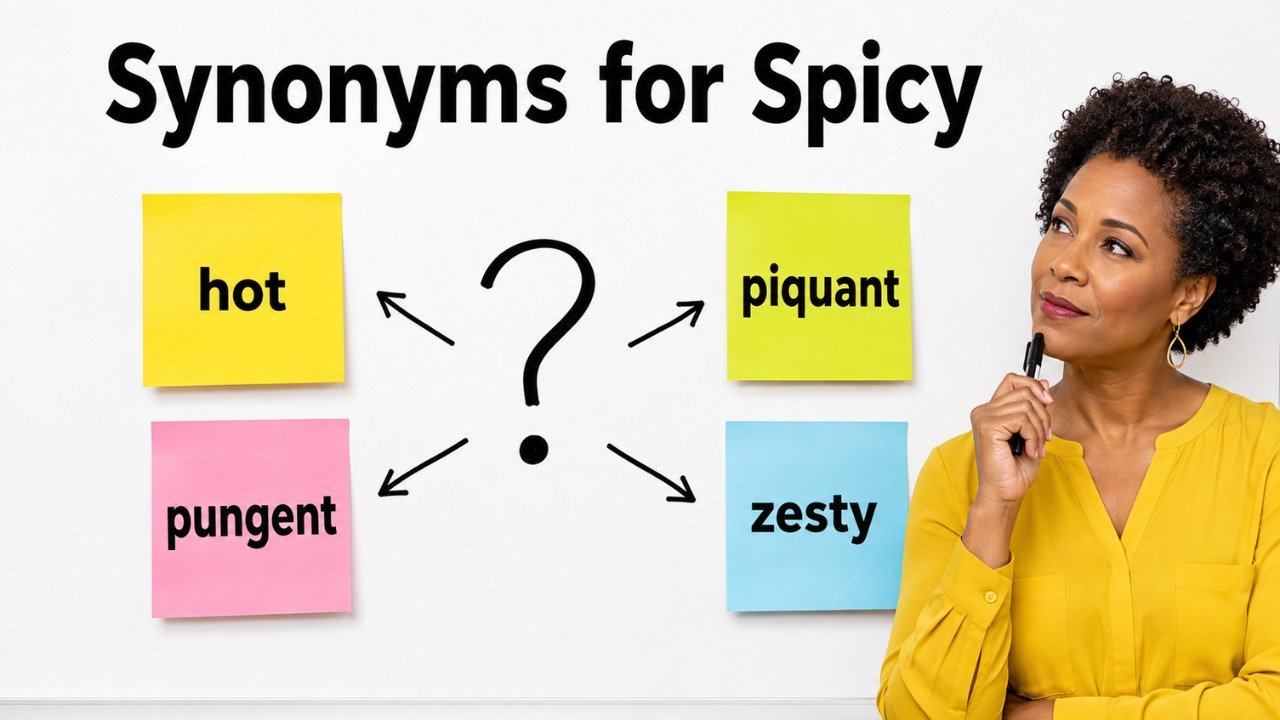
Quick Answer: The best synonyms for spicy include hot, fiery, peppery, piquant, pungent, zesty, tangy, bold, provocative, and racy. Use hot, fiery, or peppery for food that creates a burning sensation. Choose piquant, zesty, or tangy for an appealing sharp flavor. Bold works for strong flavors, personalities, or ideas. Provocative and racy describe daring conversations, stories, or content. The most accurate replacement depends on whether spicy refers to heat, flavor, excitement, or suggestive language.
Pronunciation and Word Details
Word: Spicy.
Pronunciation: /ˈspaɪsi/.
Part of Speech: Adjective.
Meaning: Having a strong flavor from spices or possessing an exciting, bold, or provocative quality.
US Pronunciation:
UK Pronunciation:
What Does “Spicy” Mean?
Spicy means containing strong spices, producing a hot sensation in the mouth, or having an exciting and provocative quality.
As an adjective, spicy most commonly describes food made with ingredients such as chili peppers, black pepper, ginger, mustard, or other strong seasonings. A spicy dish may create warmth, tingling, or burning sensations on the tongue.
The word can also describe food that has a noticeable mixture of spices without being extremely hot. For example, a spicy soup might be aromatic and richly seasoned rather than painfully hot.
In informal and figurative language, spicy can describe a conversation, story, opinion, rumor, or detail that is daring, exciting, controversial, or slightly suggestive. A spicy discussion may contain strong opinions, while a spicy story may include provocative details.
The intended meaning depends on the noun being described. Spicy food usually refers to heat or seasoning. Spicy language, gossip, or content usually suggests boldness, excitement, or controversy.
Meaning, Tone, and Context of “Spicy”
Spicy is generally a neutral and conversational adjective when used for food. It appears naturally in restaurant descriptions, recipes, everyday speech, food reviews, and discussions about personal taste.
When describing flavor, spicy can be positive or negative. A person who enjoys strong heat may use it approvingly, while someone with a sensitive palate may use it as a warning.
In formal food writing, more precise terms such as peppery, pungent, piquant, aromatic, or highly seasoned may communicate the exact flavor more effectively. Spicy is useful, but it does not always explain whether the food is hot, sharp, sour, fragrant, or strongly seasoned.
In figurative contexts, spicy is casual, expressive, and sometimes playful. It can describe bold opinions, lively discussions, dramatic gossip, or suggestive material. In professional or academic writing, provocative, controversial, explicit, or sensational may be clearer.
The tone can therefore change according to context. Spicy food is usually a neutral description. A spicy personality sounds lively and daring. A spicy rumor sounds dramatic or scandalous. Spicy language may sound offensive, provocative, or sexually suggestive.
When and How to Use “Spicy”
For Food Heat: Use spicy when food creates warmth, tingling, or a burning sensation because of chili peppers or similar ingredients.
Example: The spicy curry left a pleasant warmth on my tongue.
For Strong Seasoning: Use spicy when a dish contains noticeable spices, even when it is not extremely hot.
Example: The spicy rice had rich notes of cumin, pepper, and ginger.
For Sharp Flavor: Use spicy for food with a strong, stimulating, or biting taste.
Example: The spicy mustard added a sharp kick to the sandwich.
For Bold Personality: Use spicy informally for someone who is energetic, outspoken, or daring.
Example: Her spicy personality made every conversation more interesting.
For Lively Conversation: Use spicy for a discussion that contains bold opinions, teasing remarks, or unexpected revelations.
Example: The interview became spicy when the guests began challenging one another.
For Provocative Content: Use spicy informally for stories, language, or details that are daring or suggestive.
Example: The novel includes a few spicy scenes intended for mature readers.
For Controversial Opinions: Use spicy casually for a statement that may provoke strong reactions.
Example: He offered a spicy opinion about the proposed changes.
For Dramatic Gossip: Use spicy for rumors or details that are exciting, scandalous, or attention grabbing.
Example: Everyone wanted to hear the spicy details from the private meeting.
Best Synonyms for Spicy
Hot: Producing a burning or warming sensation in the mouth.
Example: The hot sauce made my eyes water.
Fiery: Extremely hot, intense, or forceful.
Example: She served a fiery stew made with several kinds of chili.
Peppery: Having a sharp flavor similar to black pepper or peppery greens.
Example: The salad had a fresh, peppery taste.
Piquant: Pleasantly sharp, stimulating, or appetizing in flavor.
Example: The pickled vegetables added a piquant note to the meal.
Pungent: Having a very strong, sharp taste or smell.
Example: The pungent seasoning filled the entire kitchen with its aroma.
Zesty: Having a fresh, lively, and pleasantly sharp flavor.
Example: The zesty dressing brightened the simple salad.
Tangy: Having a pleasantly sharp or slightly sour taste.
Example: The tangy sauce balanced the sweetness of the roasted vegetables.
Bold: Strong, noticeable, and full of character.
Example: The soup had a bold flavor that remained memorable.
Provocative: Likely to create strong interest, emotion, or disagreement.
Example: Her provocative comments changed the direction of the discussion.
Racy: Exciting, daring, or slightly suggestive.
Example: The book became popular because of its racy humor.
50 Synonyms for Spicy With Short Meanings
- Hot: Producing a burning sensation in the mouth.
- Fiery: Extremely hot or intense.
- Peppery: Sharp tasting like black pepper.
- Piquant: Pleasantly sharp and stimulating.
- Pungent: Strong in taste or smell.
- Zesty: Fresh, lively, and sharply flavored.
- Tangy: Pleasantly sharp or slightly sour.
- Sharp: Strong and immediately noticeable in taste.
- Biting: Harshly sharp or penetrating.
- Acrid: Strong, bitter, or irritating in taste or smell.
- Spiced: Prepared with noticeable spices.
- Seasoned: Flavored with herbs, spices, salt, or pepper.
- Highly Seasoned: Containing a strong amount of seasoning.
- Flavorful: Rich and noticeable in taste.
- Savory: Pleasantly salty, rich, or seasoned.
- Aromatic: Having a strong and appealing smell.
- Robust: Full, rich, and powerful in flavor.
- Bold: Strong and distinctive.
- Intense: Extremely strong in flavor or effect.
- Punchy: Immediately strong and stimulating.
- Chili Hot: Producing heat from chili peppers.
- Pepper Laden: Containing a noticeable amount of pepper.
- Tongue Tingling: Creating a light prickling sensation.
- Mouth Burning: Producing powerful heat in the mouth.
- Scorching: Extremely hot and difficult to tolerate.
- Sizzling: Exciting, intense, or impressively hot.
- Incendiary: Likely to inflame emotions or disagreement.
- Lively: Full of energy and interest.
- Spirited: Energetic, confident, and expressive.
- Animated: Full of excitement or active expression.
- Vibrant: Bright, energetic, and full of character.
- Energetic: Showing strong activity or enthusiasm.
- Exciting: Creating strong interest or anticipation.
- Stimulating: Awakening the senses or the mind.
- Colorful: Interesting, vivid, or full of unusual details.
- Saucy: Bold, playful, or slightly disrespectful.
- Provocative: Intended to create interest or strong reactions.
- Suggestive: Indirectly implying something daring or sexual.
- Racy: Exciting and slightly improper.
- Risqué: Daring in a way that may shock or amuse.
- Daring: Bold enough to challenge normal limits.
- Edgy: Unconventional, tense, or deliberately provocative.
- Salacious: Containing indecent or scandalous details.
- Scandalous: Likely to cause shock or public disapproval.
- Sensational: Dramatic and intended to attract attention.
- Juicy: Full of interesting or scandalous details.
- Naughty: Playfully improper or mildly offensive.
- Explicit: Expressed openly and without concealment.
- Titillating: Creating excitement through provocative details.
- Controversial: Likely to produce disagreement or debate.
Read Also:
Synonyms for Sovereignty

Synonyms for Spicy by Context
When Spicy Means Hot
Use hot, fiery, scorching, mouth burning, or chili hot when the main idea is physical heat caused by peppers or strong spices.
Example: The fiery noodles were too intense for several guests.
Hot is the most direct and widely understood alternative. Fiery suggests stronger heat, while scorching describes an extreme level that may be uncomfortable.
When Spicy Means Sharp in Flavor
Use peppery, piquant, pungent, sharp, biting, or punchy when the flavor is strong and stimulating.
Example: The radishes added a peppery taste to the salad.
Peppery works for food with a pepperlike bite. Piquant usually suggests an appealing sharpness. Pungent can describe both a strong taste and a strong smell.
When Spicy Means Fresh and Lively
Use zesty, tangy, vibrant, lively, or stimulating when the flavor feels bright rather than painfully hot.
Example: A zesty citrus dressing gave the vegetables more character.
Zesty often suggests citrus, herbs, or fresh seasonings. Tangy usually includes a slightly sour quality. Vibrant describes a flavor that feels energetic and noticeable.
When Spicy Means Richly Seasoned
Use spiced, seasoned, highly seasoned, flavorful, aromatic, savory, robust, or bold when food contains strong seasoning without necessarily creating heat.
Example: The aromatic rice contained cardamom, cinnamon, and cumin.
Spiced focuses on the presence of spices. Aromatic emphasizes smell. Robust and bold suggest a powerful overall flavor.
When Spicy Means Exciting
Use lively, spirited, animated, exciting, sizzling, colorful, or energetic when describing an event, personality, performance, or conversation.
Example: Their spirited discussion kept the audience interested.
Lively and animated are positive and energetic. Sizzling is more dramatic and may suggest excitement, attraction, or intense public interest.
When Spicy Means Provocative
Use provocative, daring, edgy, controversial, incendiary, or sensational when describing strong ideas, arguments, or opinions.
Example: The writer presented a provocative argument about traditional workplace rules.
Provocative invites thought or reaction. Controversial suggests disagreement. Incendiary suggests language that may intensify anger or conflict.
When Spicy Means Suggestive
Use racy, risqué, suggestive, saucy, naughty, explicit, salacious, or titillating for content with daring or sexual implications.
Example: The play included several racy jokes.
Racy and saucy often sound playful. Explicit is direct and clear. Salacious is stronger and usually carries a negative judgment.
When Spicy Means Scandalous
Use juicy, scandalous, sensational, colorful, or salacious for rumors, stories, and private details that attract attention.
Example: The article focused on sensational claims instead of verified information.
Juicy is casual and often playful. Scandalous suggests behavior that causes moral or public disapproval. Sensational suggests exaggerated drama.
Another Word for Spicy
Hot is the best general replacement for spicy when describing food that causes a burning sensation. However, the best alternative depends on the exact meaning.
Choose peppery for a sharp taste, piquant for pleasant sharpness, zesty for a fresh flavor, bold for a powerful taste, and provocative for daring language or ideas.
Original: This soup is very spicy.
Better Option: This soup is extremely hot.
Original: The salad has a spicy flavor.
Better Option: The salad has a fresh, peppery flavor.
Original: She shared a spicy opinion during the meeting.
Better Option: She shared a provocative opinion during the meeting.
Original: The story contains spicy details.
Better Option: The story contains several racy details.
When Not to Use “Spicy”
Do not use spicy when a more precise adjective can explain the flavor clearly. The word does not reveal whether food is hot, sour, peppery, aromatic, or strongly seasoned.
Weak: The dressing tastes spicy.
Better: The dressing tastes tangy and peppery.
Avoid spicy in formal reports when describing controversial language or ideas. A precise word such as provocative, inflammatory, explicit, or controversial is usually more suitable.
Weak: The speaker made several spicy comments.
Better: The speaker made several provocative comments.
Do not assume that all strongly flavored food is spicy. Sweet, sour, bitter, smoky, savory, and aromatic foods can have intense flavor without containing heat.
Weak: The garlic sauce was spicy.
Better: The garlic sauce was pungent and savory.
Avoid repeating spicy several times in the same paragraph. Replace it with accurate alternatives that identify different flavor qualities.
Weak: The spicy soup had a spicy aroma and a spicy finish.
Better: The fiery soup had a pungent aroma and a peppery finish.
Be cautious when using spicy to describe a person. It may sound playful, suggestive, or objectifying depending on the situation.
Weak: The new employee has a spicy appearance.
Better: The new employee has a bold and confident style.
Words Commonly Confused With Spicy
Spicy vs Hot: Spicy can describe heat, strong seasoning, or bold figurative content. Hot usually refers directly to temperature or a burning flavor sensation.
Spicy vs Peppery: Spicy is a broad term. Peppery specifically describes the sharp bite associated with black pepper, certain greens, or similar ingredients.
Spicy vs Pungent: Spicy usually focuses on taste or heat. Pungent describes a strong, penetrating taste or smell.
Spicy vs Zesty: Spicy may involve chili heat. Zesty suggests a lively, fresh flavor often associated with citrus, herbs, or bright seasoning.
Spicy vs Tangy: Spicy often creates warmth or burning. Tangy produces a pleasantly sharp and slightly sour taste.
Spicy vs Savory: Spicy describes heat or strong seasoning. Savory describes a rich, salty, or meaty flavor rather than sweetness.
Spicy vs Seasoned: Spicy suggests a noticeable flavor or heat. Seasoned simply means that ingredients such as salt, herbs, or spices have been added.
Spicy vs Provocative: Spicy is an informal figurative word for daring material. Provocative is more precise and appropriate in formal writing.
Spicy vs Racy: Spicy has several meanings, including food heat. Racy normally describes material that is exciting, improper, or sexually suggestive.
Which Synonym Should You Choose?
Choose hot when you need a simple and direct word for food that creates a burning sensation.
Choose fiery when the heat is powerful, intense, and difficult to ignore.
Choose peppery when food has a sharp bite similar to black pepper or peppery vegetables.
Choose piquant when the flavor is pleasantly sharp and appetizing.
Choose pungent when the taste or smell is strong, penetrating, and possibly overwhelming.
Choose zesty when a flavor is fresh, bright, and lively.
Choose tangy when food has an appealing sour or acidic sharpness.
Choose aromatic when the smell of spices is an important part of the description.
Choose robust or bold when food has a strong overall flavor without necessarily being hot.
Choose provocative for formal writing about ideas, questions, comments, or material that causes strong reactions.
Choose controversial when an opinion or statement is likely to create disagreement.
Choose racy or risqué for playful, daring, or suggestive stories and jokes.
Choose explicit when the content is direct and leaves little to the imagination.
Choose lively, animated, or spirited when describing an energetic conversation or personality.
Choose juicy or sensational for dramatic gossip, although these words may suggest exaggeration or questionable reliability.
Real Life Examples of “Spicy” in Sentences
Original: The spicy noodles made everyone reach for water.
Better Option: The fiery noodles made everyone reach for water.
Original: This salad has a spicy taste.
Better Option: This salad has a peppery taste.
Original: The chef prepared a spicy rice dish.
Better Option: The chef prepared an aromatic, highly seasoned rice dish.
Original: The spicy dressing gave the meal more flavor.
Better Option: The zesty dressing gave the meal more flavor.
Original: She expressed a spicy opinion about the new policy.
Better Option: She expressed a provocative opinion about the new policy.
Original: Their conversation became spicy after dinner.
Better Option: Their conversation became lively after dinner.
Original: The reporter revealed some spicy details.
Better Option: The reporter revealed some sensational details.
Original: The comedy contained several spicy jokes.
Better Option: The comedy contained several racy jokes.
Original: His spicy personality made the gathering entertaining.
Better Option: His spirited personality made the gathering entertaining.
Original: The sauce had a spicy smell.
Better Option: The sauce had a pungent aroma.
Synonym Groups and Usage Differences
Heat Group
Hot, fiery, scorching, chili hot, mouth burning, and tongue tingling describe different levels of physical heat in food.
Hot is general. Fiery and scorching suggest extreme intensity. Tongue tingling describes a lighter, more pleasant sensation.
Example: The fiery sauce was much stronger than the mild version.
Sharp Flavor Group
Peppery, piquant, pungent, biting, sharp, and acrid describe forceful tastes or smells.
Piquant is generally positive. Pungent may be positive or negative. Acrid usually has an unpleasant meaning.
Example: The cheese had a pungent smell and a sharp finish.
Fresh Flavor Group
Zesty, tangy, lively, vibrant, and stimulating describe flavors that feel bright and refreshing.
Zesty often relates to citrus or herbs. Tangy usually indicates sourness. Vibrant describes the overall strength and freshness of a flavor.
Example: The tangy yogurt sauce balanced the rich meal.
Seasoning Group
Spiced, seasoned, highly seasoned, flavorful, savory, aromatic, robust, and bold focus on the presence and strength of seasoning.
Spiced emphasizes the ingredients. Seasoned is broad and neutral. Aromatic focuses on fragrance. Robust suggests depth and strength.
Example: The aromatic stew contained several fragrant spices.
Energy Group
Lively, animated, spirited, exciting, energetic, colorful, and sizzling describe activity, personality, or conversation.
Lively is broadly positive. Animated suggests visible excitement. Colorful may describe unusual behavior or expressive language.
Example: The speakers had an animated debate about the proposal.
Provocation Group
Provocative, controversial, edgy, daring, incendiary, and sensational describe ideas or statements that attract attention or strong reactions.
Provocative may encourage thought. Controversial creates disagreement. Incendiary can provoke anger or conflict.
Example: The essay presented a provocative challenge to the traditional theory.
Suggestive Content Group
Racy, risqué, saucy, suggestive, naughty, explicit, salacious, and titillating refer to material that may be daring or sexually suggestive.
Saucy and naughty are often playful. Explicit is direct. Salacious is stronger and frequently disapproving.
Example: The film contained a few suggestive scenes.
Gossip Group
Juicy, scandalous, sensational, salacious, and colorful describe dramatic stories or private details.
Juicy is casual. Scandalous indicates public disapproval. Sensational often suggests that information has been exaggerated to gain attention.
Example: The biography included several juicy stories about the actor’s early career.
Antonyms of Spicy
The opposite of spicy depends on whether the word refers to food, personality, conversation, or content.
Mild: Producing little heat or irritation.
Bland: Lacking strong flavor or character.
Plain: Simple and not strongly seasoned.
Unseasoned: Prepared without added herbs, spices, salt, or pepper.
Gentle: Soft in flavor, effect, or expression.
Subtle: Delicate and not immediately noticeable.
Dull: Lacking excitement, energy, or interest.
Tame: Not daring, shocking, or provocative.
Reserved: Controlled and not openly expressive.
Innocent: Free from suggestive or improper meaning.
Conventional: Following accepted ideas or styles.
Uncontroversial: Unlikely to produce disagreement.
Restrained: Deliberately controlled and moderate.
Neutral: Not emotionally strong or provocative.
Comparison: Spicy vs Related Words
Spicy vs Hot
Spicy is broader than hot. It may describe food containing strong spices even when the food does not produce intense burning. Hot directly communicates heat.
Example With Spicy: The spicy rice contained cumin, ginger, and pepper.
Example With Hot: The hot noodles burned my tongue.
Spicy vs Fiery
Spicy can describe mild, moderate, or strong heat. Fiery suggests a much higher and more dramatic level of heat.
Example With Spicy: I ordered a spicy bowl of soup.
Example With Fiery: The fiery soup was almost impossible to finish.
Spicy vs Peppery
Spicy may come from many different seasonings. Peppery specifically suggests the sharp flavor of pepper or similar plants.
Example With Spicy: The spicy sauce contained several kinds of chili.
Example With Peppery: The fresh leaves had a naturally peppery bite.
Spicy vs Piquant
Spicy is an everyday general word. Piquant is more precise and usually describes an attractively sharp or stimulating flavor.
Example With Spicy: The dip had a spicy flavor.
Example With Piquant: The pickled relish added a piquant contrast to the rich dish.
Spicy vs Pungent
Spicy usually refers to flavor and heat. Pungent emphasizes a strong taste or smell that immediately affects the senses.
Example With Spicy: The spicy curry warmed my mouth.
Example With Pungent: The pungent cheese had a powerful aroma.
Spicy vs Zesty
Spicy may indicate chili heat. Zesty usually describes freshness, brightness, and an appealing sharpness.
Example With Spicy: The spicy beans contained chopped chili peppers.
Example With Zesty: The zesty sauce contained lemon juice and fresh herbs.
Spicy vs Tangy
Spicy normally refers to heat or seasoning. Tangy describes a sharp, pleasantly sour flavor.
Example With Spicy: The spicy salsa made my lips tingle.
Example With Tangy: The tangy yogurt had a refreshing sourness.
Spicy vs Bold
Spicy describes a specific flavor quality or an informal provocative quality. Bold describes anything powerful, noticeable, or confident.
Example With Spicy: The cook added a spicy chili paste.
Example With Bold: The sauce had a bold combination of garlic and herbs.
Spicy vs Provocative
Spicy is casual and playful in figurative language. Provocative is clearer and more suitable for formal discussion.
Example With Spicy: She offered a spicy opinion about the decision.
Example With Provocative: She offered a provocative analysis of the decision.
Spicy vs Racy
Spicy can describe food, excitement, or daring content. Racy usually refers to stories, jokes, or images that are exciting and slightly improper.
Example With Spicy: The conversation included a few spicy details.
Example With Racy: The conversation included several racy jokes.
Common Phrases and Expressions With Spicy
Spicy Food: Food containing strong spices or noticeable heat.
Spicy Flavor: A taste that is hot, sharp, or strongly seasoned.
Spicy Sauce: A sauce prepared with chili, pepper, or other powerful seasonings.
Spicy Aroma: A strong fragrance created by spices.
Spicy Kick: A sudden or noticeable burst of heat.
Spicy Dish: A meal with strong seasoning or chili heat.
Spicy Conversation: A lively, daring, or suggestive discussion.
Spicy Language: Bold, offensive, provocative, or suggestive wording.
Spicy Details: Exciting, private, scandalous, or provocative information.
Spicy Opinion: A bold or controversial viewpoint.
Common Mistakes to Avoid
One common mistake is treating hot and spicy as exact synonyms in every sentence. Hot can describe temperature, while spicy normally refers to seasoning or chili heat. A bowl of soup can be hot because of its temperature without containing any spices.
Another mistake is using spicy for every strong flavor. Sour lemons, bitter coffee, smoky vegetables, and pungent cheese may have intense tastes without being spicy.
Writers should also avoid using tangy when they mean hot. Tangy suggests pleasant sourness, while hot describes a burning sensation.
Do not use savory as a direct replacement for spicy unless the sentence refers to rich, nonsweet flavor. A savory dish may be completely mild.
Avoid calling every fragrant dish spicy. Aromatic food may contain noticeable herbs and spices without causing heat.
In formal writing, replace figurative uses of spicy with precise words. Provocative, controversial, explicit, inflammatory, or suggestive usually communicates the intended meaning more clearly.
Repeated use can also weaken a description. Instead of calling the sauce, aroma, soup, and finish spicy, identify each quality separately with words such as fiery, pungent, robust, and peppery.
Remember the standard comparative and superlative forms.
Comparative: Spicier.
Superlative: Spiciest.
Although more spicy and most spicy may appear in conversation, spicier and spiciest are generally more natural.
Incorrect: This sauce is more spicier than the other one.
Correct: This sauce is spicier than the other one.
Finally, consider the audience before using spicy figuratively for a person. The expression can sound playful, suggestive, or inappropriate depending on the relationship and setting.
Conclusion
Understanding synonyms for spicy helps you describe food, flavor, personality, conversation, and content more accurately. Choose hot or fiery for burning heat, peppery or piquant for sharp flavor, zesty or tangy for freshness, and bold or robust for strong seasoning. In figurative contexts, lively suggests energy, provocative signals strong reactions, and racy describes suggestive material. The best synonym should match the precise sensation, tone, and context you want readers to understand.
FAQs About Synonyms for Spicy
What Is the Best Synonym for Spicy?
Hot is the best general synonym when spicy describes food that creates a burning sensation. Peppery, fiery, piquant, and zesty may be more precise in particular contexts.
Are Hot and Spicy the Same?
Not completely. Hot can refer to temperature or burning flavor. Spicy usually refers to strong seasoning, chili heat, or a bold figurative quality.
What Is a Formal Synonym for Spicy?
Piquant is a refined word for pleasantly sharp flavor. Provocative is a suitable formal alternative when spicy describes daring ideas or language.
What Word Describes Extremely Spicy Food?
Fiery, scorching, mouth burning, and intensely hot can describe food with extreme chili heat.
Can Zesty Replace Spicy?
Zesty can replace spicy when the flavor is fresh, lively, and sharply pleasant. It is less suitable when the main meaning is powerful chili heat.
What Does Spicy Mean in Conversation?
In conversation, spicy can mean lively, controversial, revealing, daring, or suggestive. The exact meaning depends on the subject and tone.
What Is the Opposite of Spicy?
Mild is the most common opposite for food. Bland, plain, tame, innocent, and uncontroversial may serve as opposites in other contexts.
