
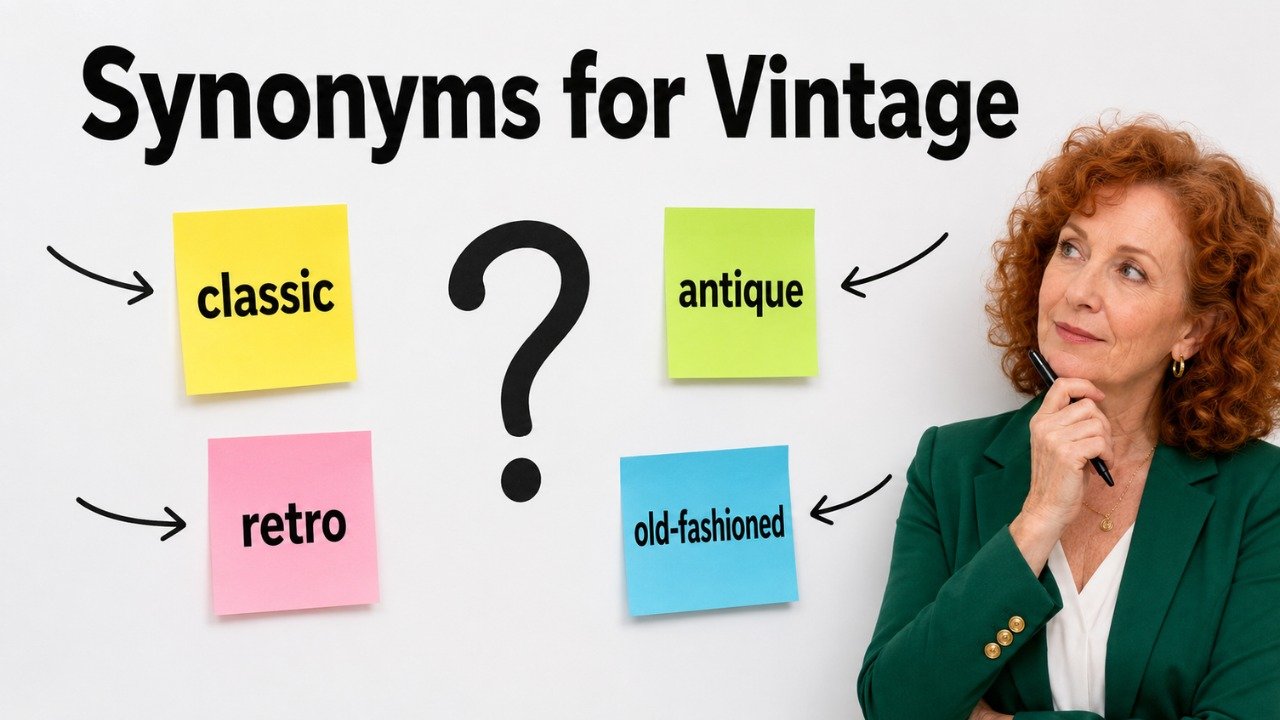
Quick Answer: The best synonyms for vintage include antique, retro, classic, period, traditional, heritage, nostalgic, aged, collectible, and timeless. Use antique for objects from a much earlier historical period, retro for newer items inspired by older styles, and classic for designs with lasting appeal. Period suits formal descriptions of items connected to a particular era, while heritage emphasizes cultural tradition. Aged works well for wine and materials, collectible highlights rarity or desirability, and nostalgic describes something that recalls the past emotionally.
Pronunciation and Word Details
Word: Vintage.
Pronunciation: /ˈvɪntɪdʒ/.
Part of Speech: Adjective and noun.
Meaning: Vintage describes something from an earlier period that is valued for its age, style, quality, history, or character.
US Pronunciation:
UK Pronunciation:
What Does “Vintage” Mean?
Vintage means belonging to, produced in, or strongly associated with an earlier period. It often describes clothing, furniture, decorative objects, vehicles, photographs, accessories, and other items valued for their age, design, quality, or historical character.
As an adjective, vintage describes the age or style of a noun.
Example: She found a vintage lamp with an elegant glass shade.
Vintage can also describe something that represents the best qualities of a person, period, or style.
Example: The speech was vintage comedy, filled with sharp observations and perfect timing.
As a noun, vintage can refer to the year or season in which wine grapes were harvested.
Example: The vineyard produced an excellent vintage that year.
It may also refer to a collection or group of items produced during a particular period.
Example: This vintage is known for its rich color and balanced flavor.
The word does not always mean extremely old. In many contexts, it describes something old enough to represent a recognizable period but still desirable, usable, or stylish.
Vintage can therefore communicate age, quality, nostalgia, authenticity, rarity, or a connection to a past era. The intended meaning depends on whether the sentence refers to an original object, an inspired style, a wine year, or a lasting quality.
Meaning, Tone, and Context of “Vintage”
Vintage usually has a positive, appreciative, and stylish tone. It suggests that something from the past has value, beauty, quality, history, or distinctive character.
The word is common in everyday conversation, product descriptions, interior design, fashion writing, collecting, historical discussion, food writing, and cultural commentary.
In clothing and decor, vintage often suggests an original item from an earlier era.
Example: The room combines vintage furniture with simple modern lighting.
In design, vintage may describe a visual style inspired by old colors, shapes, materials, or patterns.
Example: The invitation has a vintage look with faded lettering and floral details.
In collecting, vintage often suggests authenticity, age, rarity, or historical interest.
Example: He keeps his vintage cameras in a protected display cabinet.
In wine related contexts, vintage refers to the year or season connected with grape harvesting and production.
Example: Weather conditions influenced the quality of that vintage.
Vintage can also describe the familiar excellence of a person or performance.
Example: Her confident final performance was vintage brilliance.
The word is neutral enough for conversation but polished enough for articles, essays, descriptions, and professional writing. However, it may sound vague when the exact date, era, condition, or authenticity of an item matters.
When and How to Use “Vintage”
For Clothing: Use vintage for original garments or accessories associated with a recognizable earlier period.
Example: She wore a vintage silk dress to the evening event.
For Furniture: Use vintage for older furniture valued for its craftsmanship, design, materials, or character.
Example: The vintage cabinet became the main feature of the dining room.
For Interior Design: Use vintage when a space includes decorative elements inspired by or preserved from the past.
Example: Brass mirrors and patterned rugs gave the room a vintage atmosphere.
For Collectibles: Use vintage when describing older objects that attract interest because of their age, rarity, design, or history.
Example: The collector purchased a vintage clock in excellent condition.
For Vehicles: Use vintage for an older vehicle admired for its design, engineering, history, or cultural importance.
Example: A carefully restored vintage car appeared at the exhibition.
For Photography: Use vintage for photographs, cameras, editing styles, or visual effects connected with an earlier era.
Example: The photograph had a soft vintage appearance.
For Wine: Use vintage to identify the year or season in which grapes were grown and harvested.
Example: The label displays the vintage clearly.
For Lasting Quality: Use vintage when something represents a person or style at its most recognizable or impressive.
Example: The performance was vintage storytelling at its finest.
For Nostalgic Style: Use vintage when an object or design creates an emotional connection with the past.
Example: The kitchen has a warm vintage charm.
For Historical Accuracy: Use period instead of vintage when the exact historical era matters more than general style.
Example: The room contains period furniture from the early twentieth century.
Best Synonyms for Vintage
Antique: An old and often valuable object from a much earlier historical period.
Example: The hallway contained an antique wooden chest.
Retro: A newer design that intentionally copies or celebrates a style from the past.
Example: The cafe used retro chairs and bold geometric patterns.
Classic: Something admired for lasting quality, familiar style, or enduring appeal.
Example: She chose a classic coat that would remain stylish for years.
Period: Belonging to or accurately representing a specific historical era.
Example: The house still contains several period features.
Traditional: Following customs, methods, forms, or designs established over time.
Example: The room combines traditional furniture with soft neutral colors.
Heritage: Connected with cultural history, craftsmanship, identity, or inherited tradition.
Example: The designer used heritage patterns in the new collection.
Nostalgic: Creating affectionate or emotional memories of the past.
Example: The old photographs gave the display a nostalgic feeling.
Aged: Made older through time, storage, exposure, or a controlled process.
Example: The aged wood developed a rich surface color.
Collectible: Desirable to collectors because of rarity, condition, age, or special interest.
Example: The shop displayed several collectible watches.
Timeless: Remaining attractive, valuable, or relevant despite changing trends.
Example: The simple design has a timeless elegance.
50 Synonyms for Vintage with Short Meanings
- Antique: Very old and often historically or financially valuable.
- Retro: Newly created in a style associated with the past.
- Classic: Admired for lasting quality or enduring appeal.
- Period: Connected with a particular historical era.
- Old Fashioned: Typical of an earlier style, custom, or method.
- Traditional: Following long established forms, designs, or practices.
- Historic: Important or connected with events from the past.
- Heritage: Related to cultural history, tradition, or inherited craftsmanship.
- Nostalgic: Producing warm or emotional memories of the past.
- Aged: Made older through time, storage, or exposure.
- Timeworn: Showing visible signs of long use or age.
- Collectible: Worth gathering because of rarity, age, or interest.
- Archival: Preserved because of historical or documentary value.
- Original: Made during the actual period rather than copied later.
- Authentic: Genuine and accurately connected with its claimed origin.
- Timeless: Remaining stylish or valuable across different periods.
- Enduring: Continuing to be admired or useful over time.
- Bygone: Belonging to an earlier time that has passed.
- Old World: Suggesting traditional European style or historic charm.
- Throwback: Something that strongly recalls an earlier period.
- Old School: Following an older style, method, or attitude.
- Quaint: Attractively old fashioned in appearance or character.
- Rustic: Simple, traditional, and connected with rural design.
- Weathered: Changed in appearance through age and exposure.
- Patinated: Covered with a surface appearance developed through age.
- Heirloom: A valuable object passed between generations.
- Venerable: Respected because of great age, history, or importance.
- Mature: Fully developed through time or aging.
- Seasoned: Improved or shaped through age, use, or experience.
- Well Aged: Developed positively over a long period.
- Rare: Uncommon and difficult to find.
- Iconic: Widely recognized as representing a style or era.
- Distinctive: Having a recognizable and unusual character.
- Dated: Clearly associated with an earlier period, often negatively.
- Outmoded: No longer fashionable or commonly used.
- Obsolete: No longer used because something newer has replaced it.
- Preowned: Previously owned by another person.
- Secondhand: Previously used or owned.
- Reproduction: A newer copy of an older object or design.
- Reissued: Produced again after an earlier release.
- Revived: Brought back into use or popularity.
- Period Inspired: Designed with features from a particular era.
- Heritage Inspired: Influenced by traditional designs or cultural history.
- Retro Styled: Made to resemble a recognizable style from the past.
- Classic Styled: Designed with familiar and enduring features.
- Early Edition: An item from an earlier production or publication.
- Original Era: Actually produced during the period it represents.
- Harvest: The gathering of grapes connected with wine production.
- Year: The production year identified for a particular wine.
- Crop: Grapes or other produce gathered during one season.
Read Also:
Synonyms for Tell

Synonyms for Vintage by Context
When Vintage Means Genuinely Old
Antique, period, historic, original, authentic, timeworn, and venerable are useful when an object genuinely comes from an earlier period.
Antique usually suggests considerable age and possible historical or financial value.
Example: The antique desk required careful restoration.
Period emphasizes that an item belongs to a specific historical era.
Example: The building contains period doors and fireplaces.
Original makes it clear that the item was produced during the era it represents.
Example: The museum displayed an original lamp from the early twentieth century.
Authentic emphasizes that the item is genuine rather than copied or falsely described.
Example: An expert confirmed that the cabinet was authentic.
When Vintage Means Inspired by the Past
Retro, throwback, period inspired, heritage inspired, retro styled, and reproduction describe newer items influenced by earlier designs.
Retro is the broadest alternative for a modern object with an older look.
Example: The kitchen uses retro colors and rounded appliances.
Period inspired indicates that a design borrows recognizable details from a particular era.
Example: The room features period inspired wallpaper and lighting.
Reproduction means a newer copy made to resemble an older original.
Example: The chair is a reproduction rather than an original period piece.
Throwback is more conversational and often describes a strong reminder of an earlier trend.
Example: The bold pattern is a playful throwback to earlier interior styles.
When Vintage Means Stylish and Enduring
Classic, timeless, enduring, iconic, and distinctive work well when vintage expresses lasting quality rather than age alone.
Classic suggests recognized quality and familiar appeal.
Example: The jacket has a classic shape that suits many occasions.
Timeless emphasizes that the design continues to look attractive despite changing trends.
Example: The room has a timeless combination of wood and natural fabric.
Iconic describes something strongly associated with a recognizable era or style.
Example: The chair became an iconic example of twentieth century design.
Enduring highlights continued popularity or value.
Example: The pattern has an enduring appeal.
When Vintage Means Old Fashioned
Old fashioned, dated, outmoded, obsolete, and old school can replace vintage when the emphasis is on age rather than desirability.
Old fashioned can be neutral, affectionate, or mildly critical.
Example: The shop has an old fashioned counter and handwritten signs.
Dated usually suggests that something no longer looks current.
Example: The color scheme now feels dated.
Outmoded describes something no longer fashionable or practical.
Example: The company replaced its outmoded filing system.
Obsolete is stronger and means that an item or method is no longer useful because something newer has replaced it.
Example: The device became obsolete after newer technology appeared.
When Vintage Means Valuable to Collectors
Collectible, rare, heirloom, archival, early edition, and provenance rich are useful when age, rarity, history, or ownership adds value.
Collectible focuses on desirability among people who gather related objects.
Example: The figurine is highly collectible.
Rare emphasizes limited availability.
Example: She discovered a rare clock in the storage room.
Heirloom describes an object preserved and passed through a family.
Example: The necklace is a treasured family heirloom.
Archival emphasizes preservation and historical importance.
Example: The exhibition included archival photographs and documents.
When Vintage Describes Condition or Surface
Aged, weathered, timeworn, patinated, rustic, and seasoned describe the physical effect of time.
Aged is neutral and can refer to wood, leather, wine, or other materials.
Example: The aged leather had a deep brown color.
Weathered suggests exposure to sunlight, rain, wind, or repeated use.
Example: The weathered boards gave the wall natural character.
Patinated refers to a surface layer or color that develops over time.
Example: The metal frame had a beautifully patinated finish.
Timeworn suggests visible wear caused by long use.
Example: The timeworn table showed marks from many years of family meals.
When Vintage Refers to Wine
Year, harvest, crop, aged, mature, and well aged are useful alternatives in wine related contexts.
Year identifies when the grapes were harvested.
Example: The bottle label includes the production year.
Harvest refers to the gathering of grapes during a particular season.
Example: Warm weather influenced the quality of the harvest.
Mature describes wine that has developed desirable qualities through aging.
Example: The wine had reached a mature stage.
Well aged suggests that time has improved the flavor, aroma, or balance.
Example: The meal was served with a well aged wine.
Another Word for Vintage
The best single replacement for vintage is often classic because it communicates lasting style, quality, and appeal. However, the most accurate alternative depends on what the sentence describes.
Use antique for a genuinely old and valuable object, retro for a newer design inspired by the past, period for something belonging to a specific era, and aged for materials or products improved or changed through time.
Original: She purchased a vintage wooden cabinet.
Better Option: She purchased an antique wooden cabinet.
Original: The kitchen has a vintage appearance.
Better Option: The kitchen has a retro appearance.
Original: The house retains many vintage architectural details.
Better Option: The house retains many period architectural details.
Original: The restaurant served a vintage bottle of wine.
Better Option: The restaurant served a well aged bottle of wine.
When Not to Use “Vintage”
Do not use vintage when the age or origin of an item is uncertain. The word can imply authenticity, historical connection, or recognized age.
Weak: This newly manufactured chair is vintage.
Better: This newly manufactured chair has a retro style.
Avoid vintage when antique would provide a more exact description of a genuinely old and historically valuable object.
Weak: The museum displayed a vintage writing desk from a distant historical period.
Better: The museum displayed an antique writing desk from a distant historical period.
Do not use vintage as a general synonym for used. An ordinary secondhand item may not have distinctive age, design, quality, or collector interest.
Weak: I bought a vintage office printer that was used for two years.
Better: I bought a preowned office printer that was used for two years.
Vintage may sound too positive when something is simply outdated or no longer useful.
Weak: The company relies on a vintage computer system that cannot run current software.
Better: The company relies on an obsolete computer system that cannot run current software.
Avoid repeating vintage several times when more specific words would improve the paragraph.
Weak: The room had vintage chairs, vintage lamps, vintage rugs, and vintage pictures.
Better: The room combined period chairs, retro lamps, traditional rugs, and archival pictures.
Do not use vintage when the exact year or era is available and relevant.
Weak: The gallery displayed a vintage photograph.
Better: The gallery displayed a photograph taken in 1942.
Words Commonly Confused With Vintage
Vintage vs Antique: Vintage describes an item from an earlier recognizable period that is valued for style, age, or quality. Antique usually suggests greater age and stronger historical or financial importance.
Vintage vs Retro: Vintage usually describes something genuinely from the past. Retro describes something newer that copies or celebrates an older style.
Vintage vs Classic: Vintage emphasizes age or association with a past era. Classic emphasizes lasting quality, familiarity, or enduring appeal.
Vintage vs Old Fashioned: Vintage is usually positive and stylish. Old fashioned can be neutral, affectionate, or critical depending on context.
Vintage vs Secondhand: Vintage suggests age, character, style, rarity, or collector interest. Secondhand simply means previously owned.
Vintage vs Historic: Vintage may describe ordinary objects from an earlier period. Historic describes something important to history or connected with notable events.
Vintage vs Heritage: Vintage focuses on age and period style. Heritage focuses on culture, tradition, inherited identity, or established craftsmanship.
Vintage vs Collectible: Vintage describes age or style. Collectible emphasizes that people want to gather or preserve the item.
Vintage vs Aged: Vintage connects an item with a particular period or production year. Aged describes the effect of time or deliberate aging.
Vintage vs Traditional: Vintage describes something associated with a past period. Traditional describes something based on customs or practices followed over time.
Which Synonym Should You Choose?
Choose antique when describing a genuinely old object with historical, artistic, or financial value.
Choose retro when a modern object copies the colors, shapes, patterns, or appearance of an earlier style.
Choose classic when emphasizing lasting quality, familiar design, or enduring popularity.
Choose period in formal writing when an object accurately belongs to or represents a particular historical era.
Choose traditional when discussing customs, techniques, furniture, patterns, or designs established over time.
Choose heritage when the sentence concerns cultural identity, inherited craftsmanship, or historical tradition.
Choose nostalgic when an object, image, sound, or experience creates affectionate memories of the past.
Choose aged when describing wood, leather, wine, metal, paper, or another material changed by time.
Choose collectible when rarity, demand, condition, or specialist interest makes an item desirable.
Choose timeless when the main idea is lasting beauty or relevance rather than actual age.
Choose historic when an object, place, or event has recognized historical importance.
Choose secondhand when the only known fact is that an item had a previous owner.
Choose reproduction when an object is a newer copy of an older design.
Choose dated when a style looks noticeably old and no longer attractive or current.
Choose obsolete when an item or method is no longer useful because a newer replacement exists.
Choose archival for preserved photographs, documents, recordings, or materials with historical value.
Real Life Examples of “Vintage” in Sentences
Original: She decorated the bedroom with vintage furniture.
Better Option: She decorated the bedroom with period furniture.
Original: He wore a vintage jacket to the event.
Better Option: He wore a classic jacket from an earlier era.
Original: The kitchen has a vintage color scheme.
Better Option: The kitchen has a retro color scheme.
Original: They discovered a vintage clock in the attic.
Better Option: They discovered an antique clock in the attic.
Original: The photograph has a vintage feeling.
Better Option: The photograph has a nostalgic feeling.
Original: The shop sells vintage household objects.
Better Option: The shop sells collectible household objects from earlier periods.
Original: The designer created a vintage pattern.
Better Option: The designer created a heritage inspired pattern.
Original: The restaurant displayed vintage photographs of the neighborhood.
Better Option: The restaurant displayed archival photographs of the neighborhood.
Original: The room has a vintage elegance.
Better Option: The room has a timeless elegance.
Original: The table has a vintage surface.
Better Option: The table has a beautifully weathered surface.
Synonym Groups and Usage Differences
Genuine Age Group
Antique, period, original, authentic, historic, and venerable describe items genuinely connected with an earlier time.
Antique emphasizes age and value. Period identifies a particular era, while authentic confirms that an item is genuine.
Example: The house contains authentic period doors.
Inspired Style Group
Retro, throwback, reproduction, revived, period inspired, and retro styled describe newer objects or trends based on the past.
Retro is broad and positive. Reproduction identifies a copy, while throwback sounds more conversational.
Example: The room combines retro styled lighting with modern furniture.
Lasting Quality Group
Classic, timeless, enduring, iconic, and distinctive describe designs that remain admired over time.
Classic emphasizes recognized quality. Timeless suggests freedom from changing trends, while iconic signals strong cultural recognition.
Example: The chair has a timeless shape and enduring appeal.
Historical Value Group
Historic, heritage, archival, heirloom, venerable, and provenance rich emphasize history, tradition, or ownership.
Historic relates to notable importance. Heirloom involves family inheritance, while archival focuses on preservation.
Example: The collection includes archival documents and family heirlooms.
Aged Appearance Group
Aged, weathered, timeworn, patinated, seasoned, and rustic describe visible effects of time or use.
Weathered suggests exposure. Patinated refers to a developed surface, while timeworn highlights wear.
Example: The weathered wood created a warm rustic appearance.
Collector Group
Collectible, rare, early edition, original, authentic, and iconic describe items that may interest collectors.
Rare focuses on scarcity. Early edition identifies an earlier release, while collectible highlights demand.
Example: The early edition became a valuable collectible.
Negative Age Group
Dated, outmoded, obsolete, and old fashioned describe things that may no longer seem current or useful.
Dated usually concerns appearance. Outmoded concerns fashion or practice, while obsolete indicates that something has been replaced.
Example: The software interface looks dated, but the operating system is completely obsolete.
Wine Group
Vintage, year, harvest, crop, mature, aged, and well aged relate to wine production and development.
Year and harvest identify production timing. Mature and well aged describe development through storage.
Example: A strong harvest helped produce a well aged wine.
Antonyms of Vintage
The opposite of vintage depends on whether the word refers to age, style, condition, authenticity, or cultural value.
Modern: Belonging to the present or recent period.
Contemporary: Existing or created during the current time.
New: Recently made, purchased, or introduced.
Recent: Happening or produced not long ago.
Current: In use or popular at the present time.
Latest: Most recently produced or released.
Futuristic: Designed to suggest advanced future styles or technology.
Innovative: Introducing new ideas, methods, or designs.
Original Design: Newly created rather than copied from the past.
Unused: Never previously owned or operated.
Brand New: Completely new and unused.
Mass Produced: Manufactured in large numbers rather than preserved for rarity.
Common: Easily found and not rare.
Ordinary: Lacking unusual age, character, or distinction.
Temporary: Intended to last for only a short period.
Trend Driven: Closely connected with a current fashion.
Unaged: Not developed or matured through aging.
Immature: Not yet fully developed through time.
Replaced: No longer current because something else has taken its place.
Future Oriented: Focused on new ideas rather than past styles.
Comparison: Vintage vs Related Words
Vintage vs Antique
Vintage usually describes an item from an earlier recognizable period that remains desirable for its design or quality. Antique generally suggests greater age and may carry more historical or financial value.
Example With Vintage: She wore a vintage dress from an earlier fashion era.
Example With Antique: The museum displayed an antique ceremonial robe.
Vintage vs Retro
Vintage usually refers to something genuinely produced in the past. Retro refers to a newer object or design that imitates an older style.
Example With Vintage: The room contains an original vintage lamp.
Example With Retro: The room contains a new lamp with a retro shape.
Vintage vs Classic
Vintage focuses on age, period, or historical style. Classic focuses on lasting quality and enduring appeal.
Example With Vintage: He restored a vintage wooden chair.
Example With Classic: He selected a classic wooden chair with a simple shape.
Vintage vs Old Fashioned
Vintage usually sounds appreciative and stylish. Old fashioned may sound affectionate, neutral, or critical.
Example With Vintage: The cafe has charming vintage decor.
Example With Old Fashioned: The office still uses an old fashioned filing method.
Vintage vs Traditional
Vintage describes something connected with an earlier period. Traditional describes a design, practice, or method passed through time.
Example With Vintage: She purchased a vintage embroidered bag.
Example With Traditional: The bag was made using traditional embroidery techniques.
Vintage vs Secondhand
Vintage suggests age, style, quality, rarity, or cultural interest. Secondhand only means that someone previously owned the item.
Example With Vintage: He collects vintage watches from earlier design periods.
Example With Secondhand: He bought a secondhand watch for everyday use.
Vintage vs Historic
Vintage concerns objects or styles from the past. Historic describes something important within history.
Example With Vintage: The store displayed vintage photographs.
Example With Historic: The archive preserved photographs of a historic event.
Vintage vs Aged
Vintage connects something with a production period, design era, or wine year. Aged describes physical development through time.
Example With Vintage: The bottle comes from a respected vintage.
Example With Aged: The cheese was aged until its flavor became stronger.
Common Phrases and Expressions With “Vintage”
Vintage Clothing: Original clothing associated with an earlier fashion period.
Vintage Style: A visual style based on designs from the past.
Vintage Look: An appearance that suggests age or an earlier era.
Vintage Design: A design genuinely from or inspired by a past period.
Vintage Furniture: Older furniture valued for its craftsmanship, style, or character.
Vintage Collection: A group of older items connected by period, type, or interest.
Vintage Piece: An individual object from an earlier era.
Vintage Charm: Attractive character created by age, history, or nostalgic style.
Vintage Year: The year connected with grape harvesting or wine production.
Vintage Wine: Wine identified by the year in which its grapes were harvested.
Common Mistakes to Avoid
A common mistake is using vintage as an exact synonym for antique. These words overlap, but they do not always describe the same age or level of historical importance.
Incorrect: Every vintage object is automatically an antique.
Better: Some vintage objects may later be classified as antiques, depending on age and context.
Another mistake is calling a newly made item vintage when retro or vintage inspired would be more accurate.
Incorrect: The newly manufactured radio is vintage.
Better: The newly manufactured radio has a retro design.
Do not assume that every secondhand item is vintage.
Incorrect: The used office chair is vintage because someone owned it before.
Better: The office chair is secondhand unless its age, style, or history gives it vintage interest.
Writers sometimes overuse vintage because it sounds stylish.
Repetitive: The vintage room had vintage curtains, vintage chairs, and vintage pictures.
Improved: The period room had traditional curtains, antique chairs, and archival pictures.
Avoid using vintage when the sentence needs a precise date or era.
Vague: She bought a vintage necklace.
Better: She bought a necklace produced during the 1950s.
Do not use antique for a new reproduction.
Incorrect: The antique mirror was manufactured last month.
Better: The antique inspired mirror was manufactured last month.
Be careful with dated. Vintage is usually positive, while dated often carries criticism.
Positive: The room has a warm vintage character.
Negative: The room has a dated color scheme that needs updating.
Do not confuse vintage as an adjective with vintage as a noun in wine related writing.
Adjective Use: They opened a vintage bottle.
Noun Use: That year produced an excellent vintage.
Conclusion
The best synonyms for vintage include antique, retro, classic, period, traditional, heritage, nostalgic, aged, collectible, and timeless. Antique suits genuinely old and valuable objects, while retro describes newer designs inspired by the past. Period is useful for historical accuracy, classic emphasizes lasting appeal, and heritage highlights cultural tradition. Aged works well for materials and wine, while collectible focuses on rarity and desirability. Choosing the right synonyms for vintage makes descriptions more accurate, natural, and meaningful.
FAQs About Synonyms for Vintage
What Is the Best Synonym for Vintage?
Classic is a broad positive synonym, but antique, retro, period, or aged may be more accurate depending on the context.
What Is a Formal Synonym for Vintage?
Period, historic, archival, heritage, and venerable are useful formal alternatives.
What Is the Difference Between Vintage and Antique?
Vintage describes something associated with an earlier recognizable period. Antique usually suggests greater age and stronger historical or financial value.
Is Retro the Same as Vintage?
No. Vintage usually refers to an original older item, while retro describes something newer that copies an older style.
What Is Another Word for Vintage Clothing?
Period clothing, classic clothing, retro fashion, archival clothing, and heritage fashion may work depending on age and authenticity.
Can Vintage Mean Old Fashioned?
Yes, but vintage is usually more positive. Old fashioned can sound neutral, affectionate, or critical.
What Is the Opposite of Vintage?
Modern, contemporary, new, current, recent, and futuristic are common opposites of vintage.
