
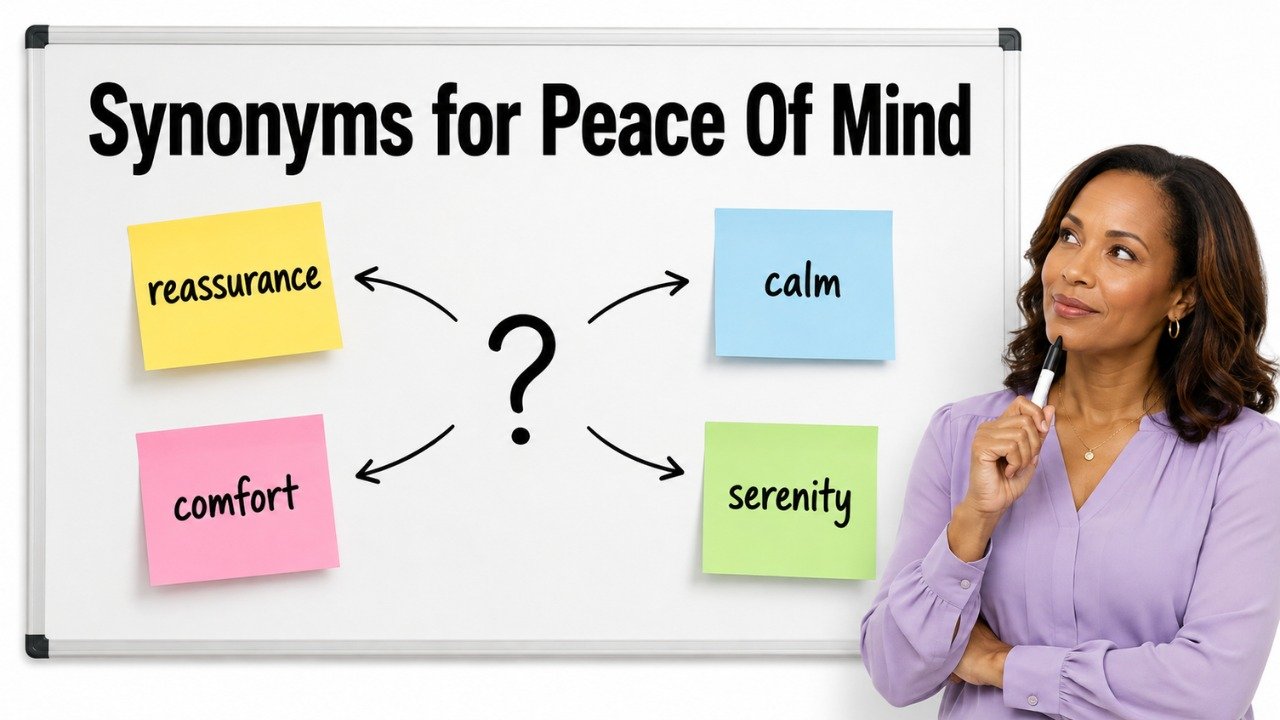
Quick Answer: The best synonyms for peace of mind include serenity, tranquility, reassurance, calmness, contentment, security, confidence, relief, composure, and inner peace. Use serenity or tranquility for deep emotional calm, reassurance when doubt has been removed, security when someone feels protected, confidence when the outcome feels dependable, relief after a worry has ended, and composure when a person remains calm under pressure. The most natural alternative depends on whether the sentence describes emotional balance, personal safety, certainty, comfort, or freedom from worry.
Pronunciation and Word Details
Word: Peace of mind.
Pronunciation: /ˌpiːs əv ˈmaɪnd/.
Part of Speech: Noun phrase and idiomatic expression.
Meaning: A calm mental state in which a person feels safe, certain, and free from serious worry.
US Pronunciation:
UK Pronunciation:
What Does “Peace of Mind” Mean?
Peace of mind means feeling calm, secure, and free from troubling thoughts. It is a noun phrase commonly used to describe emotional comfort, certainty, reassurance, and freedom from worry.
A person may experience peace of mind after solving a problem, confirming that someone is safe, completing an important responsibility, or receiving reliable information.
Example: Knowing that the doors were securely locked gave her peace of mind.
The phrase can describe a general emotional state.
Example: He moved to a quieter area in search of greater peace of mind.
It can also refer to reassurance about one specific concern.
Example: The written confirmation gave us peace of mind about the reservation.
Peace of mind does not always mean complete happiness. Someone may feel sad, tired, or disappointed while still having peace of mind because uncertainty or fear has been removed.
The phrase is normally uncountable. Writers usually say peace of mind rather than a peace of mind.
Natural: The clear instructions gave me peace of mind.
Unnatural: The clear instructions gave me a peace of mind.
Peace of mind works in personal, professional, financial, educational, family, safety, and everyday contexts. Its exact meaning depends on what has removed the person’s worry.
Meaning, Tone, and Context of “Peace of Mind”
Peace of mind has a positive, warm, and reassuring tone. It is natural in both formal and conversational English.
In casual speech, people use it when discussing worries, responsibilities, safety, relationships, travel, work, money, or future plans.
Example: I called home for peace of mind.
In professional communication, the phrase can describe the reassurance created by clear procedures, reliable service, preparation, or written confirmation.
Example: A detailed schedule can give the team peace of mind before the project begins.
In formal writing, peace of mind may sound slightly personal or emotional. More precise alternatives such as reassurance, security, certainty, emotional stability, or confidence may be better in reports and analytical writing.
Conversational: The extra preparation gave everyone peace of mind.
Formal: The additional preparation increased the team’s confidence.
The phrase is also common when discussing protection and security.
Example: Keeping copies of important records provides peace of mind.
Peace of mind is generally polite and emotionally positive. It suggests that concern has been reduced without implying that the person was unreasonable or overly fearful.
The expression can be strong when it describes deep inner calm, but it can also be mild when it refers to simple reassurance about an everyday issue.
When and How to Use “Peace of Mind”
For Emotional Calm
Use peace of mind when someone feels mentally settled and no longer troubled by persistent thoughts.
Example: Finishing the difficult conversation gave her peace of mind.
For Personal Safety
Use the phrase when a person feels protected from danger, loss, or avoidable risk.
Example: The secure entrance gave residents greater peace of mind.
For Reassurance
Use peace of mind when reliable information removes uncertainty or doubt.
Example: The confirmation message gave me peace of mind about the appointment.
For Preparation
Use it when planning ahead reduces concern about a future event.
Example: Preparing the documents early gave them peace of mind before the interview.
For Financial Certainty
Use the phrase when a clear plan or sufficient resources reduce money related worries.
Example: Building an emergency fund gave the family peace of mind.
For Family Concerns
Use peace of mind when someone knows that a family member is safe, supported, or prepared.
Example: Hearing that her son had arrived safely gave her peace of mind.
For Completed Responsibilities
Use the phrase when finishing an important duty allows someone to relax.
Example: Submitting the report before the deadline gave him peace of mind.
For Reliable Decisions
Use peace of mind when evidence, advice, or careful consideration creates confidence in a choice.
Example: Reviewing every option gave us peace of mind about the final decision.
For Freedom From Guilt
Use the phrase when a person knows they acted responsibly, fairly, or honestly.
Example: She explained the situation honestly and left with peace of mind.
For Long Term Stability
Use peace of mind when a stable arrangement reduces concern about the future.
Example: A clear long term plan can provide lasting peace of mind.
Best Synonyms for Peace of Mind
Serenity
Synonym: A deep and lasting state of calm.
Example: The quiet garden gave her a feeling of serenity.
Tranquility
Synonym: A peaceful state without noise, disturbance, or worry.
Example: He valued the tranquility of the countryside.
Reassurance
Synonym: Comfort or confidence created by removing doubt.
Example: The doctor’s clear explanation provided reassurance.
Calmness
Synonym: A state of being relaxed and emotionally controlled.
Example: Her calmness helped the group think clearly.
Contentment
Synonym: Quiet satisfaction with one’s situation.
Example: He felt a sense of contentment after completing the work.
Security
Synonym: The feeling of being safe, protected, or stable.
Example: A reliable plan gave the family a sense of security.
Confidence
Synonym: Trust that something is correct, safe, or likely to succeed.
Example: Careful preparation gave her confidence before the presentation.
Relief
Synonym: Comfort felt when fear, pain, or worry ends.
Example: He felt immediate relief when the missing document was found.
Composure
Synonym: The ability to remain calm and controlled during difficulty.
Example: She maintained her composure throughout the tense meeting.
Inner Peace
Synonym: A personal feeling of emotional and mental harmony.
Example: Forgiving the mistake helped him find inner peace.
50 Synonyms for Peace of Mind with Short Meanings
- Serenity: Deep and undisturbed calm.
- Tranquility: Peace without worry or disturbance.
- Calmness: A relaxed and controlled mental state.
- Inner Peace: Emotional harmony within oneself.
- Reassurance: Comfort created by removing doubt.
- Contentment: Quiet satisfaction with one’s circumstances.
- Security: A feeling of safety and protection.
- Confidence: Trust in an outcome, person, or decision.
- Relief: Comfort felt after worry has ended.
- Composure: Calm control during pressure or difficulty.
- Peacefulness: The quality of being calm and undisturbed.
- Ease: Freedom from difficulty, tension, or worry.
- Comfort: A feeling of emotional or physical relief.
- Assurance: Firm confidence that something is dependable.
- Certainty: Freedom from doubt about a fact or outcome.
- Safety: The condition of being protected from harm.
- Solace: Comfort received during worry or sadness.
- Quietude: A peaceful and undisturbed condition.
- Stillness: Complete calm without movement or disturbance.
- Equanimity: Mental balance during stress or change.
- Repose: A state of rest and calm.
- Restfulness: A peaceful quality that encourages relaxation.
- Emotional Balance: A stable and controlled emotional state.
- Mental Calm: Freedom from troubling or racing thoughts.
- Emotional Calm: A relaxed state without strong distress.
- Mental Ease: A mind free from serious tension.
- Calm Assurance: Quiet confidence that everything is under control.
- Calm Confidence: A relaxed belief in a positive outcome.
- Clear Conscience: Comfort from knowing one acted properly.
- Settled Mind: A mind that is no longer uncertain or disturbed.
- Freedom From Worry: The absence of troubling concerns.
- Freedom From Anxiety: Relief from nervous or fearful thoughts.
- Freedom From Doubt: Certainty without hesitation.
- Sense of Security: A personal feeling of being protected.
- Sense of Safety: Confidence that danger is unlikely.
- Sense of Certainty: A firm belief that something is known.
- Sense of Control: Confidence in one’s ability to manage a situation.
- Feeling of Protection: Comfort from being guarded against harm.
- Absence of Concern: A state in which worry is no longer present.
- Absence of Fear: Freedom from feelings of danger or alarm.
- Emotional Security: Confidence that one is emotionally safe and supported.
- Psychological Comfort: Mental reassurance created by safety or certainty.
- Emotional Relief: A reduction in distress or worry.
- Untroubled State: A condition without serious worry.
- Undisturbed State: Calm that has not been interrupted.
- Calm Acceptance: Peace created by accepting a situation.
- Personal Reassurance: Comfort relating to an individual concern.
- Restful Confidence: A relaxed belief that matters are secure.
- Trust in the Outcome: Confidence that events will end satisfactorily.
- Confidence in the Future: A secure and hopeful view of what will happen.
Read Also:
Synonyms for Outreach

Synonyms for Peace of Mind by Context
When Peace of Mind Means Emotional Calm
Use serenity, tranquility, calmness, inner peace, peacefulness, stillness, and quietude when describing a deeply relaxed mental state.
Example With Peace of Mind: Spending time alone in nature gave her peace of mind.
Example With Serenity: Spending time alone in nature gave her a feeling of serenity.
Example With Tranquility: She enjoyed the tranquility of the natural surroundings.
Serenity suggests deep and lasting calm. Tranquility often refers to a peaceful environment as well as a peaceful mind. Calmness is broader and more common in everyday speech.
When Peace of Mind Means Reassurance
Use reassurance, assurance, comfort, confidence, and personal reassurance when information or support removes uncertainty.
Example With Peace of Mind: The written confirmation gave us peace of mind.
Example With Reassurance: The written confirmation gave us reassurance.
Example With Assurance: The written confirmation provided assurance that the arrangement was complete.
Reassurance is usually the best formal replacement when doubt has been reduced. Assurance sounds firmer and may suggest a promise or guarantee.
When Peace of Mind Means Security
Use security, safety, sense of protection, emotional security, and sense of control when the phrase refers to being protected.
Example With Peace of Mind: The new safety procedure gave the workers peace of mind.
Example With Security: The new safety procedure gave the workers a greater sense of security.
Example With Protection: The new procedure created a stronger feeling of protection.
Security is the strongest general choice for protection and stability. Safety focuses more directly on freedom from physical harm.
When Peace of Mind Means Certainty
Use certainty, confidence, assurance, freedom from doubt, and trust in the outcome when someone feels sure about a fact or decision.
Example With Peace of Mind: Reviewing the contract gave her peace of mind about the agreement.
Example With Certainty: Reviewing the contract gave her greater certainty about the agreement.
Example With Confidence: Reviewing the contract increased her confidence in the agreement.
Certainty emphasizes the absence of doubt. Confidence suggests trust without always claiming complete certainty.
When Peace of Mind Means Relief
Use relief, emotional relief, comfort, ease, and solace when a difficult concern has ended or become less serious.
Example With Peace of Mind: Finding the lost keys gave him peace of mind.
Example With Relief: Finding the lost keys gave him immediate relief.
Example With Comfort: Finding the keys brought a sense of comfort.
Relief is best when worry ends suddenly. Comfort is gentler and may continue over a longer period. Solace is often used during sadness or emotional pain.
When Peace of Mind Means a Clear Conscience
Use clear conscience, calm acceptance, settled mind, and emotional ease when someone feels morally comfortable with an action or decision.
Example With Peace of Mind: She admitted the error and gained peace of mind.
Example With Clear Conscience: She admitted the error and could continue with a clear conscience.
Example With Calm Acceptance: Admitting the error allowed her to reach calm acceptance.
Clear conscience specifically relates to morality, honesty, or responsibility. It should not replace peace of mind when the concern is about physical safety or future uncertainty.
When Peace of Mind Means Emotional Control
Use composure, equanimity, emotional balance, and calm confidence when a person remains stable under pressure.
Example With Peace of Mind: His preparation helped him maintain peace of mind during the interview.
Example With Composure: His preparation helped him maintain his composure during the interview.
Example With Equanimity: He faced the difficult questions with equanimity.
Composure describes visible emotional control. Equanimity is more formal and refers to steady mental balance during difficult circumstances.
Another Word for Peace of Mind
Reassurance is often the best single replacement for peace of mind when a concern has been reduced by reliable information, preparation, or support.
However, the best alternative depends on the intended meaning. Use serenity for deep calm, security for protection, relief after worry ends, confidence for trust in a decision, and contentment for quiet satisfaction.
Original: The confirmation gave me peace of mind.
Better Option: The confirmation gave me reassurance.
Original: The quiet setting helped her find peace of mind.
Better Option: The quiet setting helped her find serenity.
Original: The safety measures gave residents peace of mind.
Better Option: The safety measures gave residents a sense of security.
Original: Completing the final task gave him peace of mind.
Better Option: Completing the final task brought him relief.
When Not to Use “Peace of Mind”
Peace of mind is useful in personal and conversational writing, but it can sound vague when the reader needs a more precise explanation.
Avoid using it in formal reports when you are specifically discussing safety, confidence, certainty, or emotional stability.
Weak: The new procedure improved employee peace of mind.
Better: The new procedure increased employees’ confidence in workplace safety.
Do not use peace of mind when relief clearly describes the end of a particular concern.
Weak: She felt peace of mind when the missing bag was returned.
Better: She felt relief when the missing bag was returned.
Avoid the phrase when composure describes visible calm under pressure more accurately.
Weak: He kept his peace of mind during the difficult interview.
Better: He maintained his composure during the difficult interview.
Do not use peace of mind as a vague promise without explaining what creates the reassurance.
Weak: This plan gives you peace of mind.
Better: This plan provides clear instructions, reliable support, and greater financial certainty.
Avoid using peace of mind as a synonym for happiness. A person may have peace of mind without feeling joyful.
Weak: Winning the prize filled her with peace of mind.
Better: Winning the prize filled her with happiness and excitement.
Do not use the phrase when you mean a quiet physical environment rather than a mental state.
Weak: The empty library was full of peace of mind.
Better: The empty library was peaceful and quiet.
Words Commonly Confused With Peace of Mind
Peace of Mind vs Peace: Peace of mind describes an individual’s calm mental state. Peace can describe personal calm, friendly relations, or the absence of conflict.
Peace of Mind vs Serenity: Peace of mind often comes from solving a concern or feeling secure. Serenity suggests a deeper and more continuous state of calm.
Peace of Mind vs Reassurance: Peace of mind is the calm result. Reassurance is the information, support, or action that helps create that calm.
Peace of Mind vs Security: Peace of mind is an emotional state. Security is the condition or feeling of being protected from danger, loss, or instability.
Peace of Mind vs Contentment: Peace of mind means freedom from serious worry. Contentment means satisfaction with one’s present situation.
Peace of Mind vs Relief: Peace of mind may continue over time. Relief is often the immediate feeling experienced when a worry ends.
Peace of Mind vs Composure: Peace of mind is an internal sense of calm. Composure is the ability to appear and remain controlled during pressure.
Peace of Mind vs Clear Conscience: Peace of mind can relate to any kind of worry. A clear conscience specifically comes from believing that one acted honestly or correctly.
Peace of Mind vs Happiness: Peace of mind means calm and security. Happiness is a broader positive emotion that may include joy, pleasure, or excitement.
Peace of Mind vs Relaxation: Peace of mind is mental reassurance. Relaxation is the reduction of physical or mental tension.
Which Synonym Should You Choose?
Choose serenity when describing deep, lasting, and almost complete emotional calm.
Choose tranquility when discussing a peaceful mind or a quiet environment.
Choose reassurance when information, support, or confirmation removes doubt.
Choose security when protection, stability, or safety is the main idea.
Choose confidence when a person trusts a decision, plan, outcome, or ability.
Choose relief when worry ends after a problem has been solved.
Choose composure when someone remains calm during pressure, conflict, or difficulty.
Choose contentment when describing quiet satisfaction with life or a particular situation.
Choose certainty when the sentence focuses on freedom from doubt.
Choose comfort when writing about emotional support or a gentle reduction in worry.
Choose inner peace in personal, reflective, or emotional writing.
Choose equanimity in formal essays when describing emotional balance during changing circumstances.
Choose calmness in everyday speech when a simple and familiar word is needed.
Choose clear conscience when the concern relates to honesty, responsibility, or moral behavior.
Choose assurance in professional emails when you need a firm but reassuring tone.
Choose emotional stability in formal reports that require a precise description of mental balance.
Real Life Examples of “Peace of Mind” in Sentences
Original: Receiving the final confirmation gave us peace of mind.
Better Option: Receiving the final confirmation gave us reassurance.
Original: The secure gate gives the residents peace of mind.
Better Option: The secure gate gives the residents a sense of security.
Original: Finishing the assignment early gave her peace of mind.
Better Option: Finishing the assignment early brought her relief.
Original: He checked the figures again for peace of mind.
Better Option: He checked the figures again for greater certainty.
Original: The emergency plan gave the staff peace of mind.
Better Option: The emergency plan increased the staff’s confidence.
Original: Spending time in the garden helped her regain peace of mind.
Better Option: Spending time in the garden helped her regain serenity.
Original: Telling the truth finally gave him peace of mind.
Better Option: Telling the truth finally gave him a clear conscience.
Original: Careful preparation gave the speaker peace of mind.
Better Option: Careful preparation gave the speaker calm confidence.
Original: Knowing that the children were safe gave their parents peace of mind.
Better Option: Knowing that the children were safe reassured their parents.
Original: A clear schedule gave the whole team peace of mind.
Better Option: A clear schedule gave the whole team a sense of control.
Synonym Groups and Usage Differences
Emotional Calm Group
This group includes serenity, tranquility, calmness, peacefulness, inner peace, quietude, and stillness.
Serenity suggests deep calm. Tranquility often connects mental calm with a quiet setting. Calmness is the most flexible everyday choice. Inner peace has a more personal and reflective tone.
Example: The peaceful surroundings helped her experience a sense of tranquility.
Reassurance Group
This group includes reassurance, assurance, comfort, confidence, and personal reassurance.
Reassurance removes doubt. Assurance is firmer and may involve a promise. Comfort reduces emotional distress. Confidence reflects trust in a decision or result.
Example: The detailed explanation provided the reassurance we needed.
Security Group
This group includes security, safety, emotional security, sense of protection, and feeling of protection.
Security may be physical, financial, emotional, or practical. Safety usually concerns protection from harm. Emotional security refers to feeling accepted, stable, and supported.
Example: The clear procedures created a stronger sense of security.
Certainty Group
This group includes certainty, assurance, freedom from doubt, trust in the outcome, and confidence in the future.
Certainty is the strongest word for the absence of doubt. Trust in the outcome suggests confidence even when the final result is not yet known.
Example: Written approval gave the team greater certainty.
Relief Group
This group includes relief, emotional relief, ease, comfort, solace, and repose.
Relief follows the removal of worry. Ease suggests reduced tension. Solace describes comfort during grief, sadness, or disappointment. Repose suggests restful calm.
Example: The successful result brought immediate relief.
Emotional Control Group
This group includes composure, equanimity, emotional balance, calm confidence, and calm acceptance.
Composure describes control during a difficult moment. Equanimity is a formal word for emotional steadiness. Calm acceptance means becoming peaceful by accepting what cannot be changed.
Example: She responded to the unexpected criticism with composure.
Moral Comfort Group
This group includes clear conscience, settled mind, calm acceptance, and personal reassurance.
A clear conscience comes from honest or responsible behavior. A settled mind means uncertainty has been resolved.
Example: Correcting the mistake allowed him to continue with a clear conscience.
Antonyms of Peace of Mind
The opposite of peace of mind may involve worry, fear, uncertainty, emotional disturbance, or guilt.
Anxiety: Strong nervousness or worry about what may happen.
Worry: Troubling thoughts about a problem or possible danger.
Unease: A mild feeling of discomfort or concern.
Distress: Serious emotional suffering or discomfort.
Uncertainty: Lack of confidence about facts or future events.
Insecurity: A feeling of being unsafe, unstable, or uncertain.
Fear: An emotional response to danger or possible harm.
Doubt: A lack of certainty or trust.
Agitation: A disturbed and restless emotional state.
Turmoil: Great mental confusion or emotional disturbance.
Tension: Mental or emotional strain.
Apprehension: Worry that something unpleasant may happen.
Restlessness: Difficulty remaining calm or settled.
Concern: Worry about a person, issue, or possible result.
Guilt: Discomfort caused by believing one acted wrongly.
Panic: Sudden and overwhelming fear.
Alarm: Fear caused by awareness of danger.
Confusion: Lack of clear understanding or certainty.
Comparison: Peace of Mind vs Related Words
Peace of Mind vs Serenity
Peace of mind often results from resolving a specific concern. Serenity is a deeper and more continuous state of calm that may not depend on a particular problem.
Example With Peace of Mind: The confirmation gave her peace of mind about the journey.
Example With Serenity: The quiet landscape filled her with serenity.
Peace of Mind vs Reassurance
Peace of mind is the calm feeling a person experiences. Reassurance is the support, evidence, or information that produces that feeling.
Example With Peace of Mind: Knowing the work was complete gave him peace of mind.
Example With Reassurance: The manager’s confirmation gave him reassurance.
Peace of Mind vs Security
Peace of mind is a mental and emotional result. Security is the condition of being safe, protected, or stable.
Example With Peace of Mind: The reliable plan gave the family peace of mind.
Example With Security: The reliable plan gave the family financial security.
Peace of Mind vs Relief
Peace of mind can describe continuing calm. Relief usually occurs immediately after a danger, uncertainty, or difficult situation ends.
Example With Peace of Mind: The completed arrangements gave us peace of mind for the entire trip.
Example With Relief: We felt relief when the delayed train finally arrived.
Peace of Mind vs Contentment
Peace of mind means being free from troubling concerns. Contentment means feeling satisfied with what one has or where one is.
Example With Peace of Mind: The clear decision gave her peace of mind.
Example With Contentment: She felt contentment while enjoying her simple routine.
Peace of Mind vs Composure
Peace of mind is internal calm and reassurance. Composure is emotional control that is especially noticeable during pressure.
Example With Peace of Mind: Careful preparation gave him peace of mind before the meeting.
Example With Composure: He maintained his composure when the discussion became tense.
Peace of Mind vs Confidence
Peace of mind means feeling calm because worry has been reduced. Confidence means trusting one’s ability, decision, or expected result.
Example With Peace of Mind: The completed checklist gave her peace of mind.
Example With Confidence: Practice gave her confidence in her ability to succeed.
Peace of Mind vs Clear Conscience
Peace of mind can come from safety, certainty, planning, or emotional calm. A clear conscience specifically comes from acting honestly or responsibly.
Example With Peace of Mind: The safety inspection gave the owner peace of mind.
Example With Clear Conscience: He returned the lost money and left with a clear conscience.
Common Phrases and Expressions With “Peace of Mind”
Give Someone Peace of Mind: To make someone feel calm and reassured.
Example: The positive update gave the family peace of mind.
Provide Peace of Mind: To create a lasting feeling of safety or certainty.
Example: Clear instructions provide peace of mind before a difficult task.
Bring Peace of Mind: To cause someone to feel calmer.
Example: Resolving the disagreement brought her peace of mind.
Gain Peace of Mind: To become calm after receiving information or taking action.
Example: He reviewed the documents to gain peace of mind.
Find Peace of Mind: To reach a calm and settled mental state.
Example: She found peace of mind after making her decision.
Restore Peace of Mind: To bring calm back after worry or disruption.
Example: The honest explanation restored their peace of mind.
Complete Peace of Mind: A strong feeling of being entirely calm and secure.
Example: The final confirmation gave us complete peace of mind.
Greater Peace of Mind: An increased sense of calm or security.
Example: Better preparation can create greater peace of mind.
Peace of Mind About Something: Calmness concerning a particular issue.
Example: The inspection gave us peace of mind about the building’s condition.
Peace of Mind Knowing That: Reassurance created by a known fact.
Example: She had peace of mind knowing that the work was finished.
For Peace of Mind: To reduce personal doubt or worry.
Example: I checked the address again for peace of mind.
Enjoy Peace of Mind: To experience continuing calm and security.
Example: Careful planning allowed them to enjoy peace of mind.
Common Mistakes to Avoid
Writing Piece of Mind Instead of Peace of Mind
Peace of mind means calmness and freedom from worry. Piece of mind is incorrect in this expression.
Incorrect: The confirmation gave me piece of mind.
Correct: The confirmation gave me peace of mind.
The separate expression give someone a piece of your mind means to speak angrily or express strong disapproval.
Example: She gave the careless worker a piece of her mind.
Adding an Unnecessary Article
Peace of mind is usually an uncountable phrase, so writers normally do not place a before it.
Incorrect: The decision gave me a peace of mind.
Correct: The decision gave me peace of mind.
Alternative: The decision gave me a sense of peace.
Leaving Out “Of”
The complete expression is peace of mind.
Incorrect: The news gave us peace mind.
Correct: The news gave us peace of mind.
Confusing Peace of Mind With Happiness
Peace of mind describes calm and freedom from worry. It does not necessarily mean excitement or joy.
Weak: The surprise party filled him with peace of mind.
Better: The surprise party filled him with happiness.
Using the Phrase Vaguely
Explain what is creating the calm when the context is not obvious.
Vague: The arrangement offers peace of mind.
Clear: The arrangement offers peace of mind by providing clear costs and reliable support.
Choosing an Overly Emotional Phrase in Formal Writing
In reports and analytical writing, reassurance, confidence, security, or certainty may be more precise.
Informal: The revised process gave the department peace of mind.
Formal: The revised process increased the department’s confidence in the results.
Confusing Peace of Mind and Composure
Use peace of mind for internal reassurance. Use composure for controlled behavior during a stressful event.
Weak: She kept her peace of mind while answering the hostile questions.
Better: She maintained her composure while answering the hostile questions.
Repeating Peace of Mind Too Often
Repeated use can make a paragraph sound promotional or vague.
Weak: The plan gives peace of mind, the support gives peace of mind, and the clear schedule gives peace of mind.
Better: The plan creates reassurance, the support offers comfort, and the clear schedule increases confidence.
Using the Wrong Preposition
Use peace of mind about when referring to a particular issue. Use peace of mind from when identifying its source. Use peace of mind knowing that when introducing a reassuring fact.
Example With About: The report gave us peace of mind about the building.
Example With From: She gained peace of mind from the clear explanation.
Example With Knowing That: He had peace of mind knowing that the task was complete.
Treating Peace of Mind as Physical Silence
A quiet environment may help create peace of mind, but the phrase itself refers to a mental state.
Incorrect: The room contained complete peace of mind.
Correct: The quiet room helped her experience peace of mind.
Conclusion
Synonyms for peace of mind help express calm, reassurance, safety, certainty, and emotional comfort more precisely. Choose serenity or tranquility for deep calm, reassurance for removed doubt, security for protection, confidence for trust in an outcome, relief when worry ends, and composure for calm behavior under pressure. Inner peace suits reflective writing, while certainty and assurance work well in formal contexts. Selecting the closest synonym makes your meaning clearer and helps readers understand exactly what created the calm feeling.
FAQs About Synonyms for Peace of Mind
What Is the Best Synonym for Peace of Mind?
Reassurance is the best general replacement when information or support removes worry. Serenity is better when describing deep emotional calm.
Is Serenity the Same as Peace of Mind?
The meanings are similar, but serenity suggests deeper and more lasting calm. Peace of mind often results from resolving a particular concern.
What Is a Formal Synonym for Peace of Mind?
Reassurance, assurance, certainty, security, equanimity, and emotional stability are suitable formal alternatives.
What Is a Casual Way to Say Peace of Mind?
Feeling calm, being at ease, not having to worry, and feeling safe are natural conversational alternatives.
Is Relief a Synonym for Peace of Mind?
Yes, especially when a specific worry has just ended. Relief is usually more immediate, while peace of mind may continue for a longer time.
What Is the Opposite of Peace of Mind?
Common opposites include anxiety, worry, unease, uncertainty, insecurity, fear, tension, and distress.
Is “A Peace of Mind” Grammatically Correct?
It is usually incorrect. Say peace of mind without an article, or use a sense of peace when you need a countable expression.
